
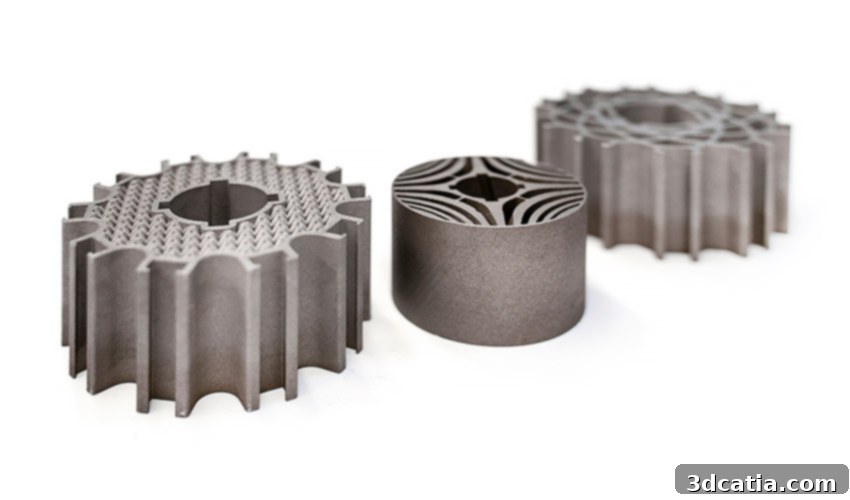
Revolutionizing Metal 3D Printing: Unlocking the Potential of Amorphous Metals with Exmet
Metal additive manufacturing (AM), while offering unprecedented design freedom, often encounters significant challenges during the production of specific parts. For instance, studies have revealed issues like metal fracturing in 3D printed components, frequently attributed to narrow vapor depressions, commonly known as “keyholes,” which can lead to structural weaknesses. Beyond this, conventional metal manufacturing also faces inherent limitations when dealing with crystalline structures, which are prone to defects such as grain boundaries and dislocations. These microscopic imperfections can negatively impact a material’s mechanical and electromagnetic properties. Addressing these limitations, a groundbreaking solution lies in the realm of amorphous metals, sometimes referred to as ‘metallic glasses’. We’ve seen these innovative materials applied in diverse fields, such as by Nik Huber for the development of high-performance electric guitars, showcasing their versatility and superior characteristics. Given the numerous benefits these unique metals offer, it’s no surprise that companies like Exmet Amorphous Technology are dedicated to advancing their application. To delve deeper into Exmet’s pioneering work and understand the transformative advantages amorphous metals bring to various industries, we recently had the opportunity to speak with Exmet’s new CEO, Tomas Hjort.
3DN: Can you introduce yourself and tell us about your first encounter with 3D printing?
My name is Tomas Hjort, and as of January 1st, I proudly assumed the role of CEO at Exmet Amorphous Technology, a Swedish company at the forefront of material innovation. My professional background is rooted in mechanical engineering, holding an MSc, and for more than two decades, I’ve been intimately involved in initiating and driving numerous entrepreneurial ventures and projects across diverse sectors, including automotive, industrial manufacturing, and other specialized segments. My initial exposure to industrial 3D printing occurred several years ago. It was during a project focused on developing a prototype for a critical vehicle component. Like many others who witness this technology in action for the first time, I was utterly captivated by its immense potential and the vast possibilities it presented for innovation in design and manufacturing. The ability to create complex geometries and functional parts with such precision was truly fascinating and ignited my interest in the additive manufacturing space.
Tomas Hjort
3DN: How did the idea of creating Exmet come about?
Exmet was founded some years ago by a dedicated team of visionary Swedish researchers and engineers. Their collective insight led them to realize that industrial 3D printing possessed capabilities far beyond merely producing intricate designs and complex geometries. They envisioned its potential to fundamentally revolutionize the commercialization of what they termed a “supermetal” – amorphous metal. This extraordinary material boasts unparalleled properties that significantly outperform conventional metals across various metrics. For decades, the immense potential of amorphous metals has been recognized within scientific and engineering communities. However, their widespread market adoption and technological development have consistently been hampered by the absence of suitable manufacturing methods. Historically, only extremely thin and small amorphous parts could be reliably produced, severely limiting their industrial applicability. Exmet’s breakthrough, underpinned by its patented innovation, completely alters this landscape. By leveraging industrial 3D printing, Exmet has made it possible not only to produce amorphous metal components but, for the very first time, to create amorphous components of virtually any size, shape, and thickness, thereby opening up a world of new possibilities for advanced material applications.
3DN: What are amorphous metals?
At a fundamental level, the atomic structure of a metallic melt is inherently disordered, existing in what we call an “amorphous” state. In a typical cooling process, as a molten metal transitions to a solid state, its atomic structure undergoes a transformation from this disordered amorphous arrangement to an ordered crystalline microstructure. This crystallization results in the formation of grains and grain boundaries, which are microscopic defects inherent to conventional metals. However, if the cooling process from the melt is incredibly rapid – often at rates exceeding 1,000,000 degrees Celsius per second – the atoms do not have sufficient time to rearrange themselves into an ordered crystalline lattice. Consequently, the amorphous, disordered structure of the melt is preserved during solidification. The crucial distinction of amorphous metal structures is their complete absence of these crystalline defects, such as grain boundaries and dislocations, which characterize conventional crystalline structures. These defects have a profound and directly negative impact on the mechanical, chemical, and electromagnetic properties of materials, often acting as initiation sites for fatigue and corrosion. Amorphous metals, being free from these inherent crystalline imperfections, present a revolutionary suite of material properties that conventional crystalline materials simply cannot achieve. They offer superior strength, elasticity, corrosion resistance, and unique magnetic characteristics.
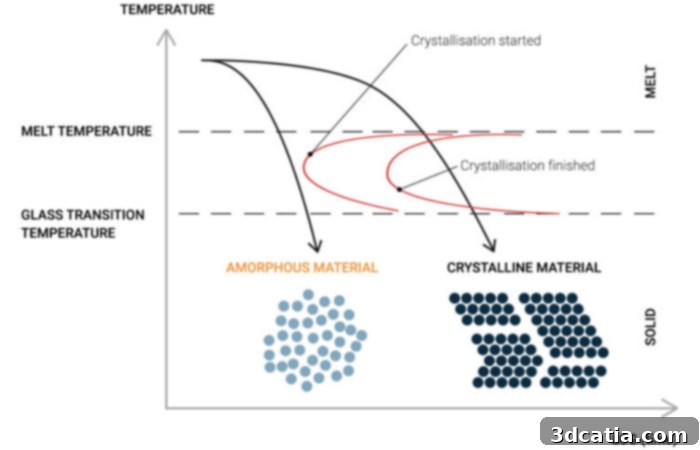
The cooling process of an amorphous metal.
Historically, the significant difficulty in achieving an amorphous structure, especially in larger metal components through traditional manufacturing methods like casting, has consistently been a major market limitation for amorphous metals. When casting, the core of a thicker component cools much slower than its surface. This differential cooling rate inevitably leads to the core crystallizing, even if the surface manages to solidify in an amorphous state, effectively nullifying the benefits of the amorphous structure for the entire part. This challenge has restricted amorphous metals to very small, thin applications. However, by strategically utilizing Additive Manufacturing, specifically industrial 3D printing, these traditional size and thickness limitations are completely circumvented. With Additive Manufacturing, metal designs are meticulously built up layer by layer. Each individual layer is inherently thin enough to enable extremely rapid cooling upon deposition, ensuring that the molten material solidifies almost instantaneously into an amorphous structure. This layer-by-layer approach allows for the creation of amorphous components of virtually any size or complex shape, opening up unprecedented opportunities for these ‘supermetals’ in industrial applications.
3DN: Why is it important for a company to invest in amorphous metals? What is their main added value compared to other metals on the market?
Investing in 3D printed amorphous metals offers compelling advantages due to their revolutionary mechanical and magnetic properties, making them exceptionally attractive across a vast spectrum of industries including automotive, medical, consumer electronics, energy, and general manufacturing. These materials empower engineers and designers to create components that are significantly smaller, substantially stronger, remarkably lighter, and considerably harder than those made from conventional metals. This translates into tangible benefits: enabling significant cost savings through material reduction and extended product lifespans, driving tremendous efficiency improvements in operational performance, and crucially, facilitating the realization of entirely new functionalities and designs that were previously impossible to achieve with existing materials. One of their standout mechanical properties is their several-fold greater resilience compared to steel and other crystalline metals. Resilience, understood as the optimal combination of high strength and exceptional elasticity, signifies a material’s superior ability to absorb and store mechanical energy without permanent deformation. This high resilience of amorphous metals is a game-changer for engineering, allowing for the development of extreme light-weight designs without compromising structural integrity. Furthermore, their surfaces are incredibly hard, endowing them with excellent wear resistance, alongside superior corrosion resistance, making them ideal for harsh environments.
Beyond mechanical prowess, amorphous metals exhibit superior magnetic properties, characterized by very high permeability and electrical resistivity. These attributes make them exceptionally well-suited for all magnetic applications, including high-efficiency electrical motors, advanced transformers, and various power electronics. In these applications, the use of amorphous metals significantly reduces energy losses, such as eddy currents and hysteresis losses, thereby substantially increasing overall device efficiency and performance. Moreover, amorphous metals hold considerable promise for certain consumer markets. Their distinctive properties, including high reflectivity and an inherent “scratch-free” surface – thanks to their disordered atomic structure preventing crack propagation along grain boundaries – make them optimal materials for luxury watches, high-end jewelry, sophisticated electronic casings, and other premium applications where aesthetics and durability are paramount. The combination of these advanced properties positions amorphous metals as a truly transformative material, offering a competitive edge and unlocking new product development avenues for forward-thinking companies.
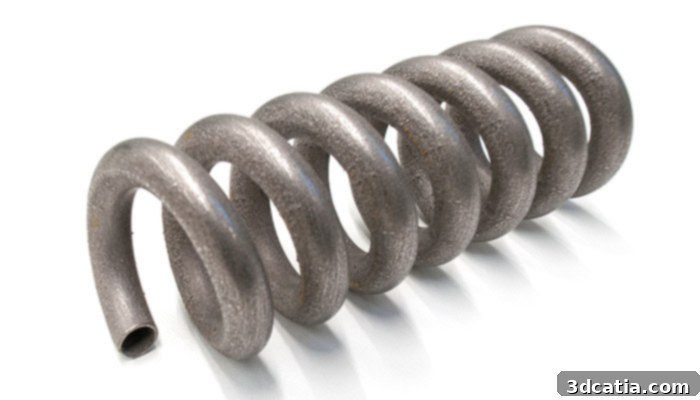
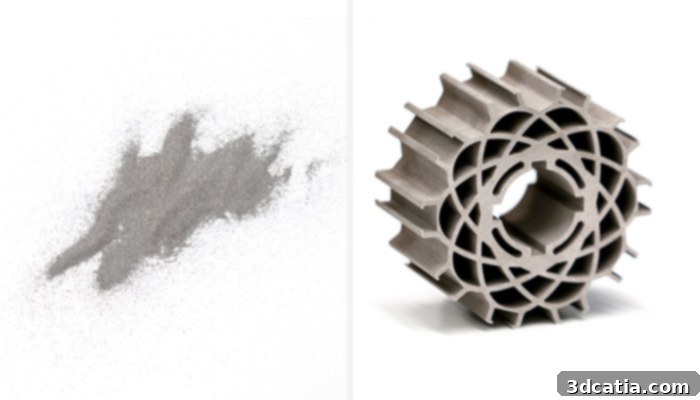
3D printed part with Exmet technology
3DN: Can you tell us about the ExMet AM²? How can a company benefit from its implementation?
ExMet AM² is the proprietary name for Exmet’s advanced Additive Manufacturing process technology, specifically engineered to enable the efficient and reliable manufacturing of amorphous metal components. One of the most significant advantages of ExMet AM² is its remarkable compatibility: it can be seamlessly deployed on standard, commercially available AM machines, meaning no specialized or additional hardware investment is typically required for companies already equipped with metal AM capabilities. This ease of integration drastically lowers the barrier to entry for adopting amorphous metal production. With ExMet AM² technology and our expertly optimized metal powder, a company that is already engaged in metal AM is immediately prepared to begin producing high-quality amorphous metal components using their existing machines. This readiness allows for rapid experimentation, prototyping, and eventually, scaled production. For organizations tackling particularly complex designs or intricate process requirements, Exmet provides comprehensive application support, guiding them through the nuances of amorphous metal additive manufacturing. Furthermore, we offer specialized prototyping services, allowing clients to validate designs and explore the full potential of amorphous metals before committing to in-house production. This holistic approach ensures that companies can confidently leverage the unique benefits of amorphous metals in their specific applications, maximizing their return on investment and accelerating innovation.
3DN: Who are your current partners and customers?
Exmet has dedicated several years to the meticulous development and refinement of our technology, and we are thrilled that it is now poised for full commercialization. This journey has been greatly supported by a number of committed partners and key customers who have been intimately involved throughout the development and industrialization phases. Illustrious names such as ABB, a global technology leader, Volvo Cars, renowned for its automotive innovation, and Heraeus, a leading technology group, stand among those who have collaborated closely with us, providing invaluable feedback and expertise. As is crucial for all front-end innovations, collaboration with leading academic institutions and research institutes has been decisive for our progress. We have had the tremendous opportunity and pleasure to work with esteemed Swedish institutions like Uppsala University, Swerim, KTH Royal Institute of Technology, and Chalmers University of Technology, as well as Saarland University in Germany. These partnerships have been instrumental in pushing the boundaries of material science and additive manufacturing. Furthermore, Exmet’s key strategic investors, AM Ventures (owned by EOS, a pioneer in additive manufacturing) and Volvo Cars Technology Fund, have provided crucial financial backing and technical support. Their belief in our vision and their sustained investment have been pivotal in enabling Exmet to rapidly transition this transformative technology from an initial idea to a market-ready commercial solution, accelerating our path to impact.
3DN: Where do you see Exmet in 5 years?
Looking ahead over the next five years, Exmet is committed to maintaining its strategic focus on the advanced development of our proprietary technologies, which are essential for enabling the efficient manufacturing of amorphous components using Additive Manufacturing. We anticipate continuous and significant improvements in our processes, particularly in areas like printing speed and overall efficiency, as speed is an absolutely critical factor in the broader adoption of all AM technologies. Our optimized metal powder portfolio will experience rapid growth, expanding to include a wider range of amorphous alloys tailored for specific industrial needs and applications. These products will be increasingly refined and optimized for our target applications and industries, ensuring maximum performance and value. By the end of this five-year period, we firmly believe that 3D printed amorphous parts will have transcended their current status as an emerging technology. They will become an established and recognized manufacturing solution, representing a standard alternative in the toolkit for engineers, designers, and the entire additive manufacturing industry. This will signify a paradigm shift, where the superior properties of amorphous metals, made accessible through AM, are routinely considered for demanding applications across various sectors, driving a new era of material innovation and product performance.
3DN: Do you have any last words for readers?
Indeed. I want to acknowledge that this has been a challenging period for many companies globally, primarily due to the ongoing pandemic situation. However, there is a clear light at the end of the tunnel, and the most important things right now are to prioritize health, well-being, and to maintain patience and resilience. Despite the global challenges, the metal additive manufacturing sector continues its steady and robust growth trajectory, demonstrating its fundamental importance and increasing adoption across industries. Within this thriving landscape, amorphous metal technologies, particularly those facilitated by advanced 3D printing, are poised to make a very interesting and significant contribution, pushing the boundaries of what is possible in material science and engineering. We encourage interested readers to explore more about our cutting-edge work, our innovative technologies, and the transformative potential of amorphous metals by visiting our official website, which can be found here. Thank you for your interest and support.
* All photos courtesy of Exmet
What are your thoughts on Exmet’s innovative approach and their groundbreaking use of amorphous metals in additive manufacturing? We invite you to share your insights and comments below, or engage with us on our social media platforms: Facebook, Twitter, and LinkedIn! For the very latest news, trends, and developments in the world of 3D printing delivered directly to your inbox, don’t forget to sign up for our free weekly Newsletter here.