
Revolutionizing the Skies: Discover the Most Innovative 3D Printed Drones
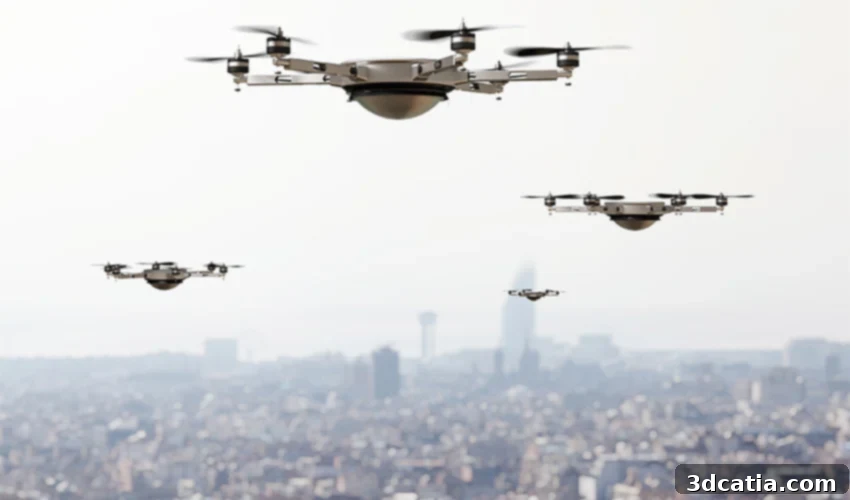
Drones, officially known as Unmanned Aerial Vehicles (UAVs), have transitioned from niche military applications to widespread use across numerous sectors and for recreational enjoyment. These pilotless aircraft, controlled remotely or operating autonomously, now serve critical roles in surveillance, reconnaissance, aerial photography, package delivery, environmental monitoring, and even search and rescue operations. As their versatility grows, so does the demand for lighter, more efficient, and highly customizable designs. This is precisely where additive manufacturing, commonly known as 3D printing, enters the picture, transforming the landscape of drone development. 3D printing offers unparalleled design freedom, allowing for complex geometries, integrated functionalities, and rapid prototyping, which significantly reduces development cycles and costs. From cutting-edge commercial solutions to ingenious DIY projects, 3D printing empowers manufacturers and hobbyists alike to produce entire drone bodies or intricate components with remarkable precision and speed. The adoption of additive manufacturing leads to drones that are not only lighter and more robust but also tailored to specific mission requirements in record time. This article explores some of the most innovative 3D printed drones available today, showcasing how this revolutionary technology is shaping the future of flight.
AldoraTech Pioneers Sustainable Drone Delivery Solutions
Spanish startup AldoraTech is at the forefront of manufacturing highly functional drones designed for various demanding missions, particularly focusing on sustainable logistics and package delivery. Their innovative approach combines the strengths of 3D printed parts with high-performance composite materials, resulting in drones that are both robust and efficient. A key objective for AldoraTech is to significantly reduce the carbon footprint associated with traditional logistics transport, aiming for an impressive 80% reduction in emissions through the deployment of their advanced drones. What truly sets AldoraTech’s drones apart is their inherent modularity. This design philosophy allows each drone to be meticulously adapted to the unique requirements of individual customers and specific missions. Whether it’s optimizing for speed to shorten delivery times or scaling up for heavier, specialized goods, the modular design ensures maximum flexibility. This exceptional adaptability is largely facilitated by the inherent versatility and precision offered by advanced 3D printing technology, enabling the rapid creation of custom components and structural elements.

Photo Credits: AldoraTech
X VEIN: An Open-Source 3D Printed Drone with Optimized Aerodynamic Design
The X VEIN project represents a significant leap in open-source drone innovation, conceived and developed by a talented Japanese team comprising Yuki Ogasawara, Ryo Kumeda, Yuji Fujimura, and Tetsuya Konishi. This particular 3D printed drone stands out due to its meticulous reliance on design principles specifically tailored for additive manufacturing. The creators ingeniously leveraged advanced techniques such as generative design and topological optimization. These methodologies allowed them to achieve an optimal balance between critical performance factors: exceptional strength for durability, enhanced safety for operational reliability, remarkable lightness for extended flight times, and inherent scalability for diverse applications. The drone’s frame, a testament to intelligent engineering, has been rigorously optimized in terms of material distribution. The overarching goal was to produce a significantly lighter drone capable of maintaining structural integrity and resisting various operational stresses and constraints. This optimization not only improves flight efficiency but also enhances payload capacity. Adding to its appeal, the X VEIN drone is an accessible project; enthusiasts can readily download the necessary 3D printable parts from Autodesk’s website. Furthermore, the design thoughtfully incorporates a central mounting point, allowing users to easily install a camera and capture breathtaking aerial videos and images, opening up new perspectives for exploration and content creation.

Photo Credits: X Vein
CargoCopter: A Research-Driven 3D Printed Delivery Drone
The CargoCopter, a pioneering 3D printed drone, emerged from three years of intensive research conducted by dedicated researchers at KU Leuven, a prestigious university located in Leuven, Belgium. Launched in 2017, this project exemplifies the profound impact of 3D printing throughout the entire development lifecycle. During its extensive development phase, additive manufacturing played an indispensable role, particularly in the rapid prototyping of numerous design iterations. This capability allowed the research team to efficiently test and refine various features, material combinations, and structural configurations, ultimately enabling them to determine the most optimal design for performance and functionality. Once the ideal design and materials were meticulously selected, the project’s stakeholders moved forward to completely 3D print the final CargoCopter. This advanced drone boasts impressive specifications, demonstrating its viability as a robust delivery solution. It is capable of carrying a substantial 5 kg (11 lbs) load, achieving speeds of up to 150 km/h (93 mph), and covering significant distances of 60 km (37 miles). These remarkable capabilities position the CargoCopter as a highly promising and more than viable alternative for efficient and flexible logistics operations, particularly in challenging environments where traditional transport might be less effective.
The Auxdrone Lifeguard by General Drones: Enhancing Beach Safety
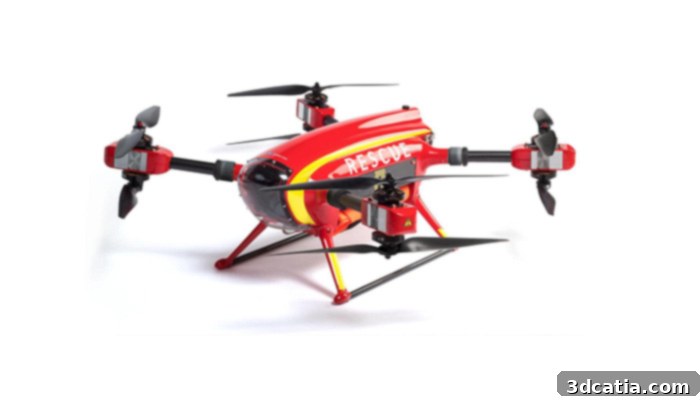
The Auxdrone Lifeguard, developed by General Drones, represents a significant advancement in public safety technology. This innovative drone has already proven its invaluable utility by actively monitoring the beaches of Port de Sagunt and Palma de Mallorca during recent summer seasons, providing an extra layer of protection for bathers. Officially presented at Las Naves, an innovation center affiliated with the Valencia City Council, the Auxdrone Lifeguard marked a crucial first step in integrating cutting-edge technology into beach surveillance and rescue operations. Its design prioritizes speed and accessibility, allowing it to rapidly reach areas that are otherwise difficult or dangerous for human lifeguards to access quickly, thereby significantly improving response times for individuals in distress. Recognizing the demanding environmental conditions of beach operations, the Auxdrone Lifeguard has been meticulously engineered for durability and resilience. Its 3D printed components and overall design are specifically resistant to the harsh effects of sun exposure, high humidity, and corrosive saltwater, ensuring reliable performance under the natural conditions in which it operates. This robust construction makes it an ideal tool for critical life-saving missions.
The DIY T4 Quadcopter Drone: Empowering Hobbyists
For hobbyists and enthusiasts eager to delve into the world of drone construction, the DIY T4 Quadcopter Drone offers an exciting and accessible entry point. This popular 3D printed drone project is readily available for download on Thingiverse, a widely used platform for sharing digital design files. Originally uploaded in 2014 by user Brendan22, the T4 Quadcopter quickly gained traction within the DIY community due to its straightforward design and ease of assembly. A significant advantage of this design is that it is entirely 3D printable without requiring any support structures, simplifying the printing process and reducing material waste. Once printed, the individual components can be put together using simple assembly techniques, making it an ideal project for beginners and experienced makers alike. The creator thoughtfully notes that users will need to integrate their own battery and wiring system, but the drone’s frame has been specifically designed with beveled cable tunnels and tie mounts, facilitating neat and efficient cable routing. For those seeking variations or different configurations, the creator, Brendan22, has also uploaded a range of other compatible designs, including the TX8 Octocopter Drone, the T Copter Mini Legs, and various sizes of the T4 Quadcopter Mini (315 Drone and 250 Drone), offering ample opportunities for customization and further exploration. To learn the exact steps to build this original drone, a comprehensive build video is provided, guiding makers through each stage of the process.
The Tundra® Drone by Hexadrone: Industrial-Grade Modularity
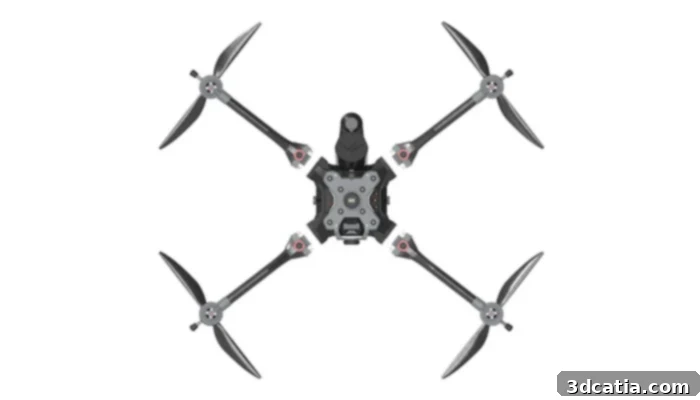
The Tundra® Drone, a remarkable creation by Hexadrone in collaboration with Raphael Cheze, sets a new benchmark for industrial-grade unmanned aerial systems. This drone distinguishes itself as the first of its kind to be a fully modular, user-friendly, and completely 3D printed solution, meticulously engineered for a wide array of industrial settings and multi-purpose tasks. Its exceptional modularity is highlighted by features such as rapidly detachable arms and an innovative system of three quick-release attachments. These design elements ensure unparalleled flexibility, allowing the drone to be swiftly reconfigured to meet the specific demands of virtually any professional application, from inspection and mapping to specialized payload delivery. Furthermore, the Tundra® Drone is built to withstand extreme environmental challenges, thanks to its rugged and meticulously waterproof design. This robust construction ensures reliable performance even in the harshest weather conditions, making it an indispensable tool for operations in diverse climates and terrains. Its groundbreaking design and functionality were recognized with the prestigious Red Dot Award earlier this year, underscoring its innovation and excellence in the field of industrial drone technology.
Dronistics: Safe and Agile Drones for Last-Mile Deliveries
Dronistics has emerged as a key innovator in the autonomous drone sector, developing a sophisticated range of flying drones characterized by their paramount safety, impressive portability, and lightweight construction. The company strategically targets the rapidly expanding logistics and services market, offering a compelling drone delivery solution that is not only environmentally friendly but also remarkably cost-effective and highly efficient. Dronistics positions its offerings as an ideal solution for addressing critical challenges such as last-minute delivery requirements and efficient transport to difficult-to-access locations. Their product line includes the PackDrone and the GearQuad, each designed with unique features for specific applications. The PackDrone is engineered with inherent safety at its core; a protective cage completely surrounds the drone, safeguarding both the package it carries and mitigating risks to people and property. Furthermore, its ingenious foldable design allows users to maximize storage space, making it highly practical for diverse operational environments. The GearQuad, another innovative offering, features a dense protective grid that effectively shields hands and fingers from the rapidly rotating propellers, ensuring safety for ground personnel. Both drones are designed for intuitive control, requiring only an Internet connection and the user-friendly Dronistics app, which incorporates GPS functionality and advanced controls to guarantee the secure and precise delivery of packages, streamlining the entire delivery process.
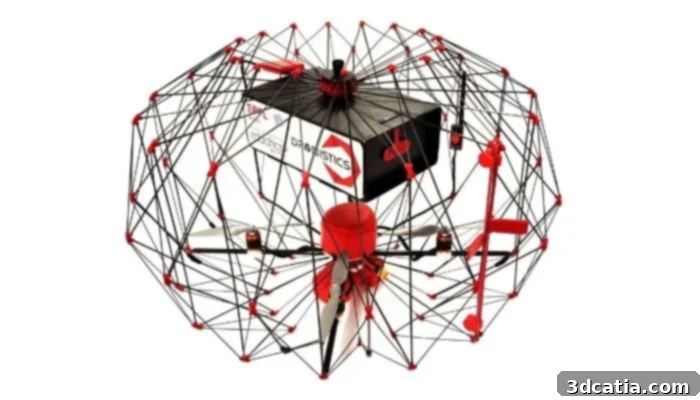
Photo Credits: Dronistics
The Dark Matter® by Clogworks: Precision Engineering Through Modularity
The Dark Matter® drone, engineered by Clogworks, embodies a highly sophisticated modularity concept that underpins its exceptional flexibility, ease of maintenance, and uncompromising performance. This innovative approach allows for complete detachment of its arms and legs, along with a state-of-the-art quick-release payload attachment system. Such modularity not only simplifies transportation and storage but also significantly streamlines repair and upgrade processes without sacrificing the drone’s operational capabilities or flight dynamics. The dedicated team at Clogworks meticulously develops the Dark Matter® using a combination of advanced manufacturing techniques. They leverage in-house rapid prototyping capabilities, which are crucial for iterating designs quickly and efficiently. For specialized custom parts, they expertly utilize a range of high-performance materials and processes, including precision CNC machining, strong and lightweight carbon fiber composites, and critically, advanced 3D printing. This integrated approach to design and manufacturing ensures that every component is optimized for its specific function, contributing to the drone’s robust construction and superior performance. Clogworks’ commitment to precision engineering and custom fabrication results in a drone that offers both high-end functionality and enduring reliability, making it a powerful tool for various professional applications.
Piccolissimo: The World’s Smallest Self-Powered 3D Printed Drone from UPenn
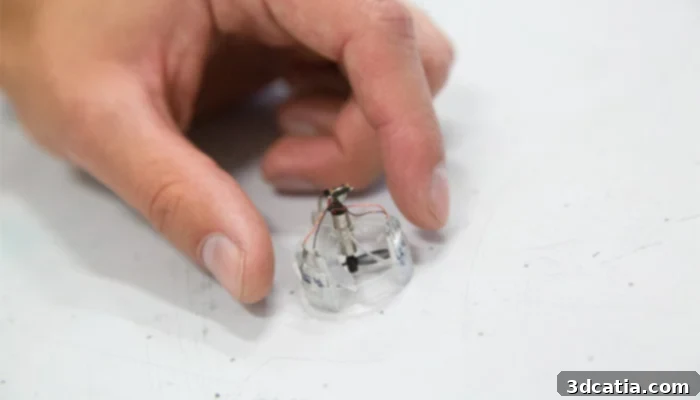
A groundbreaking project by students at the University of Pennsylvania has led to the creation of what they believe to be the world’s smallest self-powered, controllable drone, aptly named Piccolissimo. The Italian word “Piccolissimo” translates to “tiniest,” perfectly encapsulating the diminutive size of these innovative devices. The project actually encompasses two distinct versions. The first, a marvel of minimalist engineering, consists solely of a propeller, a compact power source, and an infrared receiver that dictates its rotational speed. This variant is incredibly small, no bigger than the size of a US quarter coin. The second version, while still remarkably tiny, incorporates additional elements to enable greater maneuverability, making it approximately one centimeter wider than its even smaller sibling. Crucially, the main body of both Piccolissimo drones is entirely 3D printed, showcasing the precision and capability of additive manufacturing at a micro-scale. Despite its minute size, Piccolissimo’s potential applications are vast and intriguing. Its small footprint and inherent simplicity lead to significantly cheap production costs, making it a highly attractive option for mass deployment. Such drones could be utilized in large numbers for extensive search and rescue missions, environmental monitoring of confined spaces, or other initiatives where size and cost-effectiveness are paramount. This little 3D printed drone truly redefines what is possible in miniaturized flight technology. Further details on this remarkable project can be found on their official website.
The innovative drones highlighted above vividly demonstrate the transformative power of 3D printing in the rapidly evolving field of unmanned aerial vehicles. From enhancing logistical efficiency and bolstering public safety to fostering open-source innovation and pushing the boundaries of miniaturization, additive manufacturing is enabling designs that were once considered impossible. It offers unparalleled flexibility in design, allows for rapid prototyping and iteration, and facilitates the creation of lightweight yet robust structures, all contributing to more efficient, customizable, and sustainable drone solutions. As the technology continues to advance, we can expect even more sophisticated and specialized 3D printed drones to emerge, further revolutionizing how we interact with and utilize aerial technology across various industries and in our daily lives.
What are your thoughts on these incredible 3D printed drones and the potential of additive manufacturing in aerospace? Share your insights and comments below, or join the conversation on our Facebook and Twitter pages! Don’t forget to subscribe to our free weekly Newsletter to stay updated with all the latest advancements and news in the dynamic world of 3D printing, delivered directly to your inbox!