
Revolutionizing Pandemic Response: USF’s 3D-Printed Nasal Swab Earns Prestigious Patents for Humanity Award
The Covid-19 pandemic, an unprecedented global health crisis, tragically claimed the lives of nearly 7 million individuals worldwide, profoundly impacting every facet of society. In the face of such devastation, an extraordinary spirit of collaboration and innovation emerged, as communities and institutions united to confront the monumental challenges. Among the many pioneering efforts, the University of Southern Florida (USF) has been singularly recognized for its profound contribution to global health, receiving the esteemed Patents for Humanity award from the U.S. Patent and Trademark Office (USPTO). This prestigious accolade honors innovators who leverage groundbreaking technology to address pressing global humanitarian issues, celebrating their commitment to societal well-being.
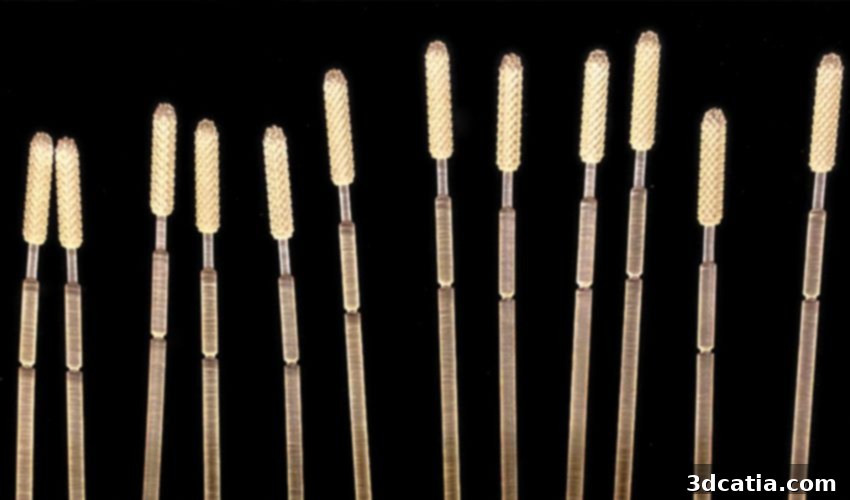
At the heart of USF’s recognition is its groundbreaking patented 3D-printed nasal swab. Developed with remarkable speed in March 2020, at the critical onset of the pandemic when testing supplies were critically scarce, this innovative prototype quickly became a beacon of hope. Crucially, the design files and data were not hoarded for profit but were generously offered free of charge to hospitals, clinics, and medical companies across the globe. This open-source approach facilitated widespread adoption and localized production, enabling healthcare systems to rapidly scale up their testing capabilities. To date, this collaborative spirit has led to the production of over 100 million swabs in more than 60 countries, underscoring the immense global impact of USF’s humanitarian innovation and the power of 3D printing technology in crisis response.
Collaborative Innovation: Developing a Critical Medical Device
The journey from concept to a globally adopted medical device was paved by an exemplary collaboration between several leading institutions. Teams from USF Health, Northwell Health, Tampa General Hospital, and Formlabs pooled their diverse expertise to accelerate the development of the 3D-printed nasal swab prototype. This interdisciplinary partnership brought together clinical insights, medical device design proficiency, and cutting-edge additive manufacturing capabilities, proving instrumental in overcoming the rapid development challenges posed by the pandemic. This synergy was essential in creating a solution that was not only innovative but also practical and scalable for global deployment.
The development process was not merely about creating a functional swab; it involved adhering to exceptionally stringent medical standards to ensure patient safety and diagnostic reliability. The prototypes had to meet critical requirements, including complete biocompatibility – meaning the materials used would not cause adverse reactions in the human body – and the ability to withstand an autoclave. Autoclaving is a crucial sterilization process that uses increased temperatures and pressure to eliminate all forms of microbial life, ensuring the swabs were safe for clinical use in various healthcare environments. Furthermore, the design prioritized patient comfort, a vital factor for widespread testing compliance, especially for repeated tests, making the experience as tolerable as possible.
Beyond material and sterilization compatibility, rigorous functional testing was paramount. Once the initial prototypes were developed, the collaborative team, working closely with researchers from the USF Health Morsani College of Medicine Department of Internal Medicine, conducted comprehensive evaluations. These tests focused on several critical aspects: viral retention efficiency (how well the swab collected viral material for accurate diagnosis), overall safety during use, and patient comfort. This meticulous scientific validation ensured that the 3D-printed swabs were not only rapidly manufacturable but also highly effective and safe for widespread clinical deployment, thereby playing a crucial role in accurate Covid-19 diagnosis and curbing the spread of the virus.
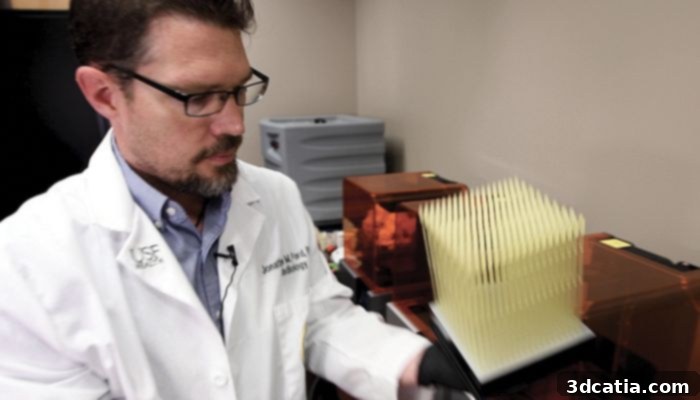
Jonathan Ford, a biomedical engineer in the Morsani College of Medicine’s Department of Radiology, holding nasal swabs (photo credits: Allison Long, USF Health Communications)
The Visionary Leadership Behind the Innovation
The successful development and global dissemination of the 3D-printed nasal swab were significantly driven by dedicated leadership. Dr. Summer Decker, PhD, a distinguished professor in the USF Health Morsani College of Medicine and the director for 3D Clinical Applications in USF Health’s Department of Radiology, spearheaded the 3D-printed NP swab team. Her unwavering commitment to leveraging advanced technology for immediate public health benefit was a guiding force throughout the project, ensuring the team remained focused on the critical humanitarian goal.
Reflecting on the team’s core mission, Dr. Decker emphasized, “Our goal from the start was to help as many people as possible, as fast and safely as possible.” This statement perfectly encapsulates the humanitarian urgency that motivated the team. It wasn’t merely about creating a product, but about deploying a solution on a massive scale to combat a rapidly spreading virus. The recognition by the U.S. Patent and Trademark Office is a profound testament to their tireless efforts. “We are very humbled by this recognition by the U.S. Patent and Trademark Office for our efforts and very grateful for this incredible opportunity to help not just USF Health and Tampa General Hospital, but also other hospitals and medical centers throughout the world,” she added. This highlights the selfless dedication to global health, moving beyond local impact to foster worldwide relief during a critical period, making an indelible mark on the pandemic response landscape.
Adding to the chorus of appreciation for this significant award, Dr. Todd Goldstein, PhD, who serves as the director of 3D Design and Innovation at Northwell Health, also shared his sentiments. His team’s expertise in 3D design played a pivotal role in refining the swab’s efficacy and manufacturability, ensuring it could be produced efficiently and reliably at scale. “It’s an honor to receive this recognition from the U.S. Patent and Trademark Office and we hope that our 3D printed nasal swab design helped alleviate burden during the height of the pandemic and showed what cooperation, even in times of crisis, can achieve,” Dr. Goldstein stated. His remarks underscore the tangible relief provided by their innovation and, more broadly, the power of collaborative problem-solving. This partnership exemplifies how diverse institutions can unite, leveraging their unique strengths to produce life-saving solutions when humanity faces its greatest trials, creating a lasting legacy of innovation and compassionate service that transcends geographical and institutional boundaries.
Acknowledging Broader Humanitarian Efforts: The 2022 Patents for Humanity Awardees
The Patents for Humanity award serves as a powerful testament to the ingenuity and selflessness demonstrated by innovators during global crises. While USF’s 3D-printed nasal swab stands out for its direct impact on testing infrastructure, it is one of several remarkable innovations recognized in the 2022 awards cycle for their contributions to fighting Covid-19. These awards collectively highlight the multifaceted approach taken by the scientific and industrial communities to combat the pandemic, addressing everything from prevention and diagnosis to treatment and protection.
Alongside the University of Southern Florida, four other distinguished recipients were honored for their critical advancements, showcasing a diverse array of life-saving innovations:
-
National Institute of Allergy and Infectious Diseases (NIAID): Recognized for its pivotal role in inventing the stabilized coronavirus spike proteins. This foundational research was absolutely critical, forming the basis for the development of many highly effective Covid-19 vaccines that saved millions of lives globally. NIAID’s work exemplified the vital role of public health research in pandemic preparedness and response, laying the scientific groundwork for vaccine success.
-
Canon Products: Honored for their rapid adaptation and production of Personal Protective Equipment (PPE). At a time when healthcare workers faced severe shortages, Canon’s ability to pivot its manufacturing capabilities to produce essential masks, face shields, and other protective gear ensured the safety of frontline heroes and helped curb the spread of the virus in medical settings, demonstrating industrial flexibility in times of need.
-
Regeneron Pharmaceuticals: Awarded for their development of REGEN-COV®, a groundbreaking monoclonal antibody cocktail. This therapeutic drug proved highly effective in treating Covid-19, particularly for patients at high risk of severe illness, significantly reducing hospitalizations and fatalities. Regeneron’s innovation provided a critical treatment option when few were available, offering a lifeline to many.
-
Gilead Sciences: Recognized for the creation of Remdesivir, one of the first antiviral medications approved for Covid-19 treatment. Remdesivir played a crucial role in the early stages of the pandemic, demonstrating efficacy in reducing recovery time for hospitalized patients and offering a vital tool in managing the severe acute respiratory syndrome caused by the virus, thus impacting clinical outcomes directly.
These diverse innovations collectively underscore the immense human effort and scientific breakthroughs that emerged from the global health crisis. Each recipient contributed a unique piece to the complex puzzle of pandemic response, from diagnostics and prevention to treatment and protection. Their achievements serve as a powerful reminder of the impact that dedicated research and innovation can have when directed towards the greater good. You can delve deeper into the contributions of all the Patents for Humanity Covid-19 category award recipients by visiting the USPTO’s official page HERE.
The Future of Medical Innovation and Humanitarian Impact
The recognition of USF’s 3D-printed nasal swab with the Patents for Humanity award is far more than an institutional accolade; it represents a powerful validation of additive manufacturing’s potential in rapid medical device deployment and highlights the profound impact of humanitarian-driven innovation. This project exemplifies how academic institutions, healthcare providers, and technology companies can converge their strengths to address urgent global needs effectively and swiftly. The open-source sharing of the swab design set a precedent for global cooperation in times of crisis, fostering localized production and democratizing access to essential medical tools, proving the value of intellectual property for public good.
The story of USF’s 3D-printed nasal swab serves as an inspiring blueprint for future responses to global challenges. It showcases how nimble, technologically advanced solutions, combined with a selfless commitment to public health, can overcome significant obstacles. This achievement solidifies the role of 3D printing as not just a manufacturing technology, but a vital enabler of resilience and innovation in the healthcare sector, particularly during emergencies. As we look ahead, the lessons learned from this pandemic, especially regarding rapid prototyping and open-source collaboration, will undoubtedly shape how future medical device development and humanitarian efforts are approached globally.
What are your thoughts on this groundbreaking award and the implications of 3D printing in humanitarian efforts? We invite you to share your perspectives in the comments section below, or engage with us on our social media platforms. Join the conversation on LinkedIn, Facebook, and Twitter. For those keen to stay abreast of the latest developments in additive manufacturing and other transformative technologies, don’t miss out on our free weekly Newsletter—delivered straight to your inbox. You can also explore a wealth of informative content, including all our videos, on our dedicated YouTube channel.
*Cover Photo Credits: Allison Long, USF Health Communications