
TCT Show 2023 Recap: Unveiling Cutting-Edge Innovations in Additive Manufacturing
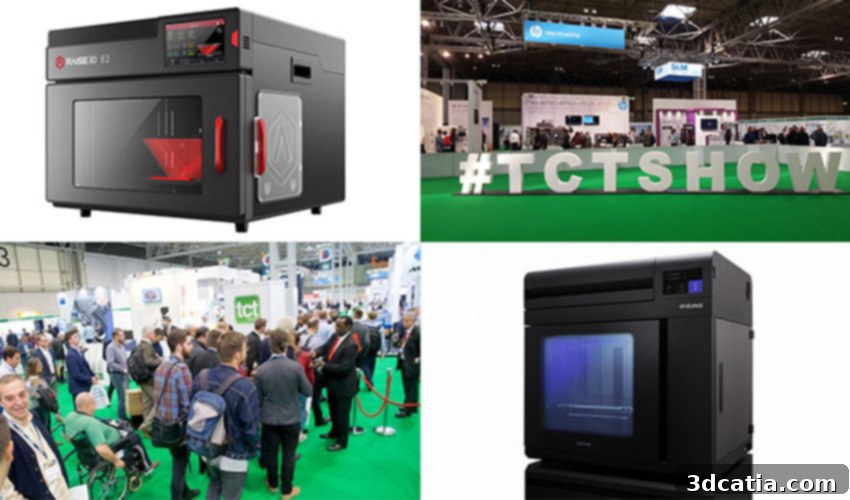
The TCT Show, a pivotal event in the additive manufacturing industry, has once again concluded, leaving a significant impact on the world of 3D printing. Over the past three days, Birmingham served as a vibrant hub where leading industry players converged to showcase and launch groundbreaking 3D printing solutions. This comprehensive recap aims to highlight the most exciting developments and product unveilings witnessed at this year’s show, providing a detailed overview of the innovations that are set to shape the future of manufacturing.
This year, the TCT Show welcomed an impressive nearly 10,000 visitors, eager to explore the offerings from almost 300 distinguished exhibitors. Renowned names such as HP, Ultimaker, Trumpf, Formlabs, Siemens, and Renishaw were among the many companies presenting their latest technologies and services. Beyond the exhibition floor, the event introduced several new and engaging programs designed to foster knowledge exchange and business growth. These included the TCT Summit, a user-led conference featuring insightful discussions and case studies from industry experts; the TCT Insights Stage, which hosted practical workshops like the fundamentals of additive manufacturing led by Graham Tromans; and TCT Connect, an innovative networking platform specifically designed to facilitate idea exchange and collaboration among professionals, aiming to accelerate business growth within the sector. These additions underscored TCT Show’s commitment to not only displaying innovation but also nurturing the community that drives it.
Key Product Launches and Showcases at TCT Show
The heart of TCT Show lies in its product launches, and this year did not disappoint. Numerous manufacturers chose this esteemed platform to debut their latest offerings, pushing the boundaries of what’s possible with additive manufacturing.
Zortrax Debuts the Endureal 3D Printing Platform
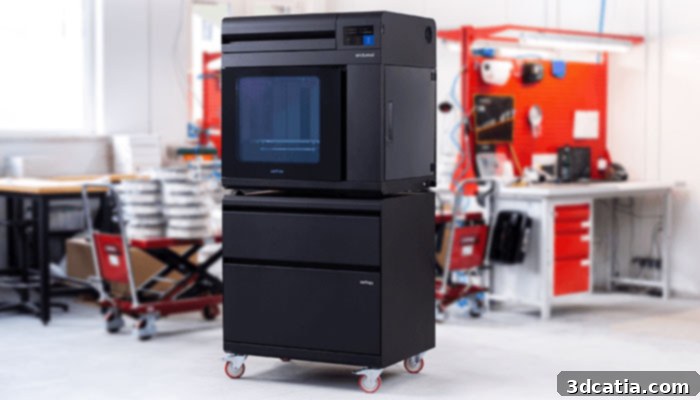
The Endureal 3D Printer from Zortrax
Zortrax, a Polish manufacturer celebrated for its comprehensive 3D printing solutions, made a significant splash with the debut of its 3D printing platform named Endureal. Positioned as a third-generation industrial solution, the Endureal has been meticulously engineered for demanding advanced engineering and medical applications. This machine is specifically designed for organizations and professionals requiring high-volume production capabilities, reliability, and precision. To meet these rigorous demands, Zortrax has integrated a plethora of advanced features into the Endureal. These include a robust build plate crafted from ferritic stainless steel, further enhanced with a PEI film for superior adhesion and durability, as well as thermally-shielded extruder compartments. These design choices ensure consistent temperature control, crucial for working with advanced technical materials and producing parts with exceptional dimensional accuracy and mechanical properties, even during extended print jobs. The Endureal represents a substantial leap forward for industrial users seeking robust and scalable additive manufacturing solutions.
Ultimaker Unveils the S3 and S5 Pro Bundle
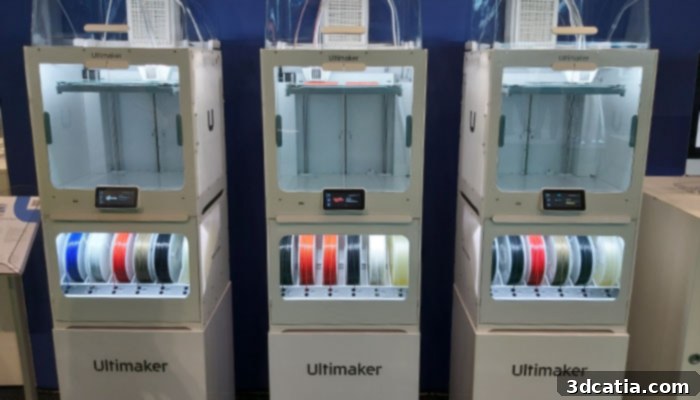
The complete S5 Pro Bundle from Ultimaker | Credits: 3Dnatives
Ultimaker, a global leader in desktop 3D printing, captivated attendees with two major announcements. The first was the launch of the Ultimaker S3, a powerful new addition to their S-line of professional 3D printers. Building upon the success of the Ultimaker 3 model, the S3 is engineered as a high-quality, composite-ready desktop solution, making it an ideal choice for offices, studios, and educational environments where space may be a premium but performance cannot be compromised. One of its standout features is its exceptional ease of use; Ultimaker has prioritized an intuitive touch interface and seamless software integration, ensuring a smooth and accessible user experience for professionals and beginners alike. The S3 boasts dual extrusion capabilities, enabling multi-material or multi-color printing, and offers a generous build volume of 230 x 190 x 200 mm. With the ability to achieve a fine 20-micron layer resolution, it delivers highly detailed and precise prints, further cementing Ultimaker’s reputation for producing reliable and versatile desktop machines.
Simultaneously, Ultimaker introduced the highly anticipated S5 Pro Bundle, an innovative upgrade designed to optimize the material management and environmental control for their flagship S5 3D printer. This comprehensive bundle includes two key components: an ‘Air Manager’ solution and a ‘Material Station.’ The Ultimaker S5, which we extensively tested and reviewed in 3Dnatives’ Lab last October, had already impressed us with its large build volume, heated build plate, vibrant color touch screen, and robust dual extrusion system. The Pro Bundle takes this experience to the next level. The Air Manager solution is a sophisticated filtration system meticulously designed to improve air quality around the printer, capturing up to 95% of ultrafine particles and enhancing safety in the working environment, particularly when printing with advanced or composite materials. The Material Station, on the other hand, is a revolutionary component aimed at enabling truly continuous 3D printing. It allows users to store and manage up to six spools of filament automatically. Each of the six compartments is equipped with a sensor to detect when a spool is finished, automatically loading the next one without manual intervention, significantly reducing downtime. Furthermore, the chamber is actively climate-controlled, maintaining the relative humidity below 40%, which is critical for preserving the integrity and print quality of hygroscopic filaments. This holistic approach to material handling and air management transforms the S5 into an even more powerful and efficient production tool.
Photocentric and Raise3D Showcase New Offerings
Another notable showcase at the event was Photocentric’s Liquid Crystal Magna solution. The LC Magna stands out for its unique combination of a significantly large build volume with exceptional printing accuracy. This makes it an incredibly versatile and appropriate tool for custom mass manufacturing applications, where both scale and precision are paramount. Its capabilities extend across various industries, proving valuable for diverse applications such as direct casting, rapid prototyping, the production of clear dental aligners, automotive components, highly detailed figurines, and much more. Photocentric’s innovative approach with the LC Magna positions it as a disruptive force in the resin 3D printing market, offering a compelling solution for businesses looking to scale their additive manufacturing operations efficiently.
Raise3D, a well-regarded name in the professional 3D printing space, also maintained a strong presence at TCT Show. Although its new E2 3D printer was officially launched on September 16th, the event provided a crucial platform for its public display and demonstration. This innovative machine, specifically reserved for the education sector in Europe, is slated for availability from November. The E2 is designed with features that make it particularly suitable for educational environments, such as independent dual extruders (IDEX) for multi-mode printing, an easy-to-use interface, and safety features ideal for classroom settings. Its robust build quality and reliability make it an excellent choice for teaching the principles of additive manufacturing and encouraging innovation among students and researchers.
MakerBot’s METHOD X Makes a Strong Impression
Last, but certainly not least, a machine that garnered immense excitement and attention was the METHOD X from MakerBot. Having launched at the beginning of August, the METHOD X had already generated considerable buzz within the industry, making its appearance at TCT Show a must-see for many attendees. The core selling point and transformative feature of the METHOD X is its unparalleled capability to work with genuine ABS material, a significant differentiator in the desktop 3D printer market. According to MakerBot, this “real ABS” offers superior performance compared to modified ABS formulations often used on other manufacturers’ desktop 3D printers. Specifically, real ABS printed on the METHOD X can withstand temperatures up to 15°C higher, boasts up to 26% greater rigidity, and exhibits up to 12% more strength. Furthermore, MakerBot highlights that the METHOD X’s meticulously engineered platform effectively prevents the common issues of warping or cracking that typically plague the printing of modified ABS on desktop platforms lacking heated chambers. The precision-controlled heated chamber ensures a stable printing environment, crucial for achieving industrial-grade accuracy and durability with genuine ABS. This capability opens up new possibilities for engineers and designers who require parts with robust mechanical and thermal properties, previously only achievable with more expensive industrial systems, making the METHOD X a truly innovative and impactful addition to the professional desktop 3D printing landscape.
Advancements in Materials for Additive Manufacturing
Beyond hardware, TCT Show also highlighted crucial advancements in 3D printing materials. Desktop Metal, a leader in metal additive manufacturing, recently expanded its range of compatible materials by adding the high-performance tool steel, H13. This material is particularly valuable for hot and cold tooling applications, offering excellent strength and wear resistance at elevated temperatures, which is critical for industrial molds, dies, and other demanding tools. Simultaneously, 3D Systems unveiled five new materials compatible with its Figure 4 3D printing platform. These innovative materials have been specifically engineered for the rapid production of plastic parts, eliminating the traditional need for costly and time-consuming tooling. This development significantly accelerates prototyping and short-run production cycles, providing manufacturers with greater flexibility and efficiency in bringing new products to market.
The TCT Show 2023 truly underscored the dynamic evolution of additive manufacturing, showcasing a future where 3D printing is more accessible, capable, and integrated into industrial workflows than ever before. From robust industrial machines to enhanced desktop solutions and advanced materials, the innovations presented will undoubtedly propel the industry forward.
What were your thoughts on TCT Show this year? We invite you to share your comments below or engage with us on our Facebook and Twitter pages! Don’t forget to sign up for our free weekly Newsletter to receive all the latest news in 3D printing directly in your inbox.