

The Sarco Pod: A 3D-Printed Solution for Autonomous Assisted Dying
The discourse surrounding euthanasia, often referred to as assisted suicide or voluntary assisted dying, has long been a subject of intense global debate. Spanning ethical, moral, legal, and personal dimensions, the concept of choosing the time and manner of one’s death continues to evolve in public perception and legislative frameworks. While distinctions between terms like active euthanasia, passive euthanasia, and assisted suicide are crucial for legal and medical clarity, the fundamental question remains: who should have control over the final moments of life? Globally, nations are grappling with these complex issues, leading to diverse legal landscapes. Recent years have seen significant shifts, with countries like Spain and Austria redefining their laws to permit greater access to end-of-life options in 2021. Yet, one nation consistently stands out as a pioneer in this field: Switzerland. Renowned for its progressive stance, Switzerland not only permits assisted suicide for its citizens but also for individuals from abroad, establishing itself as a unique hub for end-of-life care. Against this backdrop of evolving regulations and deeply personal choices, a revolutionary new device has emerged, poised to transform the conversation around assisted dying: the Sarco, a 3D-printed suicide pod.
In Switzerland, the path to assisted suicide has traditionally been facilitated by two prominent organizations, Exit and Dignitas. These groups play a pivotal role in guiding individuals through the process, which typically involves a rigorous medical and psychological assessment to confirm the person’s clear and unwavering will to die. Once approved, the individual is accompanied by a compassionate professional who ensures the process is carried out voluntarily and autonomously. The established method usually involves the self-administration of a prescribed substance, most commonly liquid sodium pentobarbital, mixed in a glass of water. Upon consumption, the person gently drifts into sleep, rapidly progressing into a deep coma within two to five minutes, leading to a peaceful death shortly thereafter. This method, while proven effective, still requires medical prescription and a degree of human intervention in preparation. The introduction of “Sarco” promises an alternative — a futuristic, 3D-printed euthanasia pod engineered to offer an even more serene and autonomous path to a chosen end, removing the need for prescribed drugs and direct medical involvement in the final act.
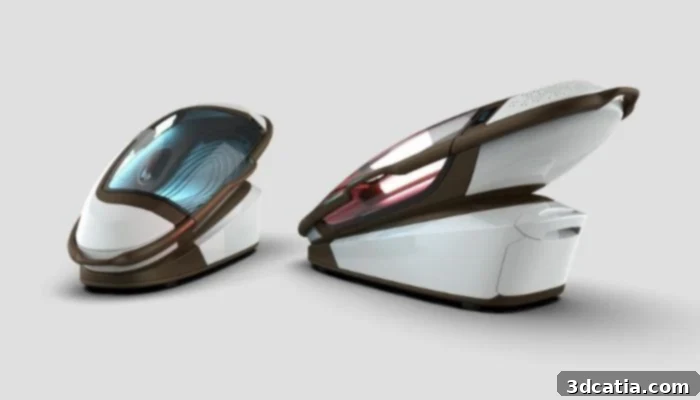
Sarco: An Autonomous Solution with Striking Design and Innovative Manufacturing
The visionary behind the Sarco pod is Dr. Philip Nitschke, an Australian physician and euthanasia activist often referred to as “Dr. Death” by media, but a champion of self-determination by his supporters. For many years, Dr. Nitschke observed the immense pressure and emotional toll placed on doctors and medical staff involved in assisted suicide procedures. He envisioned a future where individuals desiring to end their lives could do so with complete autonomy, free from reliance on medical assistance for the final act or the necessity of resorting to potentially traumatic and inhumane methods. His core philosophy centers on the right of every rational adult to choose the time and manner of their death, without external intervention once the decision is firmly made. This conviction led him to conceive of a machine that would empower individuals to take control of their dying process. To bring this audacious concept to fruition, Dr. Nitschke collaborated with Dutch product designer Alexander Bannink.
Bannink’s involvement was crucial in translating Dr. Nitschke’s philosophical vision into a tangible and aesthetically pleasing product. According to Bannink, the design of the Sarco was a paramount focus during its development. The result is a capsule that, at first glance, evokes images of a sleek sleeping pod from a science fiction film or a modern, almost utopian coffin. This deliberate design choice aims to destigmatize the act of dying, presenting it not as a grim medical procedure but as a peaceful transition. The name “Sarco” itself is a shortened form of “sarcophagus,” ancient Greek for “flesh-eating coffin,” ironically recontextualized here as a vessel for a dignified end. This thoughtful approach extends to its intended functionality: the Sarco’s operation is designed to be intuitive and self-explanatory. This user-friendly interface is critical to Dr. Nitschke’s goal of achieving widespread, global acceptance for the method, ensuring that individuals can activate the process independently and confidently, without requiring complex instructions or external intervention.
The manufacturing process of the Sarco pod also champions innovation, specifically leveraging the transformative power of 3D printing technology. Early prototypes of the Sarco were produced using a BigRep studio 3D printer, demonstrating the viability of additive manufacturing for this unique application. The initiative behind Sarco specifies the use of biodegradable wood amalgam for its construction, highlighting a commitment to environmental consciousness even in death. A particularly innovative feature is the design of the capsule’s upper section, which is detachable and can serve directly as a coffin. This thoughtful integration streamlines the post-mortem process and provides an element of practicality and respect. According to Alexander Bannink, the adoption of 3D printing for Sarco’s production offers multiple significant advantages beyond just intricate design possibilities. It greatly reduces the need for human labor in the manufacturing of each capsule, allowing for decentralized production. The ultimate goal is to commercialize the product design, enabling the Sarco capsule to be manufactured locally, at a desired location anywhere in the world, making the option of an autonomous, peaceful end more accessible and globally distributed.
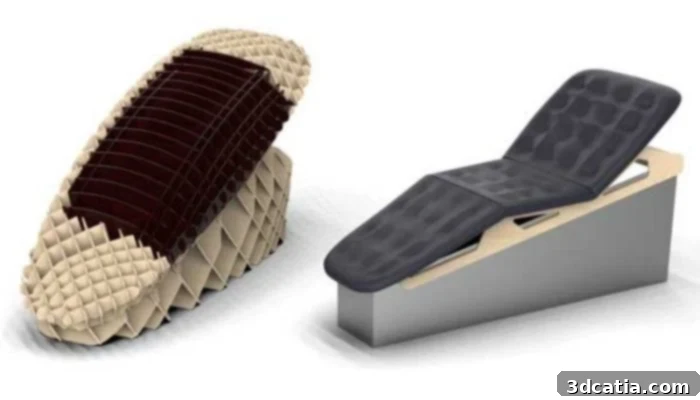
The Sarco Experience: A Peaceful, Controlled Path to End-of-Life
One of the paramount advantages of the Sarco capsule is its inherent portability and flexibility. Designed to be transported to virtually any desired location, it offers individuals seeking assisted dying the profound ability to choose their preferred place of death – be it in a tranquil natural setting, a familiar home environment, or any other location that brings them peace. This mobility provides an unparalleled degree of personal control over the final moments, aligning perfectly with Dr. Nitschke’s philosophy of autonomous dying. Once the Sarco is positioned and prepared, the individual enters the capsule, closes the transparent doors, and initiates the process by pressing a single, clearly marked button. This act triggers the release of nitrogen gas into the interior, rapidly and seamlessly displacing the oxygen. The oxygen content within the capsule swiftly drops from a normal atmospheric level of 21 percent to a negligible 1 percent. This rapid oxygen depletion is crucial to the experience.
Unlike methods involving suffocation or asphyxiation, the experience within the Sarco is designed to be free from panic and distress. As the oxygen level decreases, the person does not experience the sensation of choking, which is triggered by a build-up of carbon dioxide in the blood. Instead, the process induces a state of hypoxia (lack of oxygen) and hypocapnia (lack of carbon dioxide). Within approximately 30 seconds of activation, the individual gradually loses consciousness. The sensation described by those who have simulated the experience (without reaching the point of death) is often characterized by a feeling of disorientation, followed by a sense of euphoria or lightheadedness, akin to experiencing altitude sickness, but without the accompanying physiological discomfort of high altitudes. This peaceful transition prevents any feeling of suffocation or struggle. Death then ensues within 5 to 10 minutes, primarily due to cerebral hypoxia, a lack of oxygen reaching the brain, leading to irreversible brain damage and cessation of vital functions. The entire process is intended to be calm, serene, and entirely within the control of the individual, providing a dignified and humane exit.
Ethical Considerations and the Future of Sarco
The emergence of the Sarco pod has, unsurprisingly, ignited a fresh wave of ethical and legal discussions around the world. While proponents laud it as a significant step towards true autonomy and a compassionate option for a dignified end, critics raise concerns regarding its implications for suicide prevention, the potential for misuse, and the societal value placed on life. Medical ethics committees, disability rights groups, and religious organizations have all voiced varied perspectives, contributing to the complex tapestry of public opinion. The debate often centers on whether society should facilitate such autonomous means of dying, and what safeguards are necessary to prevent vulnerable individuals from making irreversible decisions under duress or without full capacity. The very idea of a “suicide machine” challenges conventional medical paradigms, pushing the boundaries of what constitutes acceptable end-of-life care.
Despite these ongoing debates, Dr. Philip Nitschke remains optimistic about Sarco’s future. He anticipates that the Sarco pod could be available for use in Switzerland in the near future, potentially within the next year, following legal reviews that have reportedly found no barriers to its deployment from an official standpoint. Its approval in Switzerland underscores the country’s unique legal framework regarding assisted dying, which emphasizes individual self-determination. The concept’s global potential is also immense; if successful in Switzerland, Sarco could serve as a powerful catalyst for legislative change and public discourse in other nations wrestling with end-of-life legislation. A “Sarco” prototype has already been showcased, for instance, at the Museum für Sepulkralkultur in Kassel, Germany, demonstrating the cultural and historical significance this invention holds, even before widespread adoption. As technology continues to advance, and societal values around life and death evolve, innovations like Sarco force us to confront profound questions about individual rights, suffering, and the ultimate control over one’s own destiny. For those interested in learning more about the project, further information about Sarco and its mission can be found HERE.
The Sarco pod represents a bold leap into the future of end-of-life choices, combining advanced 3D printing technology with a profound philosophical aim: to empower individuals with ultimate control over their final moments. It challenges traditional notions of assisted dying, moving away from medical intervention towards a fully autonomous, peaceful, and self-directed process. While the ethical and legal landscapes continue to shift and adapt, Sarco stands as a testament to human ingenuity in addressing one of life’s most fundamental and personal dilemmas. Its journey from concept to potential widespread availability will undoubtedly spark further global conversations, shaping how societies approach death, dignity, and individual liberty in the years to come.
What are your thoughts on the Sarco pod and its potential impact on end-of-life discussions? We invite you to share your perspective in a comment below or join the conversation on our LinkedIn, Facebook, and Twitter pages! Don’t forget to sign up for our free weekly Newsletter here to receive the latest 3D printing news straight to your inbox. You can also find all our videos on our YouTube channel for more insights into additive manufacturing innovations.
*All Photo Credits: Sarco