
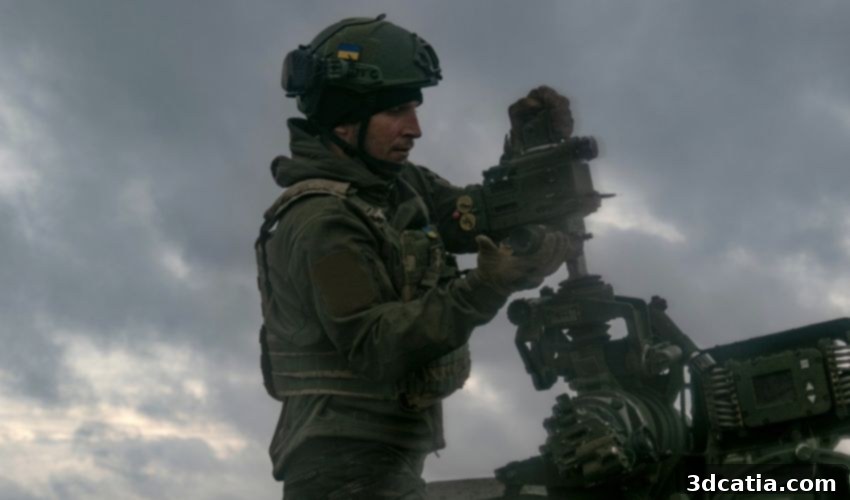
Revolutionizing Battlefield Logistics: How US-Supplied Industrial 3D Printers Empower Ukraine’s Defense
In Ukraine’s unwavering struggle against Russian aggression, the strategic importance of advanced manufacturing technologies, particularly 3D printing, has profoundly escalated. This innovative approach, often referred to as additive manufacturing, has proven to be a transformative force, injecting agility and resilience into the Ukrainian war effort. Its inherent ability to produce items on-site, on-demand, and with transportable setups offers unparalleled advantages in a dynamic conflict zone. The applications are remarkably diverse, spanning critical frontline requirements to essential civilian support. For military purposes, 3D printing has facilitated the rapid creation of vital weapons components, customized parts for various machinery, and even entire drones, significantly bolstering defensive and offensive capabilities. Beyond the battlefield, this technology extends its reach into the civilian sector, aiding in emergency construction projects, providing urgent medical supplies like tourniquets, and producing life-changing prostheses for victims of the conflict. Moreover, 3D scanning technology has been deployed in efforts to document war crimes, striving to uncover justice amidst the ongoing turmoil. The latest development signifies a major leap forward: the United States has announced the delivery of several large, industrial-grade 3D printers to Ukraine. These powerful machines are poised to provide the Ukrainian armed forces with an unprecedented capability to produce spare parts and critical replacements for their battlefield equipment directly in-theater, marking a pivotal moment in wartime logistics.
This significant technological transfer was highlighted by US Under-Secretary of Defense for Acquisition and Sustainment William LaPlante during a recent address at the Center for New American Security (CNAS) think tank. LaPlante confirmed that these robust industrial 3D printers were delivered to Ukraine just last month, with Ukrainian engineers having already completed comprehensive training on their operation and maintenance. “It’s going right in-theater and they’re printing all their repair parts,” LaPlante emphatically stated, underscoring the immediate and direct impact these printers will have. The primary objective is clear: to enable the on-location manufacturing of essential components for Ukrainian military vehicles, aircraft, and various machinery. This capability dramatically reduces reliance on traditional, often sluggish, supply chains and logistical networks, which are particularly vulnerable in a conflict zone. By fabricating parts precisely where and when they are needed, Ukraine can achieve much faster repair times, significantly enhancing equipment readiness and operational tempo, thereby gaining a crucial edge in maintaining its defense capabilities against Russia.
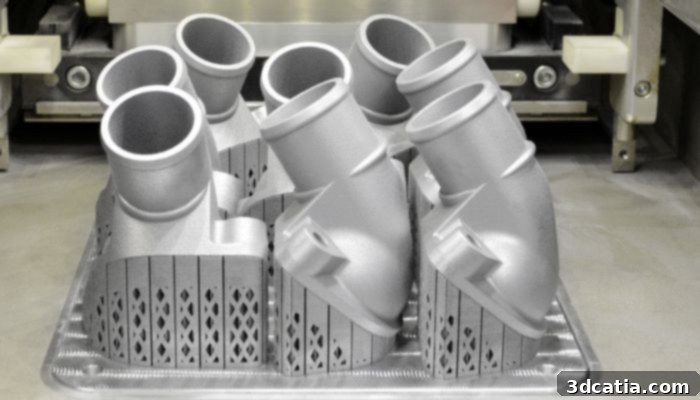
3D printing has already been used to manufacture spare parts in the automotive industry using methods such as laser powder bed fusion (Photo credits: Mercedes-Benz)
While the specific makes or models of these industrial 3D printers remain undisclosed, LaPlante’s description of them being “the size of a small truck” offers valuable clues regarding their capabilities and potential types. Such a scale strongly suggests high-capacity systems designed for robust, large-format manufacturing, often involving metal or advanced ceramics. One possibility includes **binder jetting** 3D printers, known for their ability to produce multiple parts in a single batch with relative speed and material versatility, creating complex geometries efficiently. Another strong contender could be **powder bed fusion (PBF)** systems, which encompass technologies like Selective Laser Sintering (SLS) or Laser Powder Bed Fusion (LPBF). PBF printers are renowned for producing high-strength, functional metal or ceramic components with excellent mechanical properties, crucial for demanding military applications, though not all PBF systems are truck-sized. Alternatively, these could be **direct energy deposition (DED)** printers. DED technology is frequently employed for repairing existing metal components, adding material directly onto damaged parts, and is characterized by its large build envelopes and ability to work with a wide range of metal alloys. Its capacity for localized repair and robust material handling makes it exceptionally suitable for maintaining heavy military equipment. The deployment of such advanced industrial systems underscores a commitment to providing Ukraine with durable, high-performance replacement parts, moving beyond lighter-duty applications to support heavy machinery and critical infrastructure.
Sending Advanced 3D Printers to Empower Ukraine’s Defense
The ongoing conflict has placed immense pressure on Ukraine’s ability to maintain and repair its military equipment, making the sustained churn of repair parts a continuous, critical challenge. This persistent need has, in many instances, spurred remarkable creativity and necessitated the adoption of ad-hoc, often ingenious, solutions by Ukrainian forces and civilian volunteers. These grassroots efforts, while effective in their immediate context, frequently operated outside of formal channels, lacking standardized designs or official technical specifications. The arrival of these industrial-grade 3D printers from the US, however, marks a pivotal shift towards standardizing and streamlining these vital repair processes. With these new systems comes access to official schematics and comprehensive “tech data packages,” which were previously unavailable for many improvised repairs. William LaPlante alluded to this earlier phase of Ukrainian ingenuity: “Ukrainians were initially 3D printing their own parts before they even had the tech data packages. And as [Assistant Secretary of Defense for Sustainment] Chris Lowman says, ‘When your country is under existential attack, intellectual property laws are just mildly interesting,’” LaPlante clarified. He then added, “but we’ve cleaned that up, we’ve gotten them – with other countries – gotten them all the tech data packages.” This statement highlights a transition from necessity-driven improvisation to a formally supported, scalable, and technically robust sustainment strategy. Providing official technical data alongside the advanced hardware ensures that the printed parts meet precise specifications, enhancing reliability, performance, and interoperability across the Ukrainian military’s diverse arsenal. This formalization not only optimizes current repair efforts but also lays the groundwork for a more resilient and self-sufficient logistics framework.
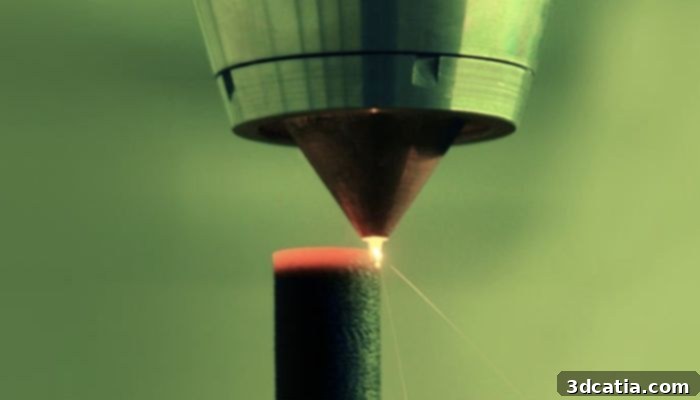
DED 3D printing can be used to make repairs directly on the broken object. It has been used extensively in the industrial and aerospace sectors (photo credits: BeAM)
The integration of these industrial 3D printers represents a profound enhancement to Ukraine’s military capabilities, providing a potent new tool in their arsenal. With the capacity for rapid, on-demand repairs directly in the field, these systems will significantly minimize downtime for critical equipment, ensuring that machinery and materials remain operational and effective against aggressors. This ability to swiftly mend damaged vehicles, weapon systems, and other vital assets is not merely a logistical convenience; it is a strategic advantage that can dramatically impact the outcome of skirmishes and prolonged engagements. By reducing the logistical footprint and accelerating the repair cycle, Ukraine can maintain a higher state of operational readiness, allowing its forces to respond more effectively to dynamic battlefield conditions. This initiative also signals a broader shift in military sustainment strategies, demonstrating how additive manufacturing can revolutionize wartime logistics, making forces more agile, resilient, and self-reliant. As Ukraine continues its valiant fight against tyranny, we are certain to witness further innovations and adaptations of 3D printing technology, not just for repairs but potentially for customization and even the rapid prototyping of new solutions directly on the frontlines. This technological leap solidifies additive manufacturing’s critical role in modern defense, offering a blueprint for future conflict zones and humanitarian efforts alike.
What are your thoughts on Ukraine’s rapidly expanding 3D printed repair capabilities and the strategic implications of these new industrial printers? Share your perspective in a comment below or join the conversation on our LinkedIn, Facebook, and Twitter pages! Don’t miss out on the latest advancements in additive manufacturing—sign up for our free weekly Newsletter here to get the freshest 3D printing news delivered straight to your inbox! You can also find all our engaging videos and in-depth analyses on our YouTube channel.
*Cover Photo Credits: АрміяInform