
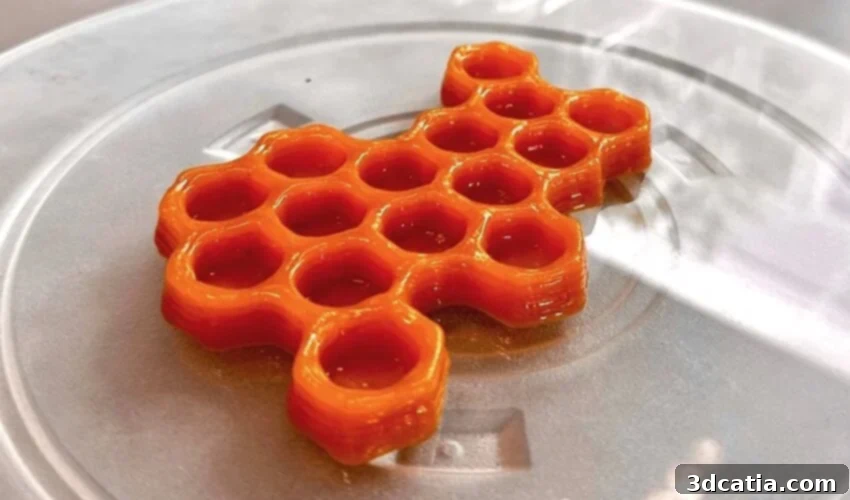
Revolutionizing Cuisine: How Food 3D Printing with Moodbytes is Shaping the Future of Gastronomy
Food 3D printing stands at the forefront of culinary innovation, transforming the way chefs and restaurants approach dish creation. This groundbreaking technology empowers culinary artists to design and produce truly unique, highly personalized gastronomic experiences. Already, avant-garde and fine-dining establishments are leveraging food 3D printers to craft intricate shapes and visually stunning dishes that would be nearly impossible to achieve through traditional cooking methods. Beyond their exceptional aesthetic appeal, food 3D printers offer significant practical advantages in both the preparation and elegant presentation of meals. As an evolving technology, food 3D printing is poised for greater accessibility and affordability, sparking the emergence of innovative companies and initiatives dedicated to promoting this advanced manufacturing method within the food service sector. Among these pioneers is Moodbytes, a company making significant strides in this exciting domain. We had the distinct pleasure of speaking with Marcio Barradas, CEO and founder of Moodbytes, to delve deeper into their revolutionary application of food 3D printing and his vision for the future of food.
Meet Marcio Barradas: A Visionary in 3D Food Technology
3DN: Could you introduce yourself and tell us about your connection with 3D technologies?
My name is Marcio Barradas, and I am the CEO and founder of Moodbytes. My journey in the world of 3D food began even earlier with FoodInk, which proudly held the title of one of the world’s first 3D printed food restaurants. My profound connection with 3D technologies stems from a deep belief in their potential to bridge FoodTech and FoodDesign, unlocking unprecedented levels of artistic and culinary creativity for chefs and artists alike. For the past seven years, I have been immersed in 3D technologies, accumulating extensive experience that I’ve shared with consumers and the wider food industry at numerous gastronomic events. At FoodInk, our customers didn’t merely come to eat; they sought an immersive experience, a chance to savor distinct and delicious dishes meticulously crafted by renowned chefs, all while ensuring the ingredients were healthy and exceptionally tasty. This blend of innovation, health, and artistic expression has been the cornerstone of my work.
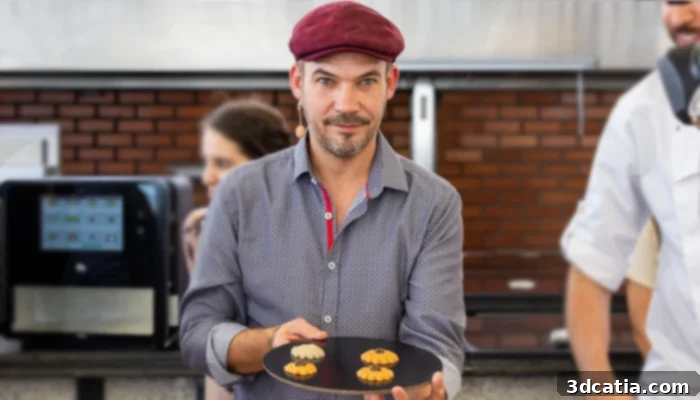
Marcio Barradas, CEO and founder of Moodbytes and FoodInk, is a trailblazer in food 3D printing.
The Genesis of Moodbytes: From FoodInk to Culinary Innovation
3DN: What is Moodbytes, and how did the idea for the company come about?
Moodbytes is far more than just a company; it’s a dedicated hub for innovation in gastronomy. We are intensely focused on researching, developing, and implementing the very latest trends and technologies related to the food world. Our mission is holistic: to elevate every process, from sustainable cultivation practices to the ultimate act of consumption, thereby forging a more sustainable and intelligent future for gastronomy. We achieve this through an innovative methodology that seamlessly integrates modern technologies with personalized care and the fundamental essence of food itself. This approach not only propels culinary advancement but also supports and motivates improved health, pleasure, and unparalleled personalization in dining.
The inception of Moodbytes can be directly traced back to the groundbreaking success of FoodInk. Launched in 2015, FoodInk was the pioneering company that began manufacturing 3D-printed meals using state-of-the-art technologies. Its impact was truly global, garnering over 35 million views across various media platforms, featuring in more than 75 renowned publications worldwide, and accumulating an astounding waiting list of over 3,000 people eager to experience FoodInk meals. The overwhelming success and media attention surrounding FoodInk underscored the immense potential and public appetite for 3D printed food. Building on this invaluable experience and establishing itself as a representative image of innovation in gastronomy across the globe, Moodbytes officially started operations in 2017. It was a natural evolution, channeling the accumulated knowledge and public recognition into a broader, more ambitious vision for the future of food.
Moodbytes in Action: Harnessing Food 3D Printing for Culinary Excellence and Sustainability
3DN: How are you using food 3D printing, and can you tell us more about Moodbytes’ latest projects?
At Moodbytes, we primarily utilize Foodini, an advanced food 3D printer that championing cooking with only fresh, real ingredients. Foodini distinguishes itself as one of the first 3D printers capable of printing all kinds of food, from savory delights to sweet confections, all while adhering to our strict philosophy of using authentic, fresh components. The Foodini system is comprehensive, arriving complete with empty stainless steel food capsules that chefs can fill with their desired ingredients. This technology dramatically expands the creative horizons for culinary professionals, allowing them to rapidly transform novel ideas into unique, surprising, and delicious dishes. The beauty of Foodini lies not just in its initial creation capabilities but also in its ease of repetition, enabling chefs to consistently reproduce complex dishes for multiple guests with perfect precision.
Beyond creative freedom, Moodbytes is also pioneering personalized nutrition. We are exploring the incredible potential of combining food 3D printing with advanced bioinformatics. Thanks to a sophisticated food DNA test, we are able to obtain a consumer’s unique genetic map. This invaluable data allows us to precisely identify which foods are most beneficial for them, enabling us to design modern meals that are not only delicious but also perfectly tailored to their individual physiological needs. This personalization extends to tailoring food for optimal health benefits, moving beyond a one-size-fits-all approach to diet.
3D printers like Foodini also simplify numerous complex processes that traditionally demand significant time and investment, particularly in intricate culinary tasks such as chocolate making. From design conceptualization to iterative trial-and-error, 3D printing streamlines these stages, allowing for unparalleled precision and efficiency. Imagine being able to design any type of chocolate – whether 90%, 75%, or 45% cocoa, milk, white, or any other variation – and print it effortlessly, whether at home or in a professional kitchen. Today, we can offer automated repetition processes within the kitchen, empowering users to replicate the exact same recipe countless times, ensuring consistency and quality. Furthermore, this technology allows for the preparation of the same dish with diverse ingredients, catering to various dietary requirements or flavor preferences seamlessly. Our key partner in this innovative endeavor is Natural Machines, the company behind Foodini. Their advanced 3D printers have been instrumental in enabling us to create some truly amazing meals, even utilizing our specialized freeze-dried powders for unique textures and flavors.
In 2023, Moodbytes actively participated in several prominent food events, including WEP at KAUST and Dare2Change in Porto. These platforms provided us with invaluable opportunities to demonstrate to a wide audience how 3D printing technology can serve as an ingenious solution for food waste recycling, showcasing its potential for enhanced sustainability within the food industry. This aspect underscores our commitment not just to innovation, but to responsible and environmentally conscious culinary practices.
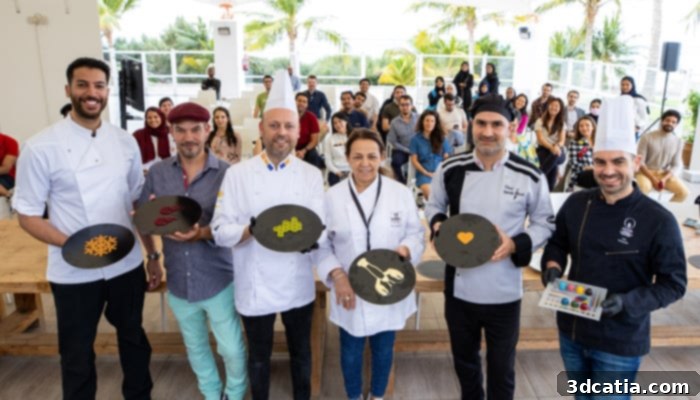
Moodbytes is dedicated to spreading the adoption and understanding of food 3D printing across various culinary applications.
Advantages and Limitations: A Balanced View of Food 3D Printing
3DN: What are the advantages of this method over traditional cooking? Are there any limitations?
The advantages of food 3D printing, especially within haute cuisine, are becoming increasingly evident and impactful. This method unlocks unprecedented avenues for experimentation with shapes, textures, and flavors, enabling chefs to craft truly distinctive dishes that set them apart from the competition. The unparalleled food customization offered by 3D printing holds immense value across all sectors of the food industry. Renowned chefs like Paco Pérez, Paco Morales, Davide Oldani, and Sergi and David Torres have already integrated these advanced technologies into their Michelin-starred restaurants, leveraging them to push the boundaries of culinary artistry and create novel dining experiences. Thanks to food 3D printing, we gain the ability to precisely tailor meals to individual tastes and dietary preferences. Crucially, it empowers us with complete transparency, allowing us to know exactly what we are eating, ensuring balanced nutrition, and mitigating potential side effects from unknown ingredients.
With the aid of 3D printers, consumers can meticulously select and control the ingredients they wish to ingest, utilizing their preferred components to craft healthy, bespoke meals. This technology provides a revolutionary means to store, concentrate, and preserve food in a manner that is not only new but also safer, more sustainable, and highly personalized. It allows for the precise delivery of essential nutrients to every individual, optimized for the healthiest possible intake. Moodbytes is actively creating a novel experience in how people interact with their food, transforming a necessity into an engaging and personalized journey. This extends to specialized applications, such as for babies, where parents can print purées of any flavor, achieving the exact textures their children prefer, ensuring a personalized, healthy, and enjoyable diet from an early age.
Despite its numerous benefits, this innovative method does present two primary limitations: economic accessibility and energy consumption. For a 3D printing machine to function, it requires a continuous power supply. This constant energy demand means that we are actively researching and developing more environmentally-friendly energy solutions to enhance sustainability. Furthermore, the initial investment in 3D printing technology remains relatively high, posing an economic barrier for broader adoption, particularly for smaller establishments or individual consumers. Addressing these cost and energy challenges is critical for the widespread integration of food 3D printing into everyday culinary practices.
The Future of Additive Manufacturing in the Culinary Field
3DN: How do you see the future of additive manufacturing in the culinary field?
Looking ahead, the future of additive manufacturing in the culinary field is incredibly promising, with a strong emphasis on natural and sustainable ingredients. Right now, a significant part of our focus is directed towards sourcing and developing natural alternatives to processed food products. Our goal is to replace existing processed ingredients with natural counterparts that possess at least the same beneficial properties, ensuring that the end result – in terms of texture, flavor, and technological characteristics – is largely equivalent or even superior. The ultimate aim is to create foods that offer tangible health advantages, or at the very least, have no negative impact on our well-being. This shift towards natural, unadulterated ingredients, combined with the precision and customization offered by 3D printing, will enable a new era of highly nutritious, personalized, and gastronomically sophisticated meals.
We envision a future where 3D food printers are commonplace, not just in professional kitchens but also in homes, allowing individuals to customize their diets based on real-time nutritional needs, health goals, and personal preferences. This will involve the development of an even wider array of printable food materials, including plant-based proteins, customized dietary supplements, and foods designed for specific medical conditions. The technology will also continue to evolve in terms of speed, affordability, and ease of use, making it accessible to a much broader audience. Furthermore, the integration of AI and machine learning will play a crucial role, enabling printers to learn and adapt to user preferences, optimize recipes for nutritional content, and even minimize food waste through precise portion control and ingredient usage. This holistic approach, combining technological advancement with a deep commitment to natural ingredients and health, will truly redefine our relationship with food.
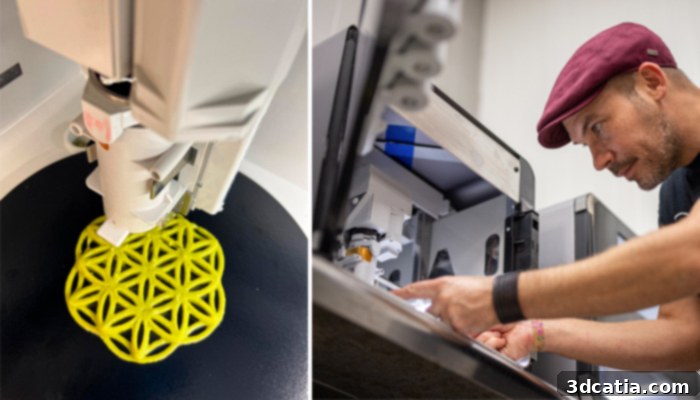
A closer look at the intricate possibilities offered by food 3D printing technology.
Final Thoughts from Moodbytes
3DN: Any last words for our readers?
At Moodbytes, we hold a firm belief that by harnessing the transformative power of 3D printing technology, we are capable of forging a more sustainable and deeply personalized approach to both food production and consumption. Our commitment is unwavering as we continue our intensive research and development work in this dynamic area. We sincerely hope that our efforts will inspire others to join us on this exciting journey towards a healthier, more sustainable, and unequivocally more delicious future for all. We extend our deepest gratitude for your interest in our pioneering work and eagerly anticipate the opportunity to meet you soon at one of our upcoming events or demonstrations. To delve even further into the world of Moodbytes and explore our innovative projects, please click HERE.
What are your thoughts on Moodbytes and their groundbreaking utilization of food 3D printing? We encourage you to share your perspectives in a comment below or engage with us on our LinkedIn, Facebook, and Twitter pages! Don’t miss out on the latest advancements; make sure to sign up for our free weekly Newsletter here to get the freshest 3D printing news delivered straight to your inbox! You can also discover all our insightful videos on our dedicated YouTube channel.
*All Photo Credits: Moodbytes