

Fatal 3D Printer Fire Prompts Landmark Lawsuit Against Tronxy and Alibaba: Unpacking Product Liability and Essential Safety
In a tragic incident that highlights the critical importance of product safety in the burgeoning world of additive manufacturing, the parents of Calvin Yu, who perished in a 2020 fire linked to a 3D printer, have initiated a lawsuit against both the printer manufacturer, Tronxy 3D, and the e-commerce giant, Alibaba. This devastating event unfolded when a Tronxy X5SA 24V 3D printer allegedly overheated, igniting a nearby couch and resulting in fatal injuries to Calvin Yu. Filed in San Francisco, the lawsuit seeks significant damages from the two corporations, citing a range of complaints including negligence, product liabilities stemming from printer defects, and a fundamental failure to adequately warn consumers about potential hazards. This case not only brings to light the personal tragedy of the Yu family but also underscores broader questions about accountability within the global supply chain for consumer electronics.
Alibaba, a name synonymous with global e-commerce and digital innovation, is a multinational technology powerhouse with diverse interests spanning retail, internet services, and cloud computing. Crucially for this lawsuit, Alibaba owns AliExpress, a popular online retail platform based in China. Much like its Western counterpart Amazon, AliExpress is renowned for its vast selection of products, often offering worldwide free shipping and competitive prices. This accessibility, while beneficial for consumers, places a significant burden of responsibility on the platform concerning the quality and safety of the products it facilitates. Tronxy 3D, on the other hand, is a well-known Chinese manufacturer in the 3D printing industry, recognized for producing a variety of affordable 3D printers, including accessible DIY options. Their product line primarily focuses on Fused Deposition Modeling (FDM), LCD, and ceramic printers, catering to a wide range of hobbyists and professionals. The printer at the center of this tragic incident, the Tronxy X5SA, is one of their more popular models, widely available for as little as $280.00, and was reportedly purchased through AliExpress, directly linking both defendants to the product’s distribution.
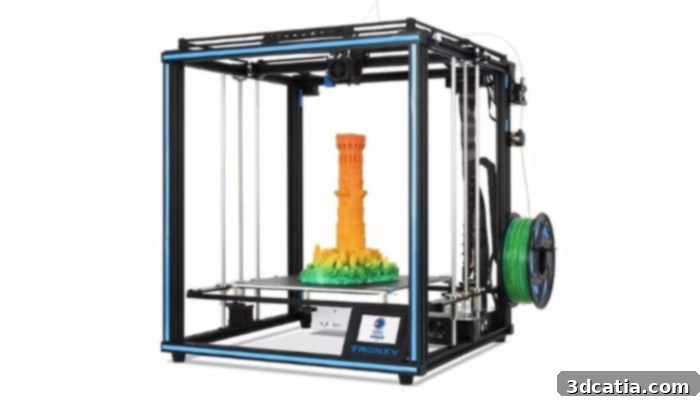
The Tronxy X5SA 24V 3D Printer, central to the lawsuit, allegedly caused the fatal fire due to overheating (photo credits: Tronxy).
The Yu Family’s Case for Damages Against Tronxy and Alibaba: Allegations of Negligence and Product Defects
The court documents reveal that the San Francisco Fire Department conducted a thorough investigation, confirming that the Tronxy 3D printer, which was plugged into an outlet, was indeed the direct cause of the fire after it overheated. Their findings further concluded that Calvin Yu’s death was a direct consequence of thermal injuries sustained in the blaze, attributed to what is described as a defective 3D printer. Hoi Kwong Yu and Janice Yu, Calvin’s parents, are now seeking substantial damages, asserting that the 3D printer was being operated as intended at the time of the incident, thereby establishing its inherent defectiveness and malfunction. Their legal strategy places considerable blame on both Alibaba and Tronxy for alleged negligence, particularly for failing to provide adequate warnings about the printer’s potential dangers and for not ensuring the machine underwent proper safety checks before being sold to consumers. The court filings explicitly state: “[The] Defendants…had a duty to warn Decedent Calvin Yu about the defects in, and the dangers associated with, use of the Tronxy X5SA 24V 3D printer of which they were aware, or in the exercise of ordinary care, should have been aware, at the time the printer left the Defendants’ control.” This statement forms a crucial pillar of their argument, highlighting the perceived breach of duty by both entities.
Further exacerbating the allegations, discussions among users on platforms like Reddit suggest that the fire could have been precipitated by a previously identified critical safety flaw in certain Tronxy printers: the disabling of thermal runaway protection. This essential safety feature is designed to prevent a 3D printer from uncontrollably heating up, automatically shutting down the heating elements if the temperature rises beyond a safe threshold without proper feedback. The issue was initially brought to light by Angus Deveson of Maker’s Muse, a prominent voice in the 3D printing community, who promptly alerted the company. Tronxy reportedly responded by updating the firmware across its 3D printer range to enable this vital protection. However, a critical timeline discrepancy emerges: the printer involved in the fire was reportedly purchased on November 9th, 2019, while Maker’s Muse published its update concerning the thermal runaway issue on November 19th, 2019. This suggests the specific printer might have been bought prior to the firmware update being widely available or applied, though it is important to emphasize that this remains a speculative element in this particular case, awaiting further legal scrutiny.
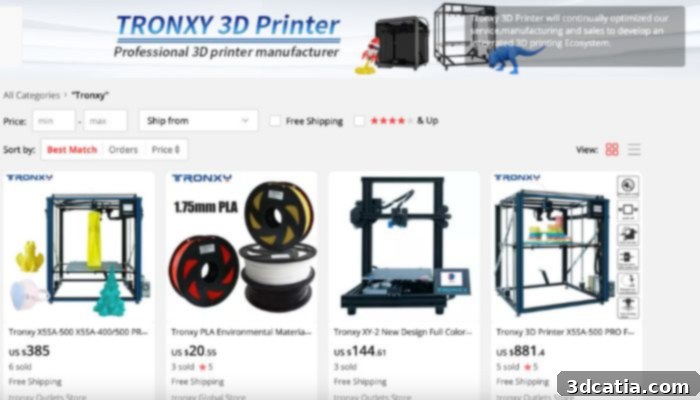
Tronxy 3D printers, like the model in question, are widely available on e-commerce platforms such as AliExpress.
The Expanding Realm of E-commerce Liability: A Precedent for Online Marketplaces
The lawsuit also includes a claim for strict liability, specifically focusing on the failure to warn consumers. The court documents highlight that the “Defendants…knew or should have known of the Tronxy X5SA 24V 3D printer’s propensity to overheat and catch fire,” implying that this knowledge should have triggered a proactive warning to buyers. This aspect of the case is increasingly relevant in the modern retail landscape, where online marketplaces, rather than just direct sellers, are facing greater scrutiny and legal challenges concerning product liabilities. Giants like Alibaba and even Amazon have found themselves entangled in lawsuits related to defective products sold by third-party vendors on their platforms. The issue became so pronounced for Amazon that it implemented a new policy last year, pledging to compensate customers up to approximately $1,000 for property damage or personal injury caused by third-party products. This policy shift by a major player like Amazon sets a significant precedent, acknowledging a degree of responsibility for the safety of products sold on its platform, even if not directly manufactured by them. To date, Alibaba has not publicly announced a similar comprehensive policy, making this lawsuit a critical test case for defining the boundaries of liability for global e-commerce platforms and their duty to vet products and warn consumers about known or discoverable defects. The outcome could significantly influence how online marketplaces operate and their obligations regarding product safety.
Prioritizing 3D Printer Safety: Essential Practices for Every User
Regardless of legal outcomes, this tragic incident serves as a stark reminder that even seemingly innocuous desktop 3D printers, widely adopted for personal and educational use, carry inherent risks that demand serious consideration. The Centers for Disease Control and Prevention (CDC) provides guidelines emphasizing that users must be acutely aware of various potential hazards. These include exposure to potentially harmful materials and their fumes, the risks associated with moving mechanical parts, and the ever-present dangers of static electricity, fire, or even explosions if equipment malfunctions or is used improperly. While such extreme incidents are thankfully uncommon, the potential for them underscores the need for vigilance. Even beginners who opt for “easy-to-use” 3D printers must take the initiative to thoroughly understand their machine’s safety features and diligently implement best practices. These measures are not merely suggestions but crucial steps to minimize the potential for risk, injury, or even death when operating machines that, despite their creative potential, are sophisticated tools and not toys. It is imperative to always operate 3D printers in well-ventilated areas, monitor them continuously during operation, and ensure they are placed on non-combustible surfaces away from flammable materials. Regular maintenance, checking for frayed wires, and understanding emergency shutdown procedures are also vital. Furthermore, users should be knowledgeable about the specific safety data sheets (SDS) for the filaments they use, as some materials emit harmful volatile organic compounds (VOCs) when heated. This ongoing lawsuit serves as a powerful cautionary tale, urging both manufacturers to prioritize safety in design and consumers to adopt responsible operating practices to foster a safer 3D printing environment for everyone.
We will continue to closely monitor any developments in this significant case. In the interim, for those interested in reviewing the foundational legal documents, The Register has made the court filings for Yu v. Alibaba Group accessible HERE. This lawsuit promises to have lasting implications for product safety standards and consumer protection in the rapidly evolving additive manufacturing sector and the broader landscape of e-commerce.
What are your thoughts on the Yu v. Alibaba Group lawsuit and its potential impact on the 3D printing industry and online retail? Share your perspective in the comments section below or engage with us on our LinkedIn, Facebook, and Twitter pages! Don’t forget to subscribe to our free weekly Newsletter here to receive the latest 3D printing news directly in your inbox. You can also explore all our insightful videos on our YouTube channel for more in-depth content.
Cover Photo Credits: © Frank Schulenburg / CC BY-SA 4.0