
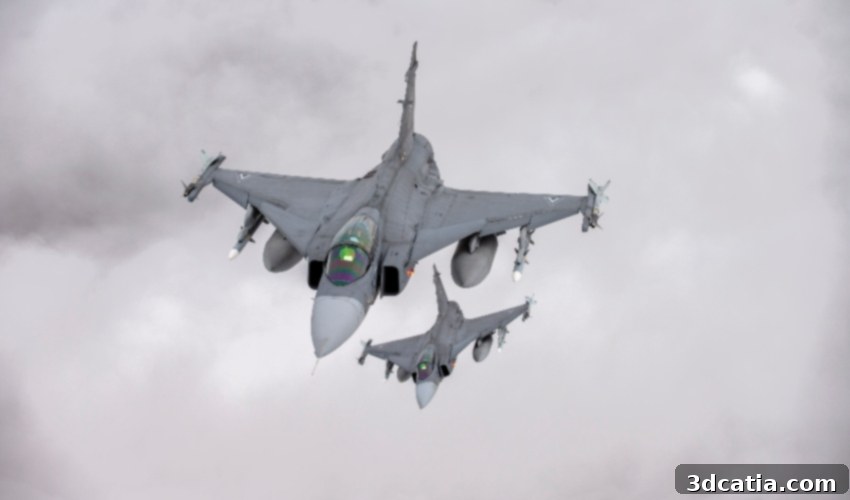
Saab Pioneers 3D Printed External Parts for Gripen Fighter: Revolutionizing Battlefield Repair and Aerospace Manufacturing
In a landmark achievement for aerospace innovation and additive manufacturing, Swedish aerospace and defense company Saab announced a successful test flight of a Gripen fighter jet equipped with 3D-printed parts on its exterior. This groundbreaking trial, conducted on Friday, March 19th, at Saab’s facilities in Linköping, Sweden, marks the first time an external 3D-printed component has been successfully flown as an integral part of a Gripen aircraft. The component in question was a replacement hatch, strategically integrated into the fighter’s airframe.
Saab, a co-founder of the AMEXCI consortium, has long been a proponent and pioneer in harnessing the benefits of additive manufacturing (AM). This recent test flight is not an isolated experiment but rather a crucial milestone within a larger, ongoing project. This ambitious initiative seeks to thoroughly investigate the potential of advanced additive manufacturing technologies, particularly for rapid and efficient battlefield damage repairs. The implications of this capability are profound, promising to transform logistical support and operational readiness for modern air forces.
Håkan Stake, who serves as the contract manager for Gripen C/D support and leads this pivotal development project, provided an enthusiastic assessment following the trial. He explained, “Post-flight initial inspection of the hatch was very positive and showed no visual structural changes had occurred from the flight. The potential of this approach means that maintenance personnel in the field can get access to individually fitted spare parts exactly when and where they are needed. This eliminates the critical need to resort to emergency, often temporary, fixes or, worse still, cannibalise other broken-down aircraft for their parts, a practice that significantly degrades overall fleet readiness. Furthermore, this capability dramatically reduces the small number of parts traditionally brought on a deployment, streamlining logistics and lowering costs. Crucially, it also considerably reduces the operational time lost during repairs, allowing aircraft to return to service much faster.”
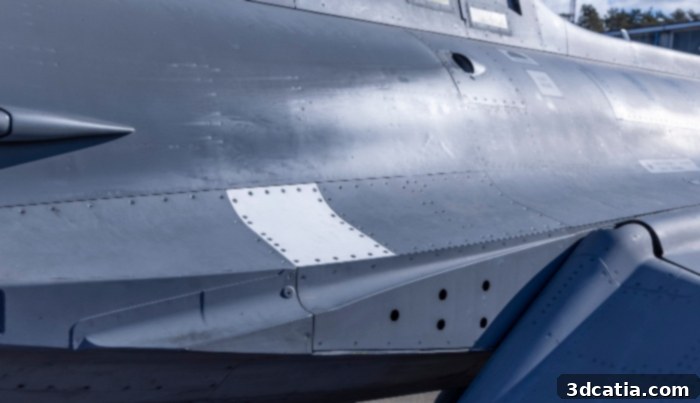
The Gripen fighter was equipped with a replacement hatch, the first external 3D printed part to be successfully flown as part of a Gripen aircraft. (Photo Credit: Saab AB)
The Engineering Behind the Breakthrough: From Scan to Flight
The process of creating the 3D-printed replacement hatch for the Gripen fighter involved several critical steps. As no existing 3D model of the specific component was available, Saab engineers first undertook a meticulous 3D scan of the original part. This digital capture created a precise blueprint for additive manufacturing. Subsequently, the part was printed using PA2200, a high-performance nylon polymer known for its excellent mechanical properties, including high strength, stiffness, and good chemical resistance, making it suitable for demanding applications. The choice of PA2200 highlights the growing versatility of advanced polymers in aerospace contexts, particularly for non-load-bearing or secondary structural components.
Beyond the crucial advantage of saving significant time in delivering rapid repairs to operational fighter aircraft, the primary benefit of deploying 3D printing technologies in this scenario lies in its unparalleled customization capability. Each part printed can be specifically tailored to the individual aircraft, minimizing the margin of error and ensuring a perfect fit, which is paramount in precision engineering applications like aerospace. This ‘on-demand, on-site’ manufacturing paradigm stands in stark contrast to traditional supply chains, which often involve lengthy lead times, extensive inventories, and complex logistics for spare parts. The ability to produce bespoke components quickly reduces downtime, enhances aircraft readiness, and significantly streamlines maintenance operations.
Pushing Boundaries: Material Science and Portable Manufacturing
Saab is not resting on its laurels with PA2200. The company is actively exploring and evaluating alternative materials that could further enhance the performance and suitability of 3D-printed parts for aerospace applications. A particular focus is on increasing both the flexibility of the material and its resistance to the extreme cold temperatures encountered at high altitudes. Aircraft components operate in some of the harshest environments, facing rapid temperature changes, significant aerodynamic stresses, and exposure to various elements. Developing materials that can withstand these conditions while maintaining structural integrity and performance is a complex yet vital area of research within additive manufacturing for defense. This material science drive aims to expand the range of 3D-printable components, potentially moving beyond non-critical parts to more structurally significant elements.
In parallel with material development, Saab is also committed to revolutionizing the logistics of additive manufacturing itself. The company is actively working on developing a container-based portability system designed to transport additive manufacturing equipment directly to operational theaters or forward deployment bases. This innovative concept envisions mobile, self-contained manufacturing units that can produce critical spare parts on-site, drastically reducing reliance on centralized manufacturing facilities and complex supply lines. This initiative draws parallels with efforts by other major defense entities, notably the U.S. Department of Defense’s commissioned factory pod from ExOne. Such portable systems represent a paradigm shift in military logistics, offering unprecedented agility, resilience, and responsiveness in maintaining sophisticated aircraft fleets in dynamic and contested environments.
A Game-Changer for Airworthiness and Operational Readiness
The successful flight test of an operationally impactful component like the Gripen hatch is a monumental step forward for Saab and the broader aerospace industry. Ellen Molin, Senior Vice President and Head of Saab’s business area Support and Services, underscored this significance, stating, “This test flight of a component with operational impact is an important step as an aircraft, including all its parts, always has to meet the tough requirements of an airworthiness process. In terms of increasing operational availability in the field, additive manufacturing will be a game changer.” Her comments highlight the rigorous certification process that every aircraft component must undergo to ensure safety, reliability, and performance. Achieving airworthiness for 3D-printed external parts demonstrates a growing maturity in the technology and its acceptance within stringent defense standards.
The concept of “operational availability” is central to military aviation. It refers to the percentage of time an aircraft is ready and able to perform its assigned mission. By enabling rapid, on-demand production of spare parts, additive manufacturing directly addresses one of the most persistent challenges to operational availability: the lengthy and complex supply chains for traditional spare parts. This technology empowers maintenance crews to conduct repairs much faster, reducing the time aircraft spend grounded and significantly enhancing the readiness of an air fleet. This strategic advantage translates into greater mission effectiveness, reduced logistical footprint, and substantial cost savings over the lifespan of an aircraft fleet. The successful integration of 3D-printed components into active service marks a pivotal moment, paving the way for more widespread adoption of AM in both military and commercial aviation.
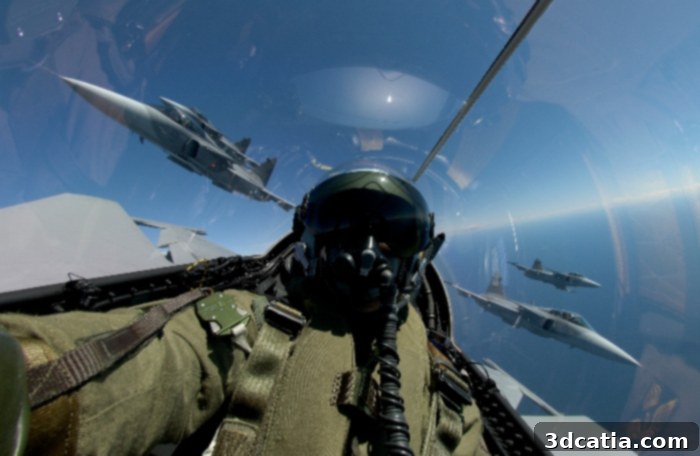
Pilot flying a Gripen fighter (Photo Credit: Saab AB)
The Future of Aerospace Manufacturing and Maintenance
Saab’s pioneering work with 3D-printed external parts on the Gripen fighter jet represents more than just a technological triumph; it heralds a new era for aerospace manufacturing and maintenance. This shift towards localized, on-demand production has the potential to fundamentally alter supply chain dynamics, reduce inventory requirements, and enhance the strategic autonomy of air forces worldwide. The integration of additive manufacturing is set to deliver unprecedented agility in addressing maintenance needs, from routine replacements to critical battlefield damage repairs. This capability ensures that sophisticated aircraft, such as the Gripen, remain operational and mission-ready with greater efficiency and reduced logistical burdens.
Looking ahead, the successful deployment of 3D printing in these critical applications will undoubtedly catalyze further research and development across the industry. We can anticipate advancements in materials science, printing technologies, and certification processes, leading to the use of 3D-printed components in an even wider array of aerospace applications, including potentially structural and high-stress parts. This transformative technology promises to deliver not only cost savings and enhanced readiness but also opens doors for innovative design solutions, allowing for more optimized and customized aircraft components. For more detailed information about this groundbreaking project and Saab’s broader initiatives in additive manufacturing, please visit Saab’s official website HERE.
What are your thoughts on Saab’s visionary plan to utilize additive manufacturing for critical battlefield damage repairs? Do you believe this marks a significant turning point for the future of military aviation maintenance and logistics? We invite you to share your insights and opinions in a comment below or join the discussion on our Facebook, Twitter, and LinkedIn pages! For the very latest news, developments, and breakthroughs in the dynamic world of 3D printing, remember to sign up for our free weekly Newsletter here, delivered straight to your inbox.
*Cover photo courtesy of Saab AB