
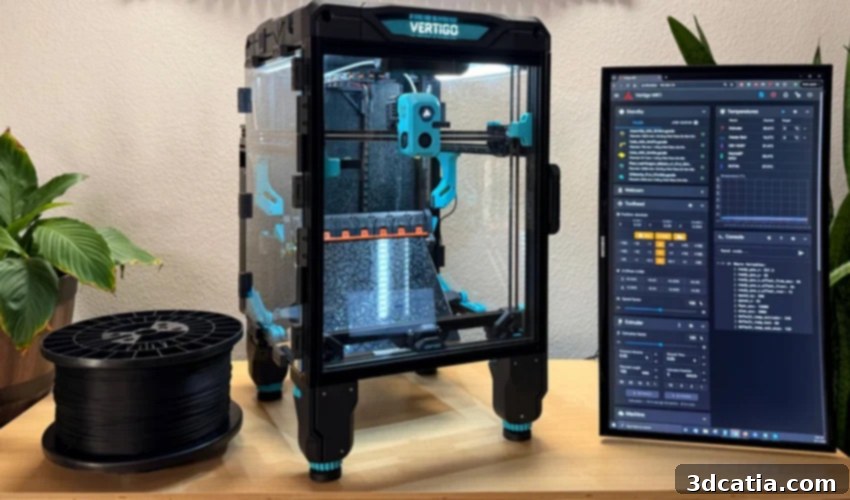
Vertigo MK1: Revolutionizing 3D Printing Automation with its Innovative Auto-Eject System
The landscape of 3D printing is continuously evolving, with a significant shift towards greater efficiency and autonomy. In recent years, the demand for 3D printing automation has surged, particularly within bustling print farms and professional manufacturing environments. These sectors are relentlessly seeking ways to optimize their workflows, minimize manual intervention, and unlock the full potential of continuous production. Stepping into this dynamic arena is the Vertigo MK1, a groundbreaking 3D printer currently making waves on Kickstarter. Designed by Automated Layers, this innovative machine promises a transformative solution through its highly distinctive and reliable auto-eject system, aiming to set a new standard for automated additive manufacturing.
The Vertigo MK1 is engineered to directly address the inherent limitations of conventional 3D printers, which often require constant human oversight for part removal. By integrating a sophisticated automated process, it seeks to democratize advanced automation, making it accessible not only to industrial professionals but also to dedicated enthusiasts who envision a more streamlined and hands-off 3D printing experience. This article delves into the ingenious workings of the Vertigo MK1, highlights its compelling advantages, and explores the diverse markets poised to benefit from its innovative capabilities, from small-scale workshops to large-volume production facilities.
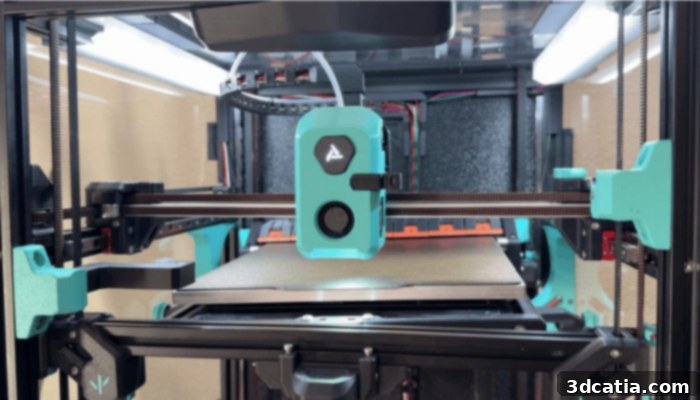
With a heated build plate capable of reaching 120°C and a print chamber up to 50°C, the Vertigo MK1 is compatible with a wide range of high-performance filaments, preventing warping and ensuring robust prints.
Engineering the Future: A Printer Designed for Unmatched Automation and Reliability
The cornerstone of the Vertigo MK1’s appeal and its most significant innovation lies in its native, integrated auto-ejection system for finished parts. Unlike many existing automation attempts that often rely on the print head to aggressively push parts off the bed, or solutions that demand expensive external modifications and supplementary accessories, the MK1 offers a purpose-built, dedicated ejection mechanism right out of the box. This integrated design ensures seamless operation, enhanced reliability, and a clean, efficient workspace, drastically reducing the need for manual intervention and freeing up valuable human resources for more complex tasks.
The auto-ejection sequence of the Vertigo MK1 is a marvel of engineering precision. After a print job is successfully completed, the heated print bed executes a vertical rotation of precisely 90 degrees. This precise movement positions the freshly printed part for optimal removal. Following this, an array of four strategically placed fans beneath the bed rapidly cools the build surface. This quick cooling not only aids in part release by causing the material to contract slightly but also prepares the bed for the next print cycle with impressive speed. The final step involves a robust bar, fitted with a durable nylon scraper, which gently yet effectively removes the printed part. This intelligent approach guarantees that parts are ejected without causing any damage to the print surface or subjecting the delicate movement system of the printer to undue stress. The entire process is meticulously designed to ensure broad compatibility with an extensive array of geometries and materials, making the Vertigo MK1 an incredibly versatile tool for diverse applications.
Beyond its pioneering auto-ejection, the Vertigo MK1 is packed with cutting-edge technical specifications that bolster its performance and reliability in automated environments. These features collectively contribute to its ability to deliver consistent, high-quality prints with minimal oversight:
- Heated Chamber: A fully enclosed and actively heated print chamber maintains a stable internal temperature of 50°C. This controlled thermal environment is crucial for successfully printing with engineering-grade filaments such as ABS and ASA, materials notorious for their tendency to warp. By mitigating thermal stress, the heated chamber significantly reduces the risk of part deformation, ensuring dimensional accuracy and structural integrity, especially for larger or more intricate prints.
- Heated Print Bed with Rapid Cooling: The Vertigo MK1 boasts a heated print bed that reaches a robust 120°C in less than two minutes. This rapid heating capability minimizes downtime between prints. Furthermore, thanks to its integrated cooling fans, the bed cools three times faster than standard beds, as reported by Automated Layers. This accelerated cooling is vital for the auto-ejection process, ensuring parts detach cleanly and quickly, further enhancing throughput in continuous operation.
- CoreXY System for Speed and Precision: At its heart, the Vertigo MK1 employs a high-performance CoreXY motion system. This sophisticated kinematic arrangement allows for exceptional print speeds of up to 300 mm/s and blistering accelerations reaching 30,000 mm/s². In practical terms, this translates to significantly reduced print times without compromising accuracy or print quality. The CoreXY system’s inherent rigidity and lightweight moving mass make it ideal for demanding, high-speed automated workflows, delivering consistent results even under rapid movements.
- Automatic Bed Leveling: Achieving an optimal first layer is paramount for print success, particularly in automated settings where human intervention is absent. The Vertigo MK1 integrates an E3D Revo PZ probe directly into its printhead, enabling highly accurate automatic bed leveling. This feature eliminates the guesswork and manual adjustments typically associated with bed leveling, dramatically improving overall printer reliability and ensuring flawless first layers, print after print.
- Open-Source Philosophy: Following the ethos of popular Voron printers, the Vertigo MK1 is designed as an entirely open-source platform. This commitment to open-source principles fosters a vibrant community, allowing users to customize, upgrade, and troubleshoot their machines with extensive communal support and documentation. For professionals, this means greater control and adaptability, while enthusiasts gain invaluable insight and the ability to truly make the printer their own.

The Vertigo MK1 utilizes a uniquely engineered tilting bed and a precise scraper mechanism to efficiently eject 3D printed parts, minimizing human intervention.
The Imperative for Automation: Why Continuous 3D Printing is the Future
The concept of automation in 3D printing isn’t merely a luxury; it’s becoming an economic and operational necessity for many. According to Automated Layers, the visionary creators behind the Vertigo MK1, their project was born directly out of the exasperating frustrations they encountered while operating their own print farm. They, like many others, initially relied on existing automated 3D printers that utilized the print head to push off finished parts. This method, while rudimentary, often led to a host of problems including inconsistent reliability, limited compatibility with a range of materials, and frequent failures that still demanded human intervention. Such experiences underscored a glaring gap in the market for a truly robust and dependable automated solution.
With the Vertigo MK1, Automated Layers set out to develop a superior alternative – a system that could genuinely facilitate continuous, non-stop printing. Their primary objectives were clear: drastically reduce the manual labor required for operating print farms, maximize the utilization rate of expensive 3D printing equipment, and enable scalable, lights-out manufacturing capabilities. Achieving these goals would translate into significant cost savings, higher throughput, and a competitive edge for any organization leveraging additive manufacturing.
To validate their design, the Automated Layers team conducted rigorous internal tests, claiming remarkable success. They reported achieving an astounding 200 hours of non-stop printing, consuming a full 5 kg of filament, all without requiring even a single instance of human intervention. While these results are undeniably impressive for a prototype and demonstrate the profound potential of their system, the true test will be how consistently this level of performance translates into diverse real-world environments and large-scale production settings once the machines are widely deployed. Nevertheless, these early indicators signal a powerful leap forward in the quest for truly autonomous 3D printing, promising a future where print farms can operate around the clock with unprecedented efficiency.
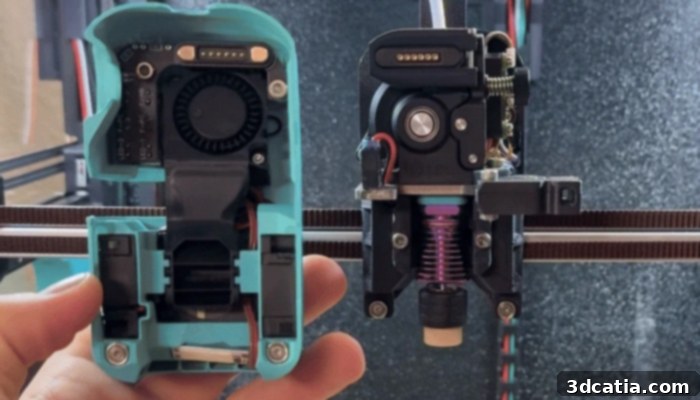
The Vertigo MK1 features an easily accessible print head, thoughtfully designed to facilitate quick and straightforward maintenance, further enhancing its reliability in automated workflows.
Navigating a Booming Market: Exploring Other Automation Offerings
The Vertigo MK1 certainly represents a significant advancement, but it enters a rapidly expanding market where several other solutions are vying for a share of the automated 3D printing landscape. Each of these alternatives presents its own set of specific features, advantages, and inherent limitations. Understanding these different approaches helps contextualize the unique position and value proposition of the Vertigo MK1:
- Robotic Arms (e.g., Mira from Cosmyx)
Solutions like the Mira system from Cosmyx integrate sophisticated robotic arms directly into the 3D printing workflow. These robotic arms are deployed to perform crucial tasks such as changing printer platens and precisely ejecting printed parts. This level of automation is highly effective and particularly well-suited for demanding industrial production environments where consistency, precision, and high throughput are paramount. However, the substantial investment required for such a complex robotic setup often places it beyond the reach of smaller businesses, independent workshops, or individual enthusiasts, making it a high-barrier-to-entry option.
- Modular Systems (e.g., Array from Mosaic Manufacturing)
Modular systems, exemplified by Mosaic Manufacturing’s Array, offer a different approach to scaling and automation. The Array effectively combines and manages up to four individual 3D printers within a single integrated unit, providing automated material handling and print tray management. Similar in concept to robotic arm solutions, the Array also utilizes a robotic arm to systematically change printer trays and store finished prints on dedicated shelves. While this setup is undeniably ideal for high-volume, multi-material production, its comprehensive nature again translates into a significant capital investment. Its large footprint and operational complexity make it more suitable for large-scale manufacturing operations rather than individual users or smaller print labs.
- Conveyor Belt Printers (e.g., Creality CR-30)
Conveyor belt printers, such as the widely known Creality CR-30, introduce an entirely distinct method for automated part removal. These machines feature an infinite Z-axis provided by a continuously moving conveyor belt. Parts are printed directly onto this belt and automatically detach as the belt reaches its end, falling into a collection bin. This solution offers an appealingly low price point and makes it remarkably easy to mass-produce identical parts without manual intervention. However, this innovative design comes with its own set of unique operational challenges. The print head on these machines is typically oriented at a 45-degree angle relative to the build plate. This unconventional setup requires specialized slicing software and a careful consideration of printing constraints, which can be difficult to master. Furthermore, conveyor belt printers are notoriously challenging to level accurately, a problem that frequently leads to premature detachment of parts during the 3D printing process, causing print failures and material waste.
- Head Ejection Systems (e.g., Cartesian FDM printer with customized G-code)
For those with technical prowess, it’s possible to implement a basic form of part ejection on standard Cartesian FDM printers by crafting custom G-code scripts. This involves programming the print head to aggressively push a finished part off the print bed after printing is complete. While this procedure can be relatively straightforward for simple, robust parts, it carries significant risks. Delicate 3D prints are highly susceptible to damage during such forceful ejection. Moreover, repeatedly using the print head in this manner can inflict mechanical stress on the printer itself, leading to potential damage or accelerated wear and tear on components. Its reliability is limited, and compatibility with various geometries and materials is often poor.
In stark contrast to these diverse approaches, the Vertigo MK1 distinguishes itself as a compact, all-in-one solution. It was meticulously designed from its inception to seamlessly incorporate automatic ejection as a core function, rather than an afterthought or an add-on. This integrated philosophy means it achieves reliable automation without necessitating costly external modifications, sacrificing precious print quality, or requiring complex setup procedures. Its balanced approach offers a compelling blend of affordability, efficiency, and robust performance, positioning it as an ideal choice for a broad spectrum of users seeking genuine 3D printing automation.
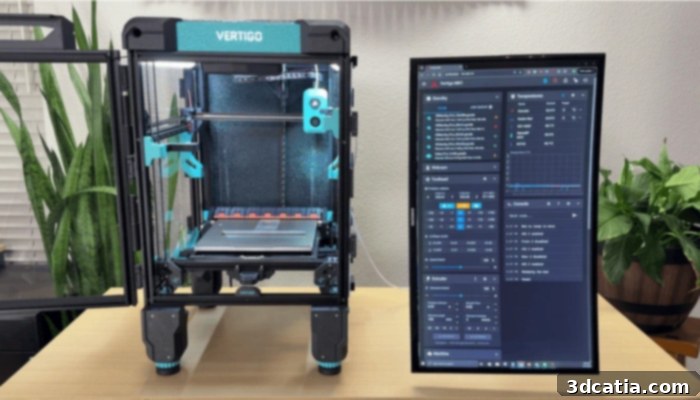
The Vertigo MK1 operates with the powerful Klipper firmware and the intuitive Mainsail interface, offering a generous print volume of 220 x 220 x 250 mm for versatile production.
A Resounding Success: The Vertigo MK1’s Kickstarter Campaign
The market’s enthusiasm for advanced 3D printing automation is undeniably reflected in the overwhelming success of the Vertigo MK1’s Kickstarter campaign. Recently launched, the project rapidly surpassed its initial funding target of $25,000, nearly doubling it at the time of writing, with a significant 20 days of funding still remaining open. This strong early performance is a clear indicator of the widespread demand for a reliable, integrated auto-eject 3D printer and validates Automated Layers’ innovative approach. The campaign offers prospective backers several tiers of participation, allowing them to support the project and secure their own Vertigo MK1:
- Vertigo MK1 – Hardware Kit: Priced at $2,250, this option includes all the essential hardware components required to build the printer, excluding the printed parts needed for assembly. It’s an excellent choice for experienced makers who prefer to print their own structural components and enjoy the hands-on assembly process.
- Vertigo MK1 – Standard Kit: Available for $2,625, this comprehensive kit provides all the necessary parts, including both the hardware and the pre-printed components, ready for assembly. This tier is ideal for users who want the full DIY experience without the hassle of sourcing or printing individual structural parts.
- Vertigo MK1 – Assembled: For those who prioritize convenience and immediate functionality, the fully assembled Vertigo MK1 can be pledged for $5,000. This tier offers a ready-to-use machine, perfect for professionals or enthusiasts who want to jump straight into automated 3D printing without the build process.
Despite the palpable excitement surrounding the campaign, it is crucial for potential backers to approach crowdfunding initiatives with a degree of awareness regarding inherent risks. While Automated Layers has demonstrated significant progress and a clear vision, crowdfunding campaigns, by their nature, can sometimes face challenges related to production scaling, unforeseen supply chain issues, and eventual delivery timelines. The team has communicated an estimated delivery date of May 2025. Therefore, it will be essential to closely monitor the project’s updates and progress as it moves from the crowdfunding stage to mass production. For individuals keen to explore the project further and potentially become a backer, detailed information is available on its official Kickstarter page HERE.
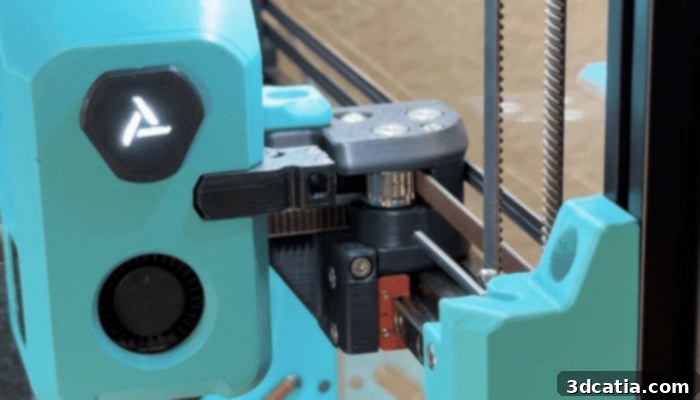
The Vertigo MK1 incorporates robust linear rails, ensuring exceptionally precise and consistent movements throughout the printing process, which is critical for high-quality automated production.
What are your thoughts on Automated Layers’ Vertigo MK1 and its potential to reshape the future of automated 3D printing? We invite you to share your insights in a comment below or join the discussion on our LinkedIn, Facebook, and Twitter pages! Don’t forget to sign up for our free weekly Newsletter here to receive the latest 3D printing news and innovations directly in your inbox! You can also find all our compelling videos and tutorials on our dedicated YouTube channel.