
Strategic Integration of Powder Bed Fusion: Unlocking Industrial Potential in Metal Additive Manufacturing
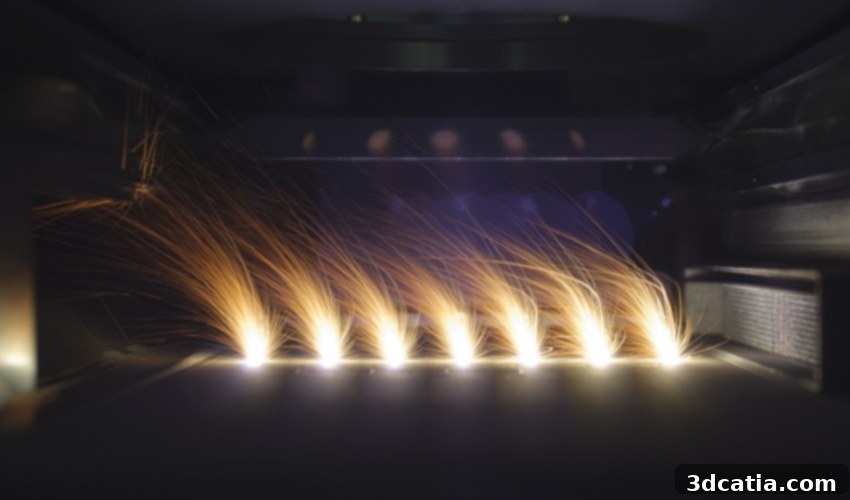
Powder Bed Fusion (PBF) represents a cornerstone of modern additive manufacturing (AM), a transformative set of processes that enable the creation of complex metal parts directly from digital designs. At its core, PBF involves meticulously fusing metal in powder form using a concentrated heat source, layer by layer, until a complete, high-precision component emerges. This revolutionary approach stands in stark contrast to traditional subtractive manufacturing methods, offering unparalleled design freedom and efficiency for a growing array of industrial applications. The heat source employed in PBF technologies typically takes one of two forms: a laser or an electron beam. A prime example utilizing a laser is Laser Powder Bed Fusion (LPBF), often referred to as Direct Metal Laser Sintering (DMLS) or Selective Laser Melting (SLM). Alternatively, Electron Beam Melting (EBM) technology leverages an electron beam for its fusion process. While the energy source differs, the fundamental printing process across all Powder Bed Fusion technologies remains remarkably similar and ingeniously simple in concept, yet highly sophisticated in execution.
The process begins with the application of an extremely thin, uniform layer of fine metal powder onto a heated build platform. Subsequently, the high-energy laser or electron beam precisely scans and fuses the powder particles together at specific points determined by the digital CAD model of the part being created. Once a layer is complete, the build platform precisely lowers by the thickness of a single layer, and a fresh layer of metal powder is spread across the surface. This intricate process of powder deposition, selective fusion, and platform lowering is meticulously repeated hundreds, or even thousands, of times until the entire three-dimensional object is fully constructed. This iterative, layer-by-layer fabrication, combined with the precise, point-by-point action of the heat source, yields components with exceptional geometric accuracy and intricate internal structures far beyond the capabilities of conventional manufacturing methods. This capability for unprecedented design complexity and precision is a primary driver for many companies considering the integration of Powder Bed Fusion into their production workflows. While other advanced metal 3D printing technologies exist, such as Directed Energy Deposition (DED), this comprehensive article will specifically delve into the nuances and opportunities presented by Powder Bed Fusion. To gain a deeper understanding of why and how businesses can strategically integrate Powder Bed Fusion, we sought invaluable insights from three distinguished experts in the field: Dr. Yves Hagedorn, Dr. Elena Lopéz, and Sadato Kobayashi.
Dr. Yves Hagedorn is the visionary CEO of Aconity3D, a mechanical engineering company established in 2014, specializing in advanced LPBF systems and bespoke machines. His mission is to deliver highly flexible and open equipment technology, designed to efficiently accelerate the industrialization of metal 3D printing. Dr. Elena Lopéz serves as the esteemed department head for additive manufacturing at the Fraunhofer Institute for Material and Beam Technology IWS in Dresden, a leading research institution. Since 2014, she has also operationally led the monumental AGENT-3D project, an initiative with a staggering budget of €90 million (approximately $109.3 million) and involving 120 project partners. Within this extensive project, virtually all relevant additive manufacturing processes for metals, ceramics, and polymers are being further developed across more than 35 distinct research projects. Sadato Kobayashi is the dedicated department head for additive manufacturing at GF Machining Solutions Japan. With an impressive career spanning 18 years, he brings a wealth of practical experience, having worked closely with additive manufacturing users and adopters across various industries.
- Dr. Yves Hagedorn
- Dr. Elena Lopez
- Sadato Kobayashi
When Powder Bed Fusion Offers a Strategic Advantage Over Traditional Manufacturing
The decision to integrate Powder Bed Fusion into a company’s operations is a significant strategic step that warrants careful consideration. While additive manufacturing undeniably presents a wealth of advantages, it is not a universally suitable solution for every production scenario or every business model. Before embarking on this transformative journey, it is crucial to first clarify the specific circumstances under which PBF genuinely makes more economic and technical sense compared to conventional manufacturing methods. Sadato Kobayashi emphasizes that this decision is highly dependent on a company’s unique situation and overarching business plans. He offers a compelling example of a motivation for adopting PBF: “The need to replace a skilled but retiring production workforce is an important reason from an organizational perspective and in terms of business continuity.” This highlights how PBF can address critical labor challenges by automating complex manufacturing tasks and preserving institutional knowledge embedded in designs.
Dr. Hagedorn provides a structured framework for evaluating the suitability of PBF by posing four fundamental questions. These questions serve as critical checkpoints for any company considering PBF integration: “Can the component also be produced conventionally? Can a more complex design generate added customer value? Is the material to be used suitable for additive manufacturing? Can the component size in combination with the quantities to be realized be mapped using AM?” If a component can be easily and cost-effectively produced conventionally without significant compromise, PBF might not be the optimal choice. However, if a more intricate or optimized design offers substantial performance benefits, weight reduction, or functional integration, PBF becomes a strong contender. The availability and suitability of additive-grade metal powders for the desired material properties are also paramount. Finally, understanding the intersection of part dimensions and required production volumes is essential, as PBF currently has certain limitations in both very large parts and extremely high-volume mass production. Dr. Lopéz adds a crucial perspective, stressing that the decision should transcend the narrow focus on a single component: “Manufacturing one component using LPBF in the same way as with conventional production methods may not bring any advantage to the company, but the overall consideration of AM in the company does!” Her insight underscores the importance of a holistic business case, where the true value of AM emerges from its strategic integration across product lines, supply chains, and innovation strategies, rather than merely replacing a single traditional process.
In essence, a comprehensive assessment for PBF adoption requires simultaneous evaluation at both the individual component level—considering specific design, material, and performance requirements—and the broader organizational level, factoring in long-term business plans, market demands, and competitive advantages. Making this informed decision can be complex, and many specialized 3D printing service providers and consultants exist to assist companies in navigating this assessment, providing expert guidance, and facilitating the successful implementation of their additive manufacturing projects from initial concept to full production.
When deciding whether Powder Bed Fusion integration makes sense, one should look at the component level as well as the overall business plans to make a decision. (photo credits: GF Machining Solutions)
Unpacking Powder Bed Fusion Integration: Key Advantages and Current Limitations
To truly understand the impetus for integrating Powder Bed Fusion into a business, one must delve deeply into the myriad benefits it offers, particularly in comparison to traditional manufacturing. Sadato Kobayashi articulates these advantages from two distinct yet complementary perspectives, technical and operational. “From a technical perspective, you can benefit from greater design freedom to better meet requirements that would otherwise be impossible or too costly to manufacture,” he explains. This unprecedented design freedom allows engineers to create geometries that were previously unimaginable, such as complex internal lattice structures for lightweighting, conformal cooling channels for enhanced thermal management, or intricate part consolidation that reduces assembly steps and costs. This capability is widely leveraged in sectors like dentistry, where metal 3D printing is instrumental in producing perfectly customized implants and crowns, tailored precisely to individual patient anatomies. Similarly, the aerospace and aviation industries are major beneficiaries, with companies like Lufthansa employing 3D printing to create lighter, more efficient components, and to streamline internal repair and maintenance processes through faster production of custom parts.
Kobayashi continues, outlining the operational benefits: “From an operational standpoint, you can gain more control over the quality, cost, delivery date and traceability of traditionally cast and/or machined components. This leads to increased flexibility in your production and the ability to produce what you need, when and where you need it.” This operational control translates into enhanced supply chain resilience, reduced lead times, and the ability to produce spare parts on demand, minimizing inventory costs and potential production bottlenecks. Dr. Lopéz acknowledges these broad additive manufacturing benefits, but further highlights specific, LPBF-centric advantages. She points to “topology optimization, increased complexity of internal structures, partially improved material properties through the use of innovative alloys” as distinct features of Powder Bed Fusion. Topology optimization, an algorithmic design method that optimizes material distribution within a given design space, is particularly attractive to the automotive industry. A notable example is Porsche’s application in their e-drive housing. By employing topology optimization software, Porsche was able to integrate various components such as bearings and heat exchangers into a single, optimized structure. The software calculated stress loads and trajectories, resulting in the development of intricate honeycomb structures that reduced the weight of the drive housing by an impressive 40% and the total drive by 10%, significantly enhancing performance and efficiency. Dr. Hagedorn echoes the emphasis on design freedom and flexibility, while also highlighting the expansion of the material spectrum, enhanced sustainability through the reuse of unused powder, and the inherent advantages of consistent digitization throughout the manufacturing workflow.
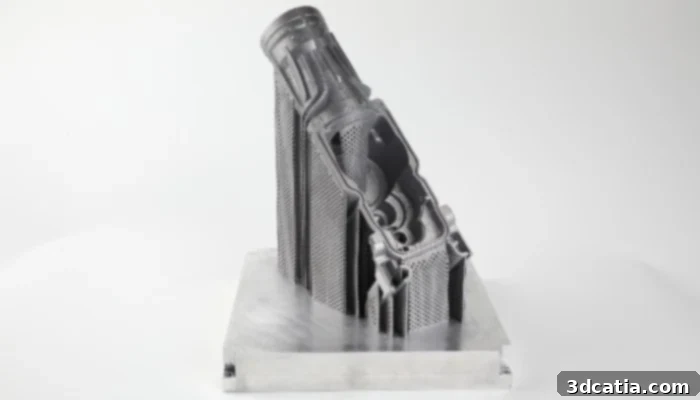
Powder Bed Fusion can be used to realize complex structures, as seen in this component. (photo credits: GF Machining Solutions)
Despite these compelling advantages, a balanced perspective requires a candid acknowledgement of Powder Bed Fusion’s current limitations. Dr. Lopéz identifies several key areas: “part size, repair of pre-existing and damaged parts, material turnover or reuse, and limited multi-material processing compared to nozzle processes.” The build volume of PBF machines currently restricts the maximum dimensions of components that can be produced, making it less suitable for very large structures. Repairing existing parts is also often challenging due to the layer-by-layer nature and the difficulty in precisely fusing new material onto a complex, pre-existing surface. Regarding materials, a significant challenge lies in the fact that many commercially available metal powders were not initially engineered specifically for the unique thermal cycles and particulate dynamics of additive manufacturing. A study by Equispheres, for instance, revealed that the inconsistent quality and characteristics of metal powder can lead to various problems, including irregular mechanical properties in the final part, reduced production speed, and overall lower productivity. Dr. Hagedorn points out further critical limitations, beyond the evolving industrial standards and design guidelines: “Probably the most important point is often the lack of competence in using the process. In contrast to conventional manufacturing, there is unfortunately still no apprenticeship for LPBF. As a result, machine tools are operated by engineers. The expectation is then often that the business case will fall out of the machine on its own.” This highlights a significant skills gap within the industry, where operating sophisticated AM machinery requires specialized knowledge often beyond traditional engineering curricula.
Sadato Kobayashi, while fully aware of these existing limitations, offers an optimistic perspective, suggesting they are not insurmountable but rather temporary challenges that can be overcome through continued innovation and industry collaboration. “Personally, I think these are all valid points and there is a lot of room for improvement in all these areas,” he states. “But these things are a function of development time and economic factors. As an industry, we are at a pivotal moment where vendors like myself need to engage with customers and support them in any way we can to help them succeed in their first round of implementations. Size constraints can be overcome with innovations in gas flow control; materials can be made available through material development combined with process parameter development, but there must be sufficient economic demand from users to accelerate this development.” This underscores the symbiotic relationship between technological advancement, market demand, and strategic partnerships in pushing the boundaries of Powder Bed Fusion capabilities.
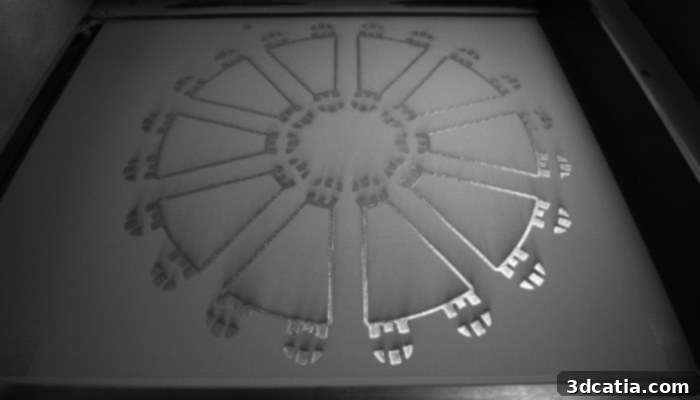
Powders need to be developed specifically for additive manufacturing to further improve part quality. (photo credits: GF Machining Solutions)
Essential Steps for Successful Powder Bed Fusion Integration and Operation
To truly harness the extensive benefits of Powder Bed Fusion and effectively mitigate its inherent limitations, a meticulously planned and flawlessly executed integration strategy is paramount. The successful adoption of this technology is not merely about acquiring a machine; it requires a comprehensive approach encompassing training, safety, and a holistic view of the manufacturing ecosystem. Kobayashi elucidates a crucial starting point: “Because it’s a relatively new technology, not many companies have a wealth of the necessary skills in-house.” Consequently, he strongly advocates for seeking external expertise and training to bridge this knowledge gap and equip employees with the specialized skills required for operating and maintaining PBF systems. Dr. Hagedorn concurs, adding a layer of emphasis: “When introducing LPBF as an industrial manufacturing process, it is always advisable to call in competent advice. This is particularly true since there are no trained LPBF personnel available on the free market.” He further specifies that critical considerations during implementation should include occupational safety protocols for handling hazardous powder materials, robust quality assurance procedures, and careful planning for application-dependent post-processing steps. These elements are vital for integrating LPBF as a reliable supplement to existing manufacturing capacities.
Occupational safety, in particular, cannot be overstated when working with metal powder. These materials can pose significant health risks if not handled correctly. Fine metal powders are often combustible, toxic, or irritant, requiring stringent safety measures. Consequently, all stages involving powder handling—from filling the machine to sieving and post-processing of unfused powder—must invariably occur within a controlled, closed environment. The extremely fine nature of these powders means they are easily dispersed into the air, necessitating advanced ventilation and filtration systems. Beyond powder hazards, LPBF systems present additional safety concerns related to the powerful lasers employed, including potential eye damage from laser radiation, skin burns, and the need for meticulous temperature control within the build chamber. Furthermore, the combination of fine metal powders and high-energy heat sources introduces risks of explosions and fire hazards, demanding robust fire suppression systems and emergency protocols. Therefore, the physical integration of a PBF printer demands careful planning for space allocation, ensuring it is positioned sufficiently far from other activities to minimize risks. Equipping the facility with a suitable filtration system, inert gas supply, and readily accessible fire extinguishers is non-negotiable. Crucially, access to the 3D printer and its operational area should be strictly limited to personnel who are thoroughly trained in its operation, maintenance, and, most importantly, all relevant safety regulations and emergency procedures. Employees can acquire these essential handling skills and regulatory knowledge through specialized 3D printing courses, certifications, and hands-on training programs.
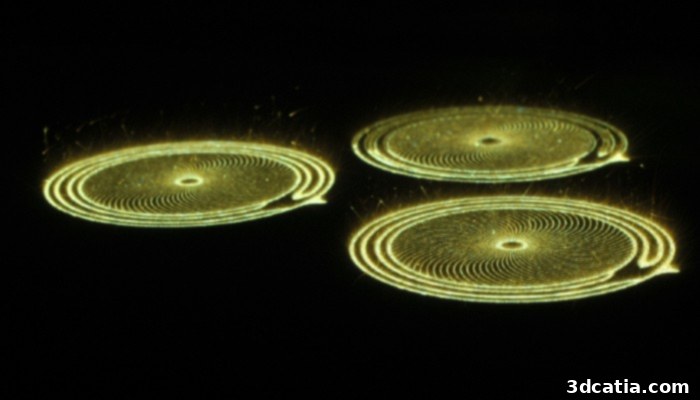
Powder Bed Fusion is not without danger and should therefore only be used in compliance with safety standards and by trained personnel. (photo credits: Aconity3D)
Dr. Lopéz reinforces the importance of a comprehensive approach, expanding on the concept of systems engineering. She highlights the need to consider “not just the LPBF machine itself, but preparation, post-processing of powder and components, metrology, post-processing, etc..” This means that a successful PBF integration encompasses the entire workflow, from initial design and material selection to post-build treatment, quality inspection, and certification. Kobayashi further elaborates on this, emphasizing the digital dimension: “The printing process itself is heavily software-driven, which means you need to (re)think your digital strategy for managing all the data that is processed, stored and ultimately reused.” This highlights the necessity for a robust digital infrastructure to handle CAD files, simulation data, build parameters, quality control logs, and traceability records, forming a critical ‘digital thread’ throughout the product lifecycle. Dr. Hagedorn concisely encapsulates the essence of effective PBF adoption: “The industrial and professional use of LPBF remains a craft that can be learned but must also be mastered in order to manufacture efficiently and economically.” This emphasizes that while the technology offers immense potential, its optimal utilization requires a blend of technical expertise, continuous learning, and strategic operational management.
Powder Bed Fusion: Shaping the Future of Metal Additive Manufacturing
Powder Bed Fusion stands as a powerful testament to innovation in manufacturing, offering a distinct suite of advantages unattainable through conventional methods. These include unparalleled design freedom, enabling the creation of lightweight and highly functional parts, enhanced production flexibility, and significantly reduced development times for new components. However, like any evolving technology, PBF currently navigates a landscape dotted with challenges. Key hurdles include limitations in component size, the relative economics for very high unit quantities, and perhaps most critically, a prevailing shortage of skilled personnel proficient in operating and optimizing these complex systems. The ongoing development of industrial standards and design guidelines also remains a work in progress, impacting widespread adoption and process predictability.
Despite these current limitations, there is a strong consensus within the industry that many of these challenges are not permanent obstacles but rather temporary impediments that will diminish with continued technological advancements, increased research and development, and broader industrial adoption. As machine capabilities expand, material science progresses, and specialized training programs become more commonplace, the accessibility and efficiency of PBF will undoubtedly improve. Nevertheless, both Dr. Lopéz and Dr. Hagedorn emphatically agree that Powder Bed Fusion is not poised to entirely displace or replace conventional manufacturing methods. Instead, it is destined to become an indispensable complement, expanding the toolkit of possibilities for industries worldwide. Dr. Hagedorn explains, “I personally don’t think LPBF will displace, or replace, conventional manufacturing methods. Rather, I think LPBF is a welcome extension and complement to conventional manufacturing methods, enabling exciting new high-tech applications. In particular, the need for conventional mechanical finishing of functional surfaces will remain a necessity for the foreseeable future.” His perspective underscores PBF’s role as an enabler for novel, high-performance applications, where its unique capabilities fill gaps left by traditional processes. Dr. Lopéz reinforces this sentiment, concluding with a powerful statement: “LPBF will become an integral part of industrial manufacturing processes.” This vision solidifies Powder Bed Fusion’s position as a future-proof technology, set to deeply embed itself within the global manufacturing landscape, driving innovation and efficiency across diverse sectors.
Final Insights from Our Esteemed Experts:
Dr. Yves Hagedorn: “Additive manufacturing and especially L-PBF as an established process shows great potential to enable better products for tomorrow’s more demanding applications. I would like to take this opportunity to call for more dialogue between experts and users in order to exploit the full potential of this technology. The development impulse for success stories should therefore come from the user’s point of view and be developed jointly for success.”
Sadato Kobayashi: “I don’t think every company needs to integrate PBF into their organization, but every engineering and manufacturing company should at least consider how they can benefit from it.”
Dr. Elena Lopéz: “If you do not use LPBF or AM processes, you will lose competitiveness! AM is here to stay and will soon become an integral part of the production chain!”
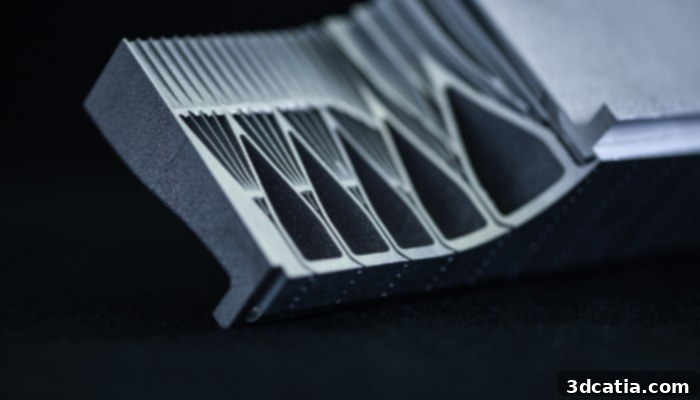
Powder Bed Fusion is an extension of traditional manufacturing methods that holds a lot of potential. (photo credits: Aconity3D)
What are your thoughts on integrating Powder Bed Fusion into your business strategy? We invite you to share your insights and experiences in a comment below or connect with us on our Facebook and Twitter pages! For the very latest news and updates in the world of 3D printing, sign up for our free weekly Newsletter here, delivered straight to your inbox!