
Life-Changing Innovation: How 3D Printing and Photogrammetry Are Revolutionizing Facial Prosthetics
Imagine living with a facial defect for years, impacting not only your physical appearance but also your self-esteem and daily interactions. This was the reality for Denise Vicentin, a 53-year-old woman whose life took an unexpected turn three decades ago when she was diagnosed with a facial tumor. Despite two successful removals, the tumor tragically returned twenty years later, this time in a malignant form, leaving her with significant facial damage. Fortunately, Denise’s journey intersected with groundbreaking research being conducted by visionary scientists at Paulista University in Sao Paulo, Brazil. Their innovative work promised a future where such challenges could be overcome with dignity and cutting-edge technology.
The pioneering team of researchers at Paulista University has developed a revolutionary method for creating highly realistic and personalized facial prostheses. Their approach leverages the power of 3D models generated through sophisticated photogrammetry software, transforming the process of prosthetic development. This technique, which captures detailed dimensional data using mobile devices, offers an unprecedented level of ease and accuracy. What makes this advancement particularly significant is its potential to deliver incredibly cost-effective, additively manufactured facial prostheses, especially for complex maxillofacial defects like those Denise faced. This marks a profound shift from traditional, often prohibitively expensive, methods, making life-changing solutions more accessible to those in need.
The traditional process for creating facial prostheses was fraught with challenges, as highlighted by Rodrigo Salazar, the lead researcher on the study. “In the past, it took much longer work, hours of sculpting by hand, and the process was very invasive, with material on the patient’s face to get an imprint of their appearance,” Salazar explained. This meticulous, time-consuming manual sculpting required exceptional artistic skill and immense patience, both from the prosthetist and the patient. Patients would endure uncomfortable, often messy, molding procedures where materials were applied directly to their faces, which could be distressing and contribute to feelings of vulnerability during an already sensitive time.
Beyond the discomfort, the conventional approach was also significantly less precise. Achieving perfect symmetry and a natural aesthetic required repeated adjustments and multiple lengthy sessions, extending the emotional and physical burden on the patient. Furthermore, the high level of specialized skill and the labor-intensive nature of the process made traditional prostheses incredibly expensive, limiting their availability to a wider population. The research at Paulista University directly addresses these critical shortcomings by introducing a streamlined, less invasive, and more efficient workflow, heralding a new era for personalized medical devices.
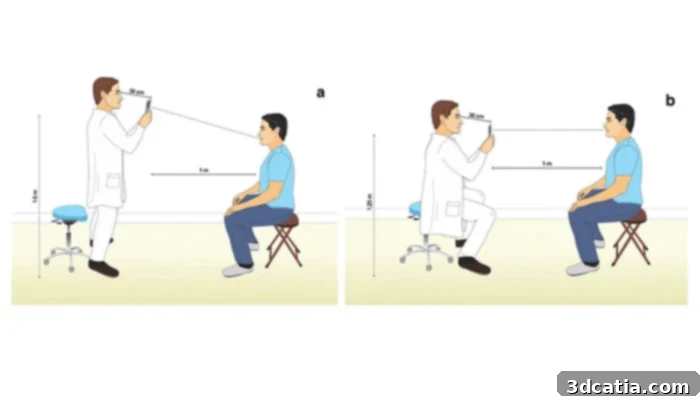
15 pictures are taken from different angles on a mobile device
Luciano Lauria Dib, another key researcher involved in this groundbreaking study, collaborated directly with Denise Vicentin to produce her highly personalized prosthesis. Denise’s journey involved not just technological innovation but also a significant personal commitment. She underwent several surgeries to rebuild her facial tissue, and titanium rods were carefully implanted into her eye socket. These rods were crucial, serving as a stable anchor point to securely hold the upcoming prosthesis in place, ensuring both comfort and functionality. The fusion of surgical expertise and advanced manufacturing techniques truly exemplified the multidisciplinary nature of this medical breakthrough.
The core of their innovative method lies in its simplicity and effectiveness. Instead of invasive molds, the team simply captured fifteen high-resolution pictures of Vicentin’s face from various angles using a standard mobile device. This seemingly simple step is where the magic of photogrammetry software comes into play. These images are then processed to reconstruct a detailed and accurate 3D model of her facial structure, allowing for the precise digital design of the prosthetic device. This digital workflow offers unparalleled accuracy, ensuring that the prosthesis perfectly integrates with the patient’s remaining facial features. The ability to iterate and refine the design in a virtual environment dramatically reduces errors and speeds up the entire creation process, leading to a superior outcome for the patient.
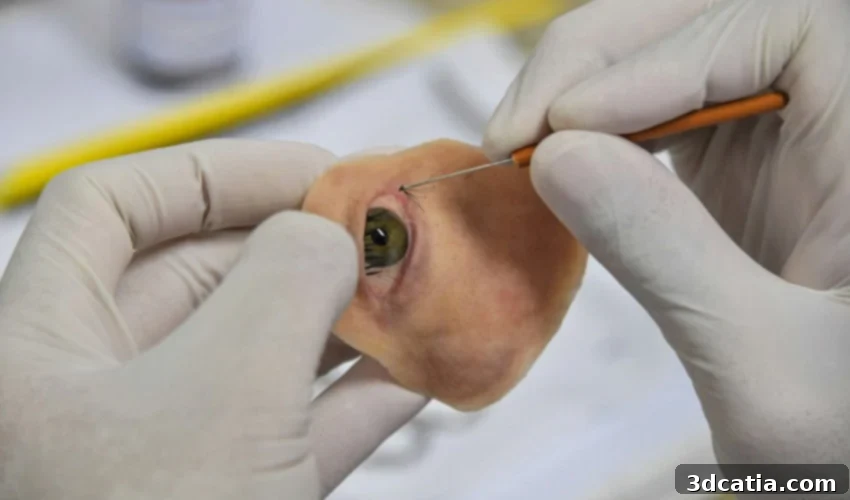
Once the detailed 3D model was perfected, the process moved to the rapid prototyping stage. The initial step involved 3D printing a prototype prosthesis, which served as a crucial test model. This prototype allowed the researchers to check for fit, comfort, and aesthetic alignment before producing the final device. This iterative process is a hallmark of 3D printing technologies, enabling rapid adjustments and ensuring patient satisfaction. After successful validation of the prototype, the final, custom-fit prosthesis was fabricated in a remarkable twelve hours. This speed is a testament to the efficiency of additive manufacturing compared to the days or even weeks required by traditional methods.
The choice of materials was pivotal for achieving both realism and durability. The final prosthesis was crafted from a combination of medical-grade silicone, resin, and synthetic fibers. Silicone provides the necessary flexibility and a skin-like texture, while resin offers structural integrity, and synthetic fibers enhance strength and longevity. Following its creation, the prosthesis underwent a meticulous painting process, where skilled artists painstakingly matched it to Vicentin’s unique skin tone and eye color. This attention to detail is paramount for creating a prosthesis that not only functions but also looks incredibly natural, seamlessly blending with the patient’s existing features and restoring their confidence.
This project stands out for its ingenious reliance on readily available technology that many of us often take for granted: a computer and a mobile phone. Unlike traditional methods that demand incredibly expensive, specialized equipment, the researchers demonstrated that high-quality, personalized prostheses could be produced without an exorbitant investment. They estimated that conventional techniques for a prosthetic device of this complexity would typically involve equipment costing upwards of $500,000. By democratizing access to this technology, the Paulista University team is not just treating individual patients; they are setting a new standard for medical device accessibility and affordability worldwide.
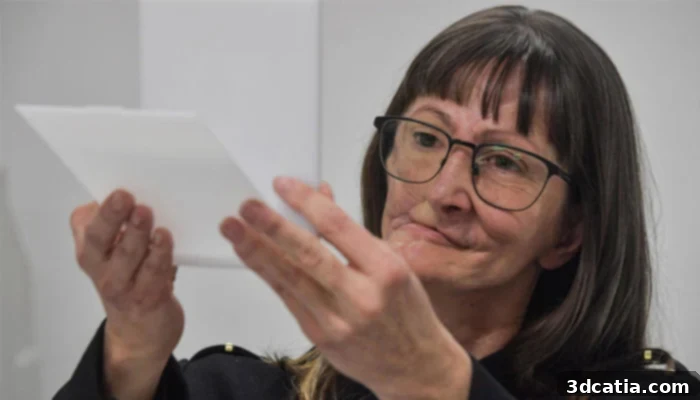
Denise Vicentin said the operation was life-changing | Credits: AFP
Denise Vicentin herself eloquently articulated the profound impact of this innovation, stating that the operation was “life-changing.” Her story is a powerful testament to the transformative potential of 3D printing technologies in the medical world. We have frequently discussed the immense benefits that additive manufacturing brings to healthcare, particularly for the creation of specialized medical devices. The ability to produce highly customized solutions for patients, such as orthoses and prostheses, is invaluable. Historically, tailor-made medical solutions have come at a great cost, often putting them out of reach for many.
However, this prohibitive trend is rapidly changing, thanks to innovative techniques like the one pioneered by the researchers in Brazil. The ability of 3D printing to create complex, individualized geometries with incredible precision and efficiency is fundamentally altering the landscape of patient care. We can confidently anticipate a future where a much broader range of medical devices will be custom-fitted and personalized to meet the unique anatomical and functional needs of each patient, leading to better outcomes and enhanced quality of life. This shift represents a move towards truly patient-centric healthcare, driven by technological empowerment.
The vision of the researchers extends beyond individual cases. Looking ahead, Mr. Salazar and Mr. Dib are planning to further institutionalize their work. In 2021, they announced their intention to establish Plus Identity, a non-profit organization dedicated to advancing this field. Alongside this, they aim to open a dedicated treatment center for facial prostheses, generously funded by Paulista University. These initiatives underscore their commitment not only to scientific advancement but also to humanitarian service, ensuring that more individuals can benefit from these life-altering innovations. Their efforts promise to create a sustainable ecosystem for research, development, and patient care in the realm of advanced prosthetics.
For those interested in delving deeper into the scientific intricacies of this remarkable study, more detailed information can be found in the Journal of Otolaryngology – Head & Neck Surgery, where the original research was published. The publication provides a comprehensive overview of the methodologies, findings, and the scientific rigor that underpins this transformative approach to facial prosthesis creation. It serves as a valuable resource for medical professionals, researchers, and anyone keen to understand the technical foundations of this medical breakthrough.
Denise Vicentin’s incredible story is a beacon of hope, illustrating how cutting-edge technology, combined with dedicated research, can dramatically improve individual lives. This project not only showcases the immense potential of 3D printing and photogrammetry in medicine but also highlights the importance of innovation in making advanced healthcare solutions more accessible and humane. It’s a powerful reminder that behind every technological advancement is a human story of resilience, hope, and transformation.
What are your thoughts on Denise Vicentin’s inspiring journey and the future of 3D printed facial prosthetics? We invite you to share your perspectives in a comment below or join the conversation on our Facebook and Twitter pages! Don’t miss out on the latest advancements and news in the world of additive manufacturing. Be sure to sign up for our free weekly Newsletter, delivering all the essential updates directly to your inbox!