
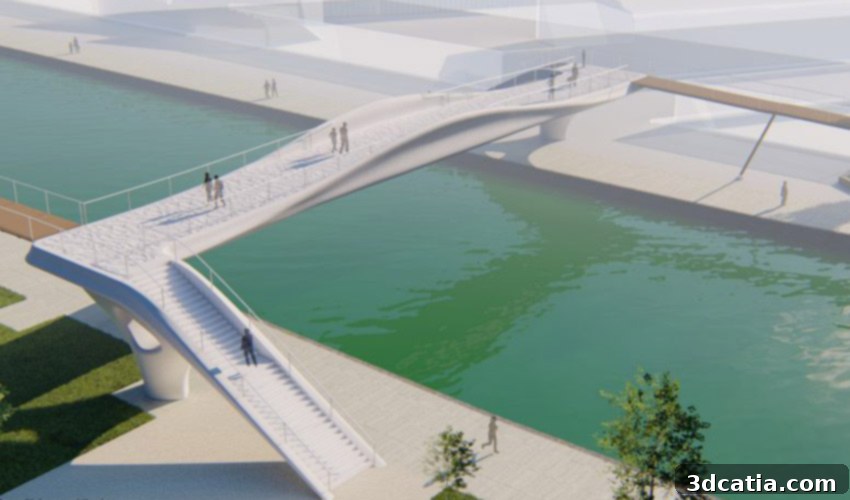
Paris Takes a Leap into the Future: Unveiling the First 3D Printed Concrete Bridge for the 2024 Olympic Games
The world of construction is constantly evolving, with 3D printing in the construction sector emerging as a groundbreaking technology. Paris, a city synonymous with innovation and architectural marvels, is now at the forefront of this revolution. Ahead of the much-anticipated 2024 Olympic Games, Plaine Commune Grand Paris has officially awarded the prestigious contract for the design and construction of a remarkable 40-meter long footbridge. This ambitious project will be undertaken by a formidable consortium comprising Freyssinet, Lavigne & Cheron Architects, Quadric, XtreeE, and LafargeHolcim. What makes this particular endeavor truly exceptional is its core innovation: the entire load-bearing structure, or deck, of the bridge will be meticulously 3D printed using advanced concrete technology. This groundbreaking structure is slated for finalization in time for the 2024 Olympic Games, marking a historic first for the French capital and setting a new benchmark for sustainable and innovative infrastructure development.
This pioneering initiative in Paris is a testament to the accelerating integration of additive manufacturing into urban development worldwide. The spread of this technology across major cities is undeniable, showcasing its versatility and immense potential. One immediately recalls the vibrant city of Amsterdam, which proudly unveiled its first 3D printed bridge, a collaborative effort demonstrating the practical application of this technology. Furthermore, the innovative steel bridge project by MX3D captivated global attention, pushing the boundaries of what’s possible with 3D printed metal. Beyond Europe, the Middle East is also embracing this future-forward approach, with Dubai setting an ambitious goal to 3D print 25% of its buildings by 2030, a clear indicator of a strategic long-term vision. In the United States, companies like Mighty Buildings are revolutionizing residential construction by 3D printing houses using unique proprietary concrete formulations, offering speed and efficiency. Similarly, ICON has made headlines for 3D printing an entire community in Mexico, providing innovative solutions for affordable and sustainable housing. The burgeoning popularity of 3D printing technology in construction stems from a multitude of compelling advantages it offers. These include significantly greater design freedom, enabling architects and engineers to create complex and organic shapes previously unachievable or cost-prohibitive with traditional methods. Moreover, it facilitates a substantial reduction in the quantity of materials used through optimized designs and minimal waste generation. This efficiency ultimately translates into lower overall project costs and a reduced environmental footprint, making it an increasingly attractive option for modern infrastructure and building projects. XtreeE, a key player in the Paris footbridge project, recognized these benefits early on and has since dedicated itself to developing advanced processes for designing and constructing concrete structures that are not only more durable and architecturally complex but also significantly more respectful of our environment. The company’s core objective is to drastically reduce concrete consumption by up to 60% when compared to conventionally built structures, underscoring their commitment to sustainable innovation.
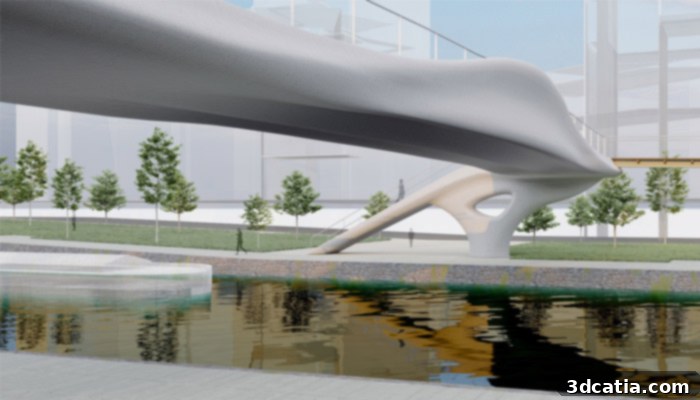
Image credits: Lavigne & Cheron Architectes
XtreeE: Pioneering Sustainable Concrete Construction
In a candid interview granted to us a few years prior, XtreeE offered profound insights into their vision and the critical role of 3D printing. They eloquently explained: “Today, concrete stands as the second most consumed material on Earth, surpassed only by water. The sheer scale of its use is staggering; in just the last three years, China alone has produced more concrete than the United States did throughout the entire 20th century. While it is certainly unthinkable to cease building with concrete altogether, given its inherent strength and versatility – its formulation can be finely adapted to meet a wide array of required properties – its environmental impact cannot be ignored. This is precisely where 3D printing emerges as a game-changer. By leveraging increased geometric control, we gain the unprecedented ability to construct highly optimized shapes. These shapes are specifically designed to limit the quantity of materials needed, ensuring structural integrity with minimal input. Such complex and intricate forms were absolutely impossible to achieve on such a large scale before, primarily due to insurmountable technological limitations and prohibitive financial costs associated with traditional construction methods. However, the landscape has fundamentally shifted. Today, thanks to advancements in additive manufacturing, it is entirely possible to manufacture architectural elements with low-cost processes. These elements possess not only aesthetic appeal and structural soundness but also offer real, tangible environmental benefits, paving the way for a more sustainable future in construction.” This statement encapsulates XtreeE’s core philosophy: harnessing technological innovation to address the environmental challenges posed by conventional construction practices while simultaneously unlocking new architectural possibilities.
The Paris Footbridge Project: A Symphony of Expertise
For the groundbreaking Paris footbridge, XtreeE will serve as the principal additive manufacturing specialist, tasked with the critical role of 3D printing the structure. This ambitious undertaking is made possible through a strategic collaboration that brings together diverse and complementary technical expertise. Freyssinet contributes its extensive experience in complex civil engineering and construction, ensuring structural integrity and robust project management. Lavigne & Cheron Architects are responsible for the aesthetic and functional design, translating innovative concepts into a visually striking and usable bridge. Quadric provides its expertise as a general contractor, overseeing the construction process and ensuring seamless execution. Finally, LafargeHolcim, a global leader in building materials, is developing the specialized concrete material specifically formulated for this advanced 3D printing application. The synergy among these partners is crucial for realizing a project of this scale and innovation. The plan is to 3D print the entirety of the bridge deck – that is, the complete load-bearing structure – utilizing the advanced material developed by LafargeHolcim, tailored to meet the unique demands of additive manufacturing in such a critical application. While specific details about the proprietary material and printing process remain somewhat under wraps, its development underscores the cutting-edge research and development being poured into this project.
Strategic Location for the 2024 Olympic Games
As for the precise location of this pioneering footbridge, it has been confirmed that it will be situated in Aubervilliers, a vibrant commune within the Plaine Commune Grand Paris area. It is most likely that the bridge will span above the Lucien Lefranc wharf, strategically positioned adjacent to the Pleyel district. This choice of location is highly significant, as the Pleyel district has been designated to host the prestigious Olympic and Paralympic Village for the 2024 Games. The footbridge will play a vital role in enhancing connectivity and accessibility for athletes, visitors, and residents, facilitating smooth movement between key areas during the global event. Its integration into the Olympic infrastructure highlights how 3D printing technology is not merely an experimental curiosity but a practical and efficient solution for large-scale, time-sensitive projects. The bridge’s design will likely incorporate elements that are both functional and visually appealing, becoming a symbol of modern urban design and sustainable engineering for the future. This project not only showcases the technical feasibility of 3D concrete printing for large infrastructure but also its potential to contribute meaningfully to urban planning and development.
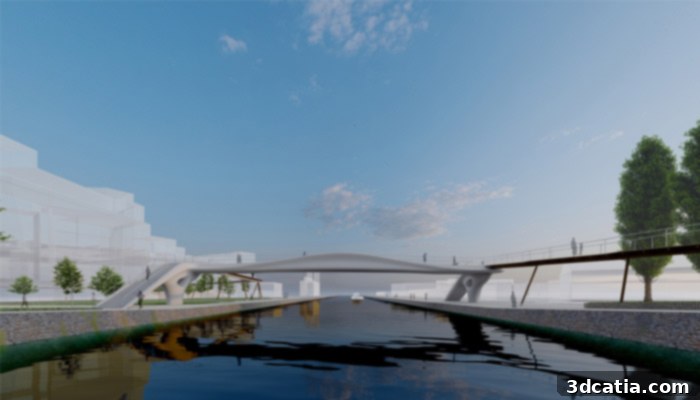
Image credits: Lavigne & Cheron Architectes
The Future of Construction: Beyond the Paris Footbridge
While the exact delivery date for the footbridge is not yet public knowledge, it is anticipated to be finalized sometime in 2023, ensuring its readiness well in advance of the 2024 Olympic Games. This project is more than just a bridge; it represents a significant leap forward in construction methodologies, blending advanced robotics with sustainable material science. Its completion will serve as a global showcase for the capabilities of 3D concrete printing, potentially inspiring similar infrastructure projects across France, Europe, and indeed, the world. The success of this 40-meter structure could pave the way for 3D printed buildings, urban furniture, and even larger bridges in the near future. This innovative approach promises not only faster construction times but also the ability to create more intricate, aesthetically pleasing, and structurally optimized designs that are inherently more sustainable. The reduction in material waste, the precision of robotic construction, and the ability to use localized materials contribute to a greener construction industry. This footbridge stands as a testament to human ingenuity and collaborative spirit, demonstrating how cutting-edge technology can address contemporary challenges in urban development and environmental responsibility. We eagerly await further details on this groundbreaking project and are committed to keeping you informed about the progress of its construction. In the meantime, for those interested in delving deeper into the technological innovations behind this exciting venture, we encourage you to visit the official XtreeE website. There, you can explore comprehensive information regarding their proprietary technology, the advanced materials they have developed, and their broader vision for the future of additive manufacturing in construction.
What are your thoughts on Paris’s pioneering 3D printed bridge and the broader implications of this technology for the future of construction? We value your insights and invite you to share your comments and perspectives below or engage with us on our Facebook and Twitter pages! Don’t miss out on the latest advancements and news in the dynamic world of 3D printing; remember to sign up for our free weekly Newsletter, delivering all the essential updates straight to your inbox.