
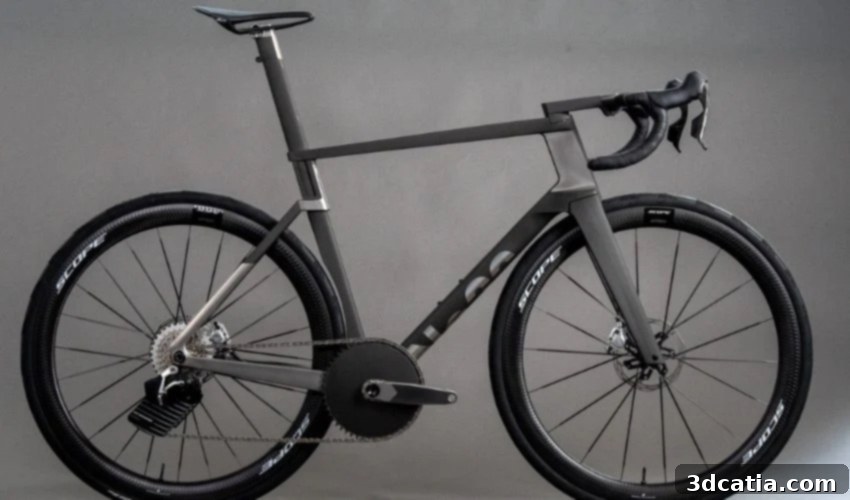
Revolutionizing Cycling: No. 22 Unveils the World’s First 3D-Printed Titanium Aero Bike, the Reactor Aero
In the dynamic world of cycling, innovation is not just an advantage; it’s a necessity. New York-based company No. 22 Bicycles is once again pushing the boundaries of what’s possible, setting new industry benchmarks with the introduction of the Reactor Aero. This groundbreaking model proudly claims the title of the world’s first 3D-printed titanium aero bike, representing a monumental leap in bicycle manufacturing and design. The Reactor Aero seamlessly integrates state-of-the-art additive manufacturing technology with an exceptionally refined design, promising riders an unparalleled and transformative cycling experience. This advanced machine builds upon the acclaimed foundation of No. 22’s existing Reactor racing bike model but has been meticulously re-engineered and optimized to become an aerodynamically superior racing machine. This extensive development process was undertaken in close collaboration with a team of external engineers and highly specialized aerodynamicists, ensuring every aspect of its performance was optimized for speed and efficiency.
No. 22 has long been celebrated for its commitment to crafting exquisite, handmade titanium bicycles, a legacy that lends significant credibility to their latest venture. With the Reactor Aero, the company has taken a remarkable stride forward by developing a prototype constructed almost entirely from titanium. This is a truly significant accomplishment, especially when considering that, historically, titanium in bicycle frames has often been limited to smaller components like eyelets or utilized in conjunction with carbon fiber frames. The decision to embrace a full titanium construction, leveraged through advanced 3D printing, unlocks unprecedented design freedom and material performance. This high-performance road bike made its public debut and garnered considerable attention at the prestigious MADE bike show in Portland, held from August 23rd to 25th, where it captivated enthusiasts and industry experts alike with its innovative approach to bicycle design.

The Reactor Aero frame offers generous clearance for tires up to 43 mm, providing versatility and comfort, while its optimized tube profiles ensure significantly improved power transmission (photo credits: No22)
Beyond its visually striking aerodynamics, this revolutionary titanium racing bike stands out due to its reliance on advanced in-house production methods and pioneering 3D printing technologies specifically for its frame manufacturing. The material of choice for this ambitious project was grade five titanium powder, known for its exceptional strength-to-weight ratio, superior fatigue resistance, and excellent biocompatibility – qualities that are paramount for a high-performance bicycle. The intricate geometry and complex internal structures of the frame were realized through sophisticated additive manufacturing processes, allowing for precise control over the material distribution. The sole exception to the all-titanium frame is the seat post, which is crafted from lightweight and stiff carbon fiber, a strategic choice to further optimize weight and compliance in that specific area. This combination of materials and manufacturing techniques allows No. 22 to achieve a blend of durability, performance, and ride quality previously unattainable in titanium bikes.
Bryce Gracey, co-founder of No. 22, articulated the profound advantages of this manufacturing approach: “3D printed titanium has phenomenal structural properties. The ability to print internal support structures anywhere in the frame gives us a level of control over the ride quality that has not been possible before. We are able to add stiffness in high load areas like the bottom bracket, dropouts, and head tube for very little weight while playing with structure in fine detail throughout the frame to ensure it delivers the ride quality we need.” This insight highlights the transformative potential of additive manufacturing. Unlike traditional fabrication methods, 3D printing allows engineers to strategically place material precisely where it’s needed for strength and stiffness, while removing it from areas where it contributes only to unnecessary weight. This granular control over the internal lattice structures and wall thicknesses enables the creation of a frame that is both incredibly robust in critical stress points and compliant where comfort and vibration damping are desired. The result is a ride that is not only fast and efficient but also surprisingly smooth and responsive, tailored to the nuanced demands of serious road cyclists.
The development of the Reactor Aero was not merely an exercise in material science but also a rigorous journey of aerodynamic optimization. The bike underwent extensive Computational Fluid Dynamics (CFD) simulations, a sophisticated computer-aided analysis that meticulously examines the airflow around both the bicycle and the rider. This advanced simulation technique allowed No. 22’s engineers to visualize, analyze, and precisely optimize air resistance and overall aerodynamic efficiency without the need for endless physical prototyping. The initial results from these simulations and subsequent tests have been nothing short of astounding, indicating a significant reduction in air resistance ranging from 30% to 40% when compared to current leading models on the market. Such a substantial improvement in aerodynamic performance translates directly into higher speeds with less effort, making the Reactor Aero a formidable contender in competitive cycling. Furthermore, during the intensive development phase, virtually every performance aspect of the bike was scrutinized and improved, with a particular focus on enhancing the stiffness and efficiency of the drive unit, ensuring maximum power transfer from rider to road.
To achieve these ambitious performance gains, No. 22 completely reimagined and redesigned several critical components of the frame. The down tube, the bottom bracket junction – a pivotal area for power transfer – and the chain stays were all meticulously re-engineered. This redesign process fully leveraged the unparalleled design freedom offered by 3D printing, enabling complex geometries and internal structures that would be impossible with traditional manufacturing. For instance, the ability to create internal webbing within the bottom bracket shell significantly bolsters stiffness without adding bulk. Moreover, other tube profiles and intricate crossings were also redesigned from scratch. The overarching goal was to create a harmonious balance, combining exceptional stiffness for efficient power transfer and precise handling with the sublime ride quality and comfort that titanium is renowned for. This holistic approach ensures that the Reactor Aero doesn’t just excel in one aspect but delivers a comprehensive high-performance package, making it a true marvel of modern bicycle engineering.
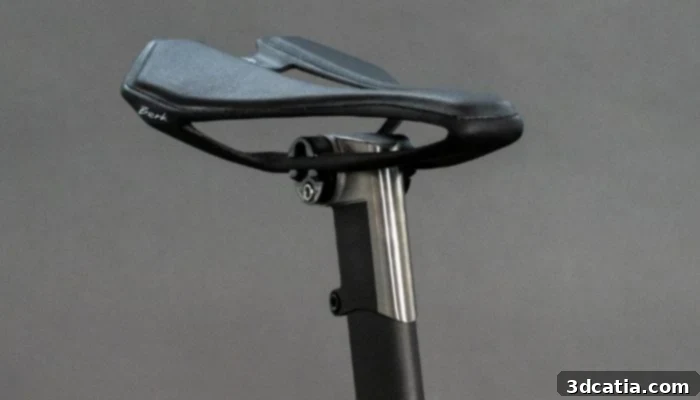
Aerodynamic designs are crucial for reducing air resistance, thereby significantly increasing the speed and overall efficiency of bicycles, especially in competitive scenarios (photo credits: No22)
As of now, specific pricing details for the No. 22 Reactor Aero have not yet been released. The cycling community eagerly anticipates further announcements regarding this groundbreaking machine. More comprehensive information on the intricate details and specifications of the Reactor Aero will be made public as soon as this advanced prototype transitions into its highly anticipated production phase. This move from a demonstration model to a commercially available product will undoubtedly be a momentous occasion for both No. 22 and the wider cycling industry. In the meantime, enthusiasts eager to delve deeper into the innovative world of this extraordinary bike and the visionary company behind it can explore more information directly on No. 22’s official website, accessible HERE. The Reactor Aero stands as a testament to the potential of additive manufacturing in transforming traditional industries, pushing the boundaries of material science, and redefining the very essence of high-performance cycling.
We’d love to hear your thoughts! What do you think of the No. 22 Reactor Aero and its pioneering use of 3D-printed titanium? Share your insights and opinions in a comment below, or engage with us on our vibrant social media platforms, including LinkedIn, Facebook, and Twitter! To stay at the forefront of additive manufacturing advancements and receive the very latest 3D printing news directly to your inbox, don’t forget to sign up for our free weekly newsletter here. You can also explore all our engaging videos and in-depth content on our dedicated YouTube channel, where we bring the world of 3D printing to life.
*All Photo Credits: No. 22 Bicycles