
Revolutionizing Confectionery: Barry Callebaut’s Mona Lisa Unveils World’s First 3D Chocolate Printing Studio
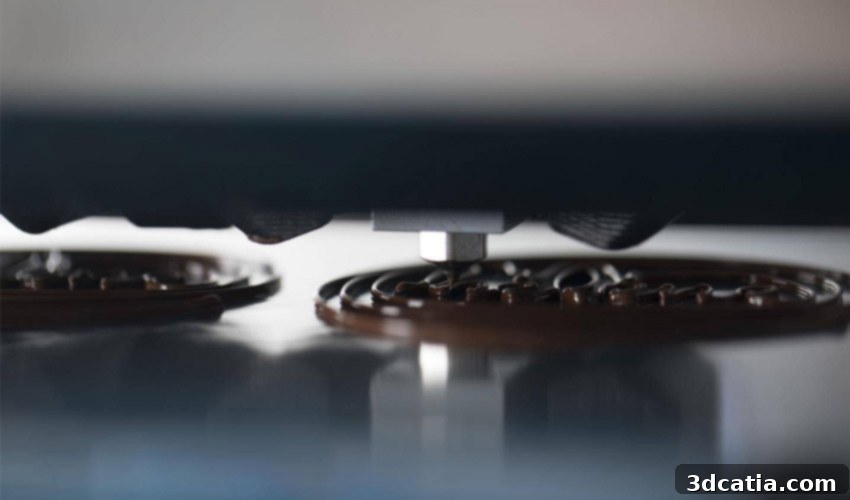
The world of fine confectionery has just taken a momentous leap into the future with Barry Callebaut, a global leader in high-quality chocolate and cocoa products, announcing the grand opening of its pioneering 3D chocolate printing studio. Operated through its innovative subsidiary, Mona Lisa, renowned for exquisite chocolate decorations, this groundbreaking facility marks a significant milestone in the culinary industry. Located in Zundert, the Netherlands, this studio is proudly proclaimed by the company as the very first of its kind, offering a dedicated space where elite chefs and visionary pastry artists can transcend traditional boundaries. Here, they are empowered to explore uncharted creative territories, experiment with novel concepts, and bring to life intricate, previously unimaginable chocolate creations with unparalleled precision and speed. The studio is outfitted with an array of advanced 3D printing machines, capable of producing chocolate pieces in series and at a remarkable pace. At its inauguration, Mona Lisa highlighted its capacity to produce thousands of unique chocolate pieces simultaneously, utilizing premium Belgian dark chocolate. This ambitious initiative beautifully encapsulates a harmonious blend of artisanal craftsmanship, state-of-the-art additive manufacturing technology, and the burgeoning trend of mass customization, promising to redefine the experience of gourmet chocolate.
This visionary move by Barry Callebaut is not merely an exercise in technological prowess; it is a direct response to evolving consumer desires. A recent comprehensive study conducted by the Swiss group revealed a compelling insight: a substantial seven out of ten surveyed consumers expressed a keen interest in “testing new chocolate experiences.” In an era where personalization and unique sensory journeys are highly valued, what could be more fitting than offering them exquisitely 3D printed chocolates? While the concept of 3D printing in confectionery isn’t entirely new, most previous applications primarily focused on 3D printing molds, which were then filled with chocolate. Mona Lisa’s new 3D studio, however, breaks this mold (pun intended) by directly printing the chocolate itself. The studio will focus on creating pieces from high-quality dark chocolate with a rich 56% cocoa content, ensuring both a luxurious taste profile and optimal printability. While the precise additive manufacturing technology employed hasn’t been explicitly detailed, industry experts widely speculate the use of an advanced extrusion process. This method involves melting chocolate to a precise consistency and then depositing it layer by layer through a fine nozzle, allowing for the intricate construction of complex geometries. The selection of a specific chocolate formulation, like the 56% dark chocolate, is crucial, as its rheological properties (how it flows) directly impact the success and quality of the 3D printing process, ensuring structural integrity and a smooth finish.
The Mona Lisa 3D Studio in Zundert, Netherlands, is equipped with several cutting-edge chocolate 3D printers, allowing for mass customization. | Credits: Barry Callebaut
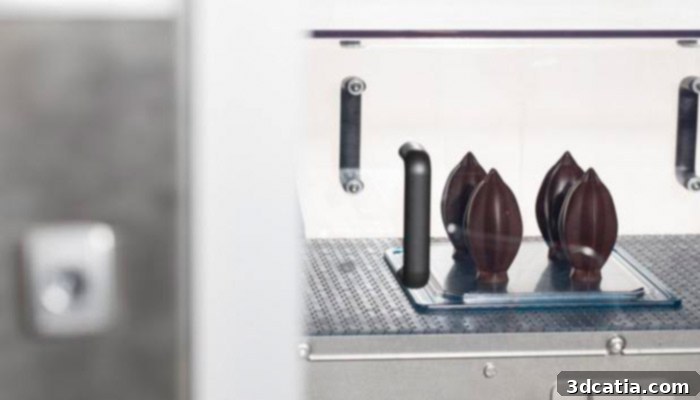
The journey to this technological breakthrough has been a meticulous one. According to Mona Lisa, the company dedicated an intensive three-year period to the research and development of its proprietary 3D printing machines. This extensive investment in R&D has culminated in a highly efficient system, boasting a respectable tray size of 20 cm in length, which is ideal for producing both individual bespoke pieces and small-batch series. One of the most impressive specifications is its speed: a small, intricate chocolate part can be printed in a mere one minute. This efficiency is a game-changer for pastry chefs and chocolatiers, as it dramatically reduces production time for complex designs and allows for rapid iteration and prototyping. The true innovation lies in the boundless possibilities it offers culinary artists. By harnessing additive manufacturing design techniques, chefs can now conceptualize and execute shapes that were previously impossible with traditional molding or carving methods. Imagine delicate honeycomb structures that play with texture and dissolve uniquely on the palate, perfectly nested pieces that reveal hidden layers or flavors, or extremely fine details that add unprecedented artistic flair and brand recognition. These 3D technologies also excel in enabling rapid prototyping, allowing chefs to quickly test numerous iterations of a design, adjust details, and refine their creations before committing to the final product. This iterative process not only saves time and material but also fosters a culture of continuous innovation and perfection in the high-stakes world of gourmet confectionery, ultimately leading to more sophisticated and exciting chocolate experiences for consumers.
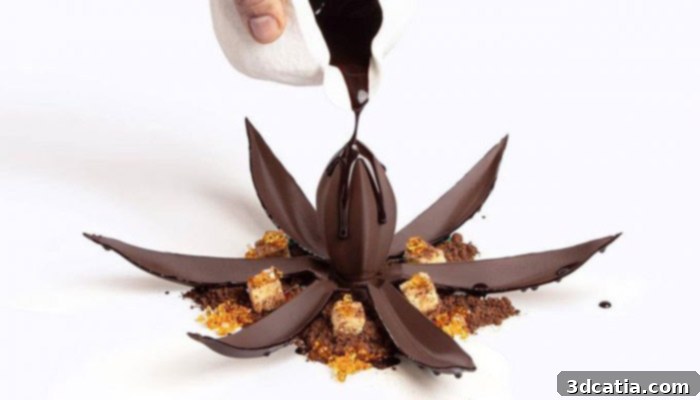
The potential of this technology is best exemplified by the enthusiastic endorsement of Spanish pastry chef Jordi Roca, celebrated for his avant-garde creations at El Celler de Can Roca. Roca was among the privileged few to test this revolutionary workshop for an entire year, pushing its capabilities to their limits. He shared his transformative experience, stating, “This new way of working with chocolate will undoubtedly surprise consumers, offering them shapes previously unthinkable, crafted to scale, and with impressive precision. I’m usually inspired by things I can’t do because they represent a creative challenge – but now, thanks to Mona Lisa’s 3D studio, I can take my chocolate know-how to the next level. I can imagine any new type of design, and it will come to life.” Roca’s testimony underscores the profound impact of 3D printing on culinary creativity, transforming conceptual challenges into tangible realities. It was within this innovative studio that he designed his exquisite “Flor de Cacao,” a masterpiece representing a delicate cocoa bean that majestically unfurls and opens upon contact with warm chocolate sauce. This interactive and visually stunning dessert showcases the studio’s ability to produce not just static shapes, but dynamic, experiential creations that engage multiple senses, elevating the act of eating chocolate to an art form. The precision offered by the 3D printers allows for such intricate mechanisms and delicate structural integrity, truly pushing the boundaries of what is possible with chocolate.
Even before its official grand opening, the Mona Lisa 3D Studio had already secured its inaugural client: Van Der Valk, a prestigious Dutch hotel chain known for its commitment to exceptional guest experiences. This partnership highlights the immediate commercial viability and appeal of personalized, high-end chocolate creations for the hospitality sector. The strategic value of this venture was further articulated by Pablo Perversi, Head of Innovation, Sustainability and Quality, and Head of Gastronomy at Barry Callebaut. Perversi emphasized, “Innovation is an important pillar of Barry Callebaut’s proven ‘smart growth’ strategy. I am delighted that Mona Lisa’s 3D studio allows chefs to create unique, mass-produced consumption experiences. This groundbreaking technological innovation positions the Mona Lisa brand at the forefront of the industry and reinforces Barry Callebaut’s global leadership in culinary décor and chocolate innovation.” Perversi’s statement underscores the dual achievement of the studio: not only does it enable unparalleled artistic expression for chefs, but it also facilitates the scalable production of these unique items. This ‘mass customization’ capability means that luxury and personalization, once confined to bespoke artisan creations, can now be delivered efficiently to a wider audience, revolutionizing everything from hotel amenities and restaurant desserts to corporate gifts and retail offerings. Mona Lisa is set to become a benchmark for personalized confectionery, cementing Barry Callebaut’s reputation as a pioneer in integrating cutting-edge technology with the rich tradition of chocolate making. Further details on this exciting development can be explored directly on Barry Callebaut’s official website HERE.
The introduction of Mona Lisa’s 3D chocolate printing studio represents more than just a new product offering; it signifies a paradigm shift in the food industry. It exemplifies how additive manufacturing can merge art and science, allowing for previously unattainable levels of precision, customization, and creative freedom in edible forms. This technology not only empowers chefs to realize their wildest culinary visions but also promises to transform consumer expectations, leading to more engaging and personalized food experiences. The implications extend beyond gourmet chocolate, hinting at a future where personalized nutrition, complex ingredient combinations, and sustainable, on-demand food production become commonplace. Barry Callebaut, through Mona Lisa, has effectively set a new standard for innovation, demonstrating how a heritage industry can embrace cutting-edge technology to unlock unprecedented opportunities for growth and artistic expression. This fusion of tradition and technology paves the way for a more exciting, delicious, and personalized culinary landscape for years to come.
Are you captivated by the intricate possibilities of these 3D printed chocolates and eager to experience a new dimension of confectionery? We’d love to hear your thoughts and predictions for the future of food 3D printing! Share your excitement and comments below or engage with us on our vibrant social media platforms, including Facebook and Twitter pages! Don’t miss out on the latest advancements and breaking news in the additive manufacturing sector; sign up for our free weekly Newsletter and have all the crucial updates delivered straight to your inbox!
For those looking to delve deeper into the practical applications and strategic integration of additive manufacturing, mark your calendars! We are hosting an insightful webinar on the 26th of February, specifically focusing on how businesses and innovators can successfully adopt additive manufacturing for their diverse projects. This is a prime opportunity to learn from industry experts and gain actionable insights. You can secure your spot and sign up for free as of today HERE. Don’t miss this valuable chance to expand your knowledge in this rapidly evolving field!