

3D Printed Sunglasses: Montserrat & King Children Redefine Sustainable Eyewear with Additive Manufacturing
The world of fashion is undergoing a significant transformation, with additive manufacturing, commonly known as 3D printing, emerging as a pivotal technology. This innovative approach is reshaping how designers conceptualize and produce everything from intricate shoe designs and sophisticated handbags to avant-garde dresses and bespoke accessories. Its inherent versatility allows for unprecedented design freedom, enabling the creation of complex geometries and personalized items that were once impossible or prohibitively expensive with traditional manufacturing methods.
As the seasons shift and the demand for stylish and functional accessories rises, a groundbreaking collaboration has captured the industry’s attention. The luxury accessories brand Montserrat has joined forces with the visionary design studio King Children to unveil an exciting new line of sunglasses. What makes these sunglasses truly special and a testament to modern innovation? They are meticulously designed and crafted using additive manufacturing technology. This venture marks another significant stride for 3D printing in the eyewear sector, echoing similar advancements seen recently. Just last year, athletic giant Adidas also made headlines by introducing glasses featuring frames produced through 3D printing, underscoring a growing trend within the industry.
A Vision for Effortless Luxury and a Zero-Waste Future in Eyewear
The partnership between Montserrat and King Children is more than just about creating new products; it’s about pioneering a new standard for design and sustainability in the luxury market. Leslie Muller, the Head of Design at King Children, articulated the core philosophy behind this collaboration during the development phase. She emphasized the symbiotic relationship with Montserrat New York, stating, “We love working with MONTSERRAT New York. For this collection, we wanted to create sunglasses that capture their DNA of effortless luxury while taking advantage of King Children’s technology in new ways. Through partnering with forward-looking brands like MONTSERRAT New York and powering their eyewear offerings, we are able to meaningfully move the eyewear industry towards a zero-waste future.”
This statement highlights two critical aspects of the project: the pursuit of “effortless luxury” and a commitment to a “zero-waste future.” Effortless luxury, in this context, refers to products that exude sophistication and quality without ostentation, offering comfort and style that seamlessly integrate into the wearer’s lifestyle. Additive manufacturing plays a crucial role here, allowing for the creation of lightweight, ergonomically designed frames that offer superior fit and comfort. The ability to produce complex, hollow structures means frames can be significantly lighter than conventionally manufactured counterparts, contributing directly to this sense of effortless wearability, aligning perfectly with Montserrat’s aesthetic. Furthermore, the commitment to a zero-waste future is a bold pledge in an industry often criticized for its environmental footprint. 3D printing inherently reduces material waste by building objects layer by layer, only using the material necessary, a stark contrast to traditional subtractive manufacturing methods that often generate significant scrap.
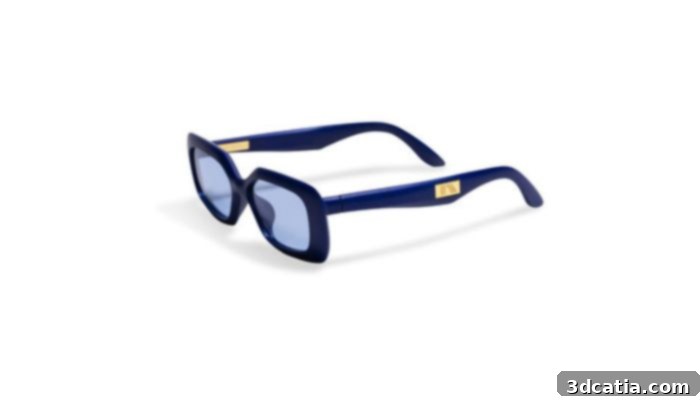
The elegantly designed 3D printed sunglasses, a result of the Montserrat and King Children collaboration. (photo credits: Montserrat)
The Sustainable Innovation Behind the Eyewear’s Development
The core principle driving the development of these unique sunglasses was a conscious effort to minimize environmental impact. By choosing additive manufacturing, Montserrat and King Children made a strategic decision to embrace a production method known for its efficiency and sustainability. Montserrat proudly asserts that the production process generated minimal waste, a significant achievement compared to conventional eyewear manufacturing, which often involves extensive material offcuts and inefficient use of resources. This approach aligns with a growing global imperative for industries to adopt greener practices and reduce their ecological footprint.
Leveraging Selective Laser Sintering (SLS) for Optimal Performance and Design
To bring their vision to life, the design and production teams at Montserrat and King Children employed Selective Laser Sintering (SLS), a renowned powder bed fusion 3D printing technology. SLS is particularly favored in industries demanding both high performance and intricate designs due to its ability to produce lightweight yet incredibly strong and durable parts. The process works by using a high-powered laser to selectively fuse small particles of polymer powder into a solid structure, layer by layer, based on a 3D digital model. Critically, the unfused powder within the build chamber acts as a self-supporting medium for the printed part, eliminating the need for additional support structures. This unique characteristic allows for the creation of highly complex internal geometries, undercuts, and interlocking designs that are challenging, if not impossible, with other manufacturing techniques, all while maximizing material efficiency by recycling unfused powder for subsequent prints.
The advantages of SLS were instrumental in achieving the desired characteristics for the sunglasses. This technology granted the teams unparalleled freedom of design, allowing them to experiment with unique shapes, textures, and structural elements that would be impractical or cost-prohibitive with injection molding or traditional fabrication. This design flexibility not only contributes to the aesthetic appeal but also facilitates enhanced personalization, ensuring that each pair of sunglasses can be crafted to a high standard, with specific attention to detail and wearer comfort. While the specific 3D printers utilized for this project were not disclosed, the companies confirmed the use of a polyamide powder, a common and highly effective material in SLS 3D printing. Polyamide 11 (PA11) and Polyamide 12 (PA12) are frequently chosen for their excellent mechanical properties, including high strength, flexibility, impact resistance, and good chemical resistance. These polyamides are also favored for eyewear applications due to their lightweight nature, smooth surface finish, and biocompatibility, making them ideal for durable, comfortable, and skin-friendly frames.
The Broader Impact: A Sustainable Future for Fashion and Eyewear
The collaboration between Montserrat and King Children signifies a crucial step forward for the entire fashion industry, illustrating how technology can be harnessed to create products in a more responsible and planet-friendly manner. Gayle Yelon, the co-founder of Montserrat, succinctly captured this ethos, stating, “This collaboration brings together two brands who turn to technology to reimagine the ways we create product to better our planet. Both of our teams worked together to fuse the architectural notes often seen in our jewelry and the effortlessness felt wearing our clothing into sunglass styles that fit perfectly into the brand and were developed without creating material waste.”
This joint venture underscores a shared commitment to innovation and sustainability, translating Montserrat’s signature architectural aesthetics, often found in their exquisite jewelry, and the comfortable, effortless feel of their apparel into the design language of their eyewear. The result is a collection of sunglasses that not only align seamlessly with the brand’s identity but are also produced with an unwavering dedication to environmental stewardship. The promise of “creating without material waste” is a powerful message, positioning these sunglasses as more than just a fashion accessory but as a beacon of sustainable manufacturing practices that challenge industry norms.
The availability of these innovative sunglasses in two distinct versions, each offered in three appealing colors, ensures a range of choices for discerning consumers. This variety, coupled with the inherent benefits of 3D printing, allows Montserrat and King Children to cater to diverse tastes while maintaining their commitment to quality and sustainability. The ability to produce on-demand also reduces the risk of overproduction, a common issue in the fashion industry that contributes significantly to waste, making the supply chain more agile and responsive to actual market demand.
Beyond Eyewear: The Future of 3D Printing in Luxury Fashion
The success of projects like Montserrat’s 3D printed sunglasses offers a compelling glimpse into the future of luxury fashion. Additive manufacturing is not merely a production tool; it is a catalyst for creativity, personalization, and environmental responsibility. It enables designers to push boundaries, creating highly customized items tailored to individual preferences, anatomical measurements, and aesthetic desires. This level of customization is particularly impactful in eyewear, where fit and comfort are paramount for an optimal user experience.
Furthermore, the localized production capabilities offered by 3D printing can significantly reduce supply chain complexities and carbon footprints associated with global shipping. Imagine a future where eyewear can be printed closer to the point of sale, reducing transportation emissions and enabling quicker response to market trends. This approach not only benefits the environment but also empowers local economies and fosters greater innovation within the industry by enabling small-batch, on-demand production that was once only feasible for mass manufacturers.
The adoption of 3D printing by luxury brands like Montserrat, alongside design-forward studios like King Children, signals a broader shift towards more thoughtful and sustainable consumption. Consumers are increasingly seeking products that reflect their values, demanding transparency in production and a commitment to environmental protection. 3D printed eyewear, with its waste-reducing attributes, potential for ethical sourcing, and capacity for bespoke design, resonates strongly with this evolving consumer mindset, making it a compelling choice for both brands and buyers looking for innovative and responsible luxury. It heralds a new era where high fashion and high technology converge for a better planet.
To delve deeper into this innovative project and explore the full collection of 3D printed sunglasses, we encourage you to visit Montserrat’s official website HERE. Discover how cutting-edge technology is transforming luxury accessories and paving the way for a more sustainable future.
What are your thoughts on these pioneering 3D printed sunglasses developed by Montserrat and King Children? We’d love to hear your opinions! Let us know in a comment below or join the conversation on our LinkedIn, Facebook, and Twitter pages! Don’t forget to sign up for our free weekly Newsletter here to receive the latest 3D printing news straight to your inbox! You can also find all our videos and more insightful content on our YouTube channel.
*Cover Photo Credits: Montserrat