
Unlocking Industrial Growth: Strategic Investment in Metal Additive Manufacturing for Key Applications
Additive Manufacturing (AM) stands poised to usher in the next profound stage of evolution across industries globally. Its transformative impact is already undeniably evident in high-stakes sectors such as Aerospace, Healthcare, and Motorsports, where precision, customization, and complex geometries are paramount. However, for a multitude of companies operating outside these traditionally early-adopting segments, the critical questions remain: What tangible value can metal additive manufacturing technology truly bring to their established manufacturing processes? And perhaps even more importantly, what are the optimal indicators and conditions that signal the opportune moment to invest in metal AM?
To address these pivotal inquiries, 3Dnatives recently co-hosted an insightful webinar with industry leader GF Machining Solutions. This session was meticulously designed to outline and scrutinize the essential considerations a company must evaluate when assessing the substantial benefits of the Laser Powder Bed Fusion (LPBF) process. LPBF currently holds the distinction as the most prevalent and widely adopted metal AM technology, known for its precision and versatility. The webinar’s strategic approach was vividly illustrated through the examination of two compelling real-world case studies: one focusing on the optimization of cutting tools, and another delving into the production of complex machinery components. The latter case study was presented by ARNOLD UMFORMTECHNIK GmbH & Co. KG, a distinguished German company from the Würth Group, which not only utilizes metal AM technologies extensively but also stands as a valued client of GF Machining Solutions.
The Ascendance of Metal Additive Manufacturing in Industry
In recent years, metal additive manufacturing has unequivocally cemented its significant position within the global 3D printing technology market. This rise has been characterized by a multi-faceted growth trajectory. We’ve witnessed a substantial increase in the number of sophisticated machine manufacturers, a rapid emergence of stronger and more advanced alloys and materials, and the widespread availability of innovative software solutions specifically engineered to optimize the entire design-to-production process. The overarching objective driving these advancements and initiatives is clear: to democratize the use of metal AM and empower companies in their journey to implement reliable, sustainable, and economically viable technologies. Crucially, these additive solutions are most often implemented not as replacements, but as powerful complements to their existing subtractive manufacturing solutions, creating hybrid workflows that leverage the best of both worlds.
This mission aligns perfectly with the core philosophy of GF Machining Solutions. Recognizing the immense potential of metal additive manufacturing several years ago, the company embarked on a strategic journey to develop and perfect an entire optimized value chain. This comprehensive approach ensures mastery over all critical stages of the manufacturing process, from initial design and simulation, through the precise printing phase, and concluding with meticulous post-processing. Their dedication ensures that clients receive not just a machine, but a complete, integrated solution designed for efficiency and superior part quality.
GF Machining Solutions: A Pillar in Additive Manufacturing Excellence
Headquartered in Switzerland, GF Machining Solutions is a distinguished member of the Georg Fischer Group, boasting a formidable global presence in over 50 countries. Their early foresight into the transformative power of metal additive manufacturing led them to make strategic investments several years ago. This proactive stance has resulted in the development of a fully optimized and integrated value chain, where they demonstrate unparalleled mastery over every critical stage of manufacturing. This includes expertise spanning from the initial concept design and meticulous simulation, through the intricate printing process, and extending to all necessary post-processing steps such as surface finishing, heat treatment, and precise machining. This holistic approach ensures seamless integration and maximum efficiency for their clients.
The collaboration between GF Machining Solutions and companies like ARNOLD UMFORMTECHNIK exemplifies this commitment. ARNOLD, a German firm renowned for combining sophisticated fastening technology with intelligent services, has ascended to become one of the world’s foremost manufacturers and development partners for high-quality fastening elements and cold-forging press parts. Their embrace of metal AM, facilitated by GF Machining Solutions, showcases the tangible benefits of integrating this advanced technology into conventional manufacturing processes, driving innovation and enhancing product performance.
Understanding Laser Powder Bed Fusion (LPBF)
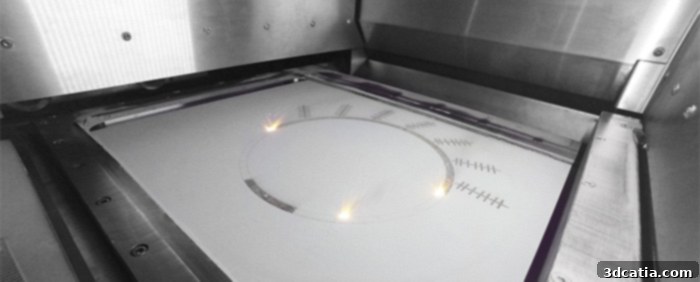
The webinar placed significant emphasis on Laser Powder Bed Fusion (LPBF), and for good reason. LPBF is currently the most popular and versatile metal AM process, offering an array of advantages for industrial applications. In essence, LPBF works by using a high-powered laser to selectively melt thin layers of metal powder, which are then fused together layer by layer according to a 3D digital model. This process allows for the creation of incredibly complex geometries, intricate internal structures, and highly dense parts with excellent mechanical properties. Unlike traditional manufacturing methods, LPBF excels at producing parts that are lightweight yet strong, optimized for performance, and can integrate multiple components into a single printed piece, thereby reducing assembly time and potential failure points. Its precision and material versatility, supporting various metal alloys, make it a cornerstone technology for industries seeking innovation.
Key Factors for Integrating Metal AM into Your Manufacturing Process Chain
Integrating additive manufacturing, especially metal AM, into an existing manufacturing process chain is a complex but rewarding endeavor. The webinar delved into several key factors that companies must consider to maximize the benefits and ensure a smooth transition. These considerations span the entire product lifecycle, from initial design to final part validation:
- Identifying Suitable Applications: Not every part is a good candidate for metal AM. Companies must conduct thorough analyses to identify components that truly benefit from AM’s capabilities, such as complex geometries, lightweighting opportunities, part consolidation, mass customization potential, or the need for rapid prototyping and on-demand spare parts. Understanding the specific problem AM solves for a particular component is crucial for a positive return on investment.
- Design for Additive Manufacturing (DfAM): Successful AM implementation heavily relies on designing parts specifically for the additive process, rather than simply converting existing designs. DfAM principles leverage the unique freedoms of AM, enabling engineers to create topologically optimized structures, internal lattices, and conformal cooling channels that are impossible with traditional methods, leading to superior performance and material efficiency.
- Material Selection and Qualification: The choice of metal alloy is critical. The market now offers a growing range of robust materials suitable for AM, including stainless steels, titanium, inconel, and aluminum alloys. However, each material has specific processing parameters and post-processing requirements. Companies must also invest in material qualification processes to ensure printed parts meet stringent industry standards and performance expectations.
- Process Chain Integration: Metal AM is rarely a standalone process. It must be seamlessly integrated into the broader manufacturing workflow, which includes pre-processing (design, simulation, build preparation), the printing itself, and extensive post-processing (support removal, heat treatment, surface finishing, CNC machining for critical tolerances). Optimizing this entire chain is essential for efficiency and cost-effectiveness.
- Cost-Benefit Analysis and ROI: A detailed financial evaluation is indispensable. While initial investment in AM machinery can be substantial, the long-term benefits can include reduced material waste, lower tooling costs, faster lead times, improved product performance, and new market opportunities. Quantifying these benefits and understanding the total cost of ownership (TCO) is vital for justifying investment.
- Skills Development and Training: Implementing metal AM requires specialized knowledge and skills, from DfAM engineers to machine operators and quality control specialists. Companies must invest in training their workforce or acquiring new talent to effectively manage the additive manufacturing process and leverage its full potential.
- Quality Control and Standardization: Ensuring consistent part quality and repeatability is a paramount concern. This involves implementing robust quality assurance protocols, utilizing in-situ monitoring systems during printing, and adhering to emerging industry standards for metal AM parts.
Webinar Highlights and Case Study Insights
The webinar provided a structured and comprehensive deep dive into these topics, offering attendees a clear roadmap for considering metal AM. The agenda was carefully crafted to guide participants through the essential phases of AM adoption:
Watch the replay
Agenda
- 16:00 to 16:05: Introduction and Survey by 3Dnatives – Setting the stage for understanding current perceptions and challenges in AM.
- 16:05 to 16:10: Adoption of Metal AM Technology: What is the Current Status? – A brief overview of market trends, growth drivers, and industrial penetration of metal AM.
- 16:10 to 16:25: Integrating AM inside a Manufacturing Process Chain: What are the Key Factors to Consider? – A detailed discussion on DfAM, material selection, workflow integration, and economic considerations.
- 16:25 to 16:40: Case Study 1 – In-depth analysis of a real-world application, likely demonstrating benefits like performance improvement, material savings, or lead time reduction for cutting tools.
- 16:40 to 16:50: Case Study 2 – Focusing on machinery components, this segment likely showcased how AM enables complex part consolidation, functional integration, or optimized thermal management.
- 16:50 to 17:00: Q&A – An interactive session allowing participants to directly engage with experts.
The case studies were particularly illuminating, offering concrete examples of how metal AM translates into tangible business advantages. For cutting tools, AM can enable complex internal cooling channels, leading to improved tool life and cutting efficiency. For machinery components, benefits often include significant weight reduction without compromising strength, enhanced functionality through integrated features, and the ability to rapidly produce specialized or replacement parts, ultimately reducing downtime and operational costs.
Meet the Experts: Driving Innovation in Additive Manufacturing
The success of the webinar was significantly bolstered by the caliber of its speakers, bringing a wealth of experience and expertise to the forefront of the discussion:

Romain Dubreuil has been an integral part of GF Machining Solutions for four years, initially joining as an Additive Manufacturing Engineer. His expertise quickly led him to leadership, where he managed a team of additive application engineers, overseeing crucial business development initiatives. Prior to his impactful tenure at GF Machining Solutions, Romain honed his skills as a Production Engineering Manager in Injection Molding, where he was also responsible for guiding production teams through various product development cycles. His diverse background offers a unique perspective on integrating advanced manufacturing techniques into traditional processes.

Uwe Wolfarth holds the distinguished position of Senior Director Research & Development / Licensing at ARNOLD UMFORMTECHNIK GmbH & Co. KG. Under his leadership, ARNOLD has solidified its reputation as one of the world’s leading manufacturers and development partners. The company achieves this by expertly combining sophisticated fastening technology with intelligent services, delivering high-quality fastening elements and precision cold-forging press parts. Uwe’s deep insights into material science, product development, and manufacturing innovation make him a credible voice on the practical application and future potential of metal AM in demanding industrial settings.
Both speakers provided invaluable perspectives, blending technical expertise with real-world application, making the webinar an indispensable resource for anyone considering the adoption of metal additive manufacturing.
Conclusion: Charting a Course for Metal AM Investment
The journey toward widespread adoption of metal additive manufacturing for industrial applications is well underway, but it necessitates strategic planning and a clear understanding of its nuances. As demonstrated by the collaborative insights from 3Dnatives, GF Machining Solutions, and ARNOLD UMFORMTECHNIK, identifying the right opportunities and investing wisely in metal AM requires careful consideration of technological readiness, process integration, and a clear vision for how AM can complement existing manufacturing capabilities. The continued growth in machine sophistication, material innovation, and software optimization ensures that metal AM will increasingly become a cornerstone of future industrial processes. For companies looking to enhance performance, reduce costs in specific applications, and gain a competitive edge, understanding when and how to integrate this powerful technology is no longer optional but a strategic imperative for unlocking new levels of industrial growth and innovation.