
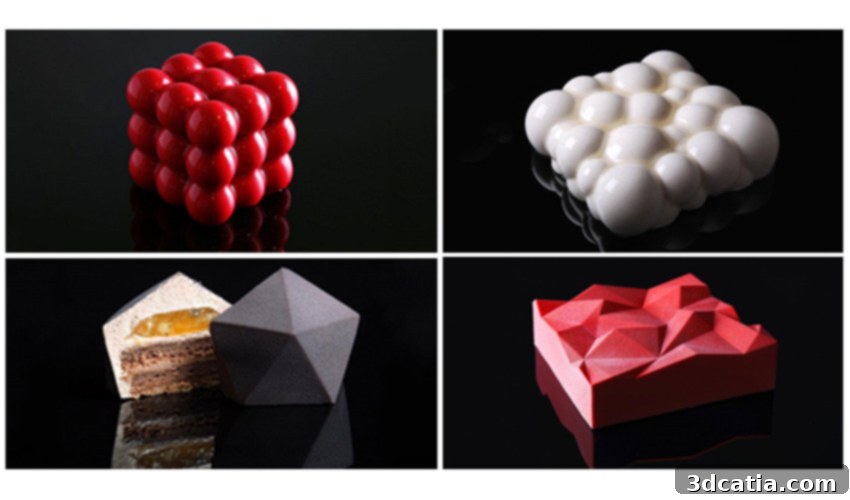
Dinara Kasko: The Visionary Chef Blending Architectural Precision with 3D Printed Culinary Artistry
In the ever-evolving world of gastronomy, where culinary artistry meets cutting-edge technology, one name shines brightly: Dinara Kasko. An undeniable internet sensation, Dinara has captivated a global audience with her awe-inspiring creations. With over half a million followers on Instagram, her feed is a visual feast, showcasing exquisite 3D printed treats that redefine the boundaries of dessert design. Unlike industrial applications where plastics or metal are the typical mediums, Dinara uniquely harnesses 3D printing technology to craft intricate and artistic designs, which she then uses to mold her spectacular pastry desserts. This innovative approach is more than just a passing trend; it represents a significant leap in culinary precision and customization, offering capabilities far beyond what traditional human hands can achieve. We had the distinct pleasure of conversing with Dinara about her fascinating journey, how she pioneered the integration of 3D printing into food design, and her exciting aspirations for the future of digital gastronomy.
3DN: Could you please introduce yourself to our readers and elaborate on your unique work as a pastry architect?
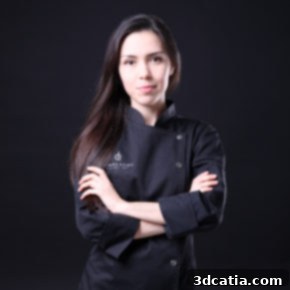
My name is Dinara Kasko, and I am a 28-year-old Ukrainian pastry chef. My culinary journey began quite organically, with me simply experimenting with classic cakes and pies, which very quickly blossomed into an all-consuming passion. Prior to fully immersing myself in the world of sweets, I pursued a degree from the University of Architecture and Design in Kharkov. After graduation, I worked as an architect, a profession I genuinely enjoyed. However, my fascination with pastries continued to grow, eventually surpassing my interest in architectural projects. Today, I find myself in a truly fortunate position where all possibilities are open. This allows me the incredible freedom to continuously modernize my craft, experiment with new techniques, and conduct numerous tests right here in my kitchen, pushing the boundaries of what pastry can be.
3DN: Your work beautifully intertwines two seemingly disparate fields. Can you explain the pivotal link between your innovative pastry creations and 3D printing technology?
From the very moment I started seriously making pastries, I felt an intrinsic desire to infuse them with a unique, personal touch – something truly novel and distinctive. I quickly came to realize that the visual appeal of a dessert was just as profoundly important as its taste and texture. To consistently create truly new and complex forms, the most effective method was to design and produce my own custom silicone molds. This led me to the ingenious solution of creating plastic 3D models, which then serve as the master patterns for these silicone molds. The only practical and precise way to bring these intricate digital models into a physical reality was by utilizing a 3D printer. Fortuitously, I had a significant advantage when I embarked on this design process: I had spent several years working alongside professional 3D designers during my architectural career. This valuable experience meant I already possessed a solid understanding of 3D modeling software and the principles of additive manufacturing, which significantly accelerated my ability to translate my creative visions into printable designs.
My initial foray into this uncharted territory involved printing a variety of geometric models. With these, I crafted a series of desserts characterized by their pure, simple shapes, deliberately devoid of elaborate colors or decorative elements. While these early creations, admittedly, didn’t always possess the most “edible” appearance in the traditional sense, I found myself deeply drawn to their minimalist aesthetic and the clean lines achieved through this process. This early success, combined with the exciting potential, spurred me to push further, eventually leading me to design and print molds for entire cakes. In the beginning, my journey relied on the generosity of a friend, whose personal 3D printer helped bring my very first molds to life. However, as my creative ambitions grew, so did my demands for both the quality and quantity of prints. This increasing need for advanced capabilities and greater control over the entire mold-making process, from digital design to the kitchen, prompted my decision to invest in my own 3D printer. This acquisition was a game-changer, granting me unparalleled creative freedom and significantly boosting my production capacity. Today, I proudly operate an Ultimaker 3, a reliable machine that stands at the heart of my innovative culinary workshop.
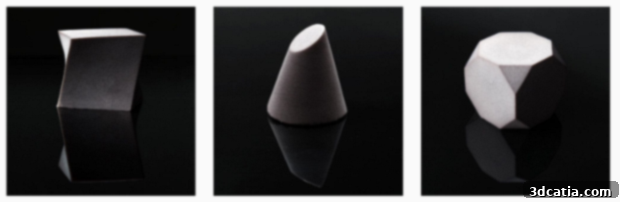
The first geometrically inspired molds created by Dinara Kasko, marking the beginning of her unique culinary journey.
3DN: Your desserts are renowned for their striking visual appeal. Where do you draw your primary inspiration when conceptualizing and designing these extraordinary creations?
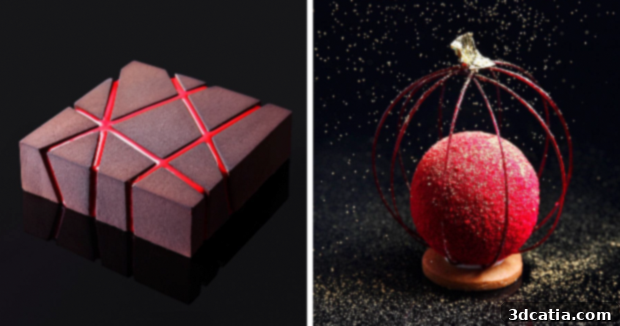
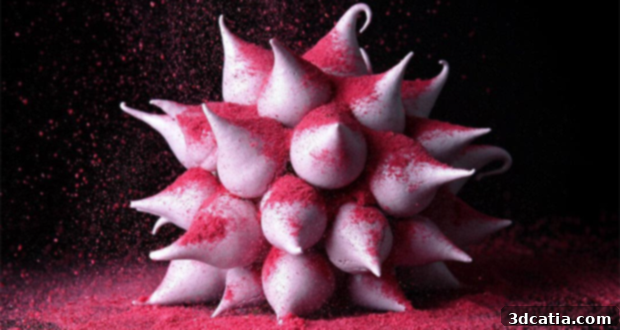
My inspiration truly springs from the rich tapestry of everything around me, encompassing a vast spectrum of influences. It can be found in the delicate curves of a piece of art, the rhythm and flow of music, the composition of striking photographs, the intricate patterns in fashion and clothing, or even the structural elegance of furniture design. The natural world also serves as an endless wellspring of ideas, from the precise geometry of a snowflake to the organic growth patterns of plants. Many of these elements, whether an artist’s vision or a natural phenomenon, can be vividly brought to life and transformed into edible art within my pastries. I naturally gravitate towards certain geometric shapes, finding particular beauty and challenge in working with forms like cubes, triangles, and spheres. Additionally, I have a distinct preference for specific color palettes, often favoring the striking contrasts and elegance of black, red, and white. These personal aesthetic preferences are deeply woven into the fabric of my design philosophy, playing a fundamental role in shaping the unique visual identity of my desserts.
3DN: As a pioneer in this field, what is your perspective on the future landscape of 3D printing within the culinary world and the kitchen environment?
The future of 3D printing in the kitchen is incredibly promising, though we are still in the early stages. Currently, we do have 3D machines capable of directly printing with ingredients like chocolate. However, in my professional opinion, the output quality from these direct food printers isn’t yet refined enough to meet the high aesthetic and textural standards I aim for in my creations. The precision, detail, and surface finish often fall short of what can be achieved through custom molds. Despite this, I am absolutely convinced that advancements are happening rapidly, and we will undoubtedly see much better quality direct food printers emerge very soon. What’s particularly exciting are the burgeoning developments in using alternative materials beyond chocolate, such as meringue and various mousses. These offer new opportunities for unique textures, flavors, and structural possibilities that were previously unimaginable. As the technology evolves, I foresee a future where bespoke dining experiences, personalized nutritional solutions, and entirely new culinary forms become commonplace, revolutionizing how we create and consume food.
3DN: Looking ahead, what specific projects and culinary innovations are you most eager to embark on next?
One of my most ambitious and immediate goals is to venture into creating intricate polycarbonate molds, specifically designed for crafting high-end candies. This would allow for a different level of precision and a superior finish, giving candies a beautiful sheen and crisp edges. However, there are significant technical hurdles to overcome. Printers utilizing Stereolithography (SLA), which would offer the necessary fine detail for polycarbonate, often do not possess a sufficiently large build volume for the mold sizes I envision, and the larger, more capable SLA printers come with a prohibitive cost. Despite these considerable challenges in terms of equipment accessibility and investment, my vision remains crystal clear. I am fully aware of what I aim to achieve and the artistic potential these new molds hold. I am confident that with persistence and innovation, I will soon accomplish these ambitious goals and bring even more exquisite edible art to life.
3DN: Is there any final message or piece of advice you would like to impart to our readers, especially those interested in the convergence of technology and creativity?
As fate would have it, right as we were speaking, my 3D printer just completed another mold! This particular one took a substantial 30 hours of printing, not to mention a few initial failures and tweaks along the way. But that’s part of the process – embracing the challenges and learning from every iteration. Ultimately, I am incredibly happy and proud of the final result. This new mold is destined for a truly unique and intricate cake design that I’m eager to share. My message is simple: don’t be afraid to experiment, to combine seemingly unrelated disciplines, and to embrace the iterative nature of creation. The most exciting innovations often come from the unexpected intersections of passion and technology.
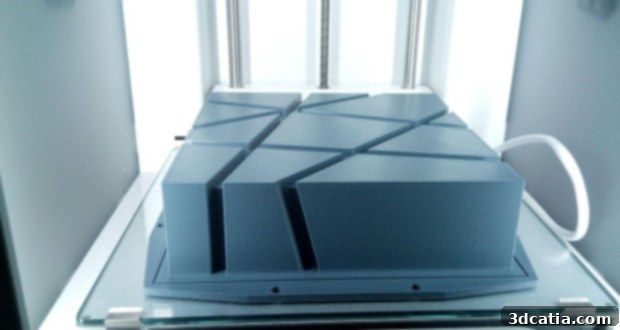
For an even deeper insight into Dinara’s fascinating process and to witness the magic firsthand, watch the captivating video below demonstrating how she meticulously 3D prints her groundbreaking molds:
Dinara Kasko stands as a true testament to the power of interdisciplinary innovation, pushing the boundaries of what is possible in the culinary arts. Her journey from architecture to pioneering 3D printed pastry is an inspiring narrative for creatives and technologists alike. What are your thoughts on the transformative potential of 3D printing in the kitchen? Do you foresee a future where every home chef can design and print bespoke molds or even directly print food? Share your insights and predictions in a comment below, and don’t forget to follow us on Facebook and Twitter to stay updated on the latest advancements in additive manufacturing!