
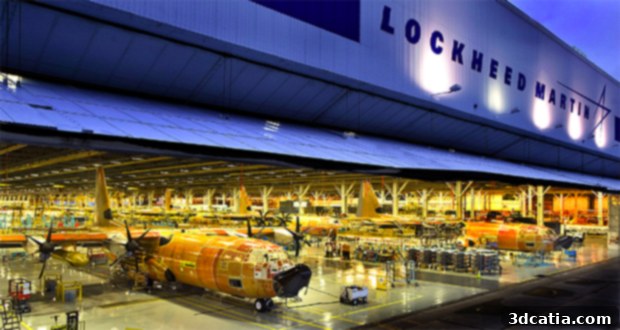
Lockheed Martin Pioneers Next-Gen ICBM Development with Virtual Reality and 3D Printing
In a significant move poised to redefine the future of defense manufacturing, Lockheed Martin, the renowned American defense giant, has unveiled its ambitious plans to integrate cutting-edge Virtual Reality (VR) and advanced 3D printing technology into the development of the US Air Force’s next generation of Intercontinental Ballistic Missiles (ICBMs). This innovative strategy marks a pivotal shift towards a more efficient, cost-effective, and adaptable approach in building the nation’s critical strategic deterrent systems.
Lockheed Martin is currently locked in a competitive battle alongside industry titans Boeing and Northrop Grumman for the coveted contract to produce the new ICBM. This sophisticated missile system is slated to replace the venerable Minuteman III, a cornerstone of the U.S. nuclear triad for decades. By synergizing virtual reality and 3D printing with their extensive traditional missile production expertise, Lockheed Martin aims to achieve a dual objective: substantially lower the overall costs associated with ICBM development and manufacturing, while simultaneously enhancing the capabilities and adaptability of these vital defense assets.
An Intercontinental Ballistic Missile
The Strategic Imperative: Modernizing America’s Deterrent
The program to replace the Minuteman III, officially known as the Ground Based Strategic Deterrent (GBSD), represents one of the most significant defense acquisition efforts of the 21st century. It is a multi-billion dollar endeavor crucial for maintaining the credibility and effectiveness of the United States’ strategic nuclear forces. The Minuteman III, operational since the 1970s, has undergone numerous upgrades, but its aging infrastructure and components necessitate a complete overhaul. The GBSD program seeks to deliver a more resilient, modern, and adaptable deterrent capable of addressing current and future global threats. Lockheed Martin’s proposal, with its heavy reliance on advanced digital manufacturing and immersive design, positions them as a strong contender, promising not just a new missile, but a new paradigm for its creation.
Iris Bomelyn, Vice President of Protection Communications at Lockheed Martin, articulated the company’s vision and the transformative potential of these technologies. In a recent statement, she emphasized, “3D printing provides the ability to rapidly implement innovation by controlling production from design through implementation with one digital model. By providing affordable, innovative solutions for our customers with a reduced timeline, we are able to adjust to the rapidly changing environment of military space.” Her words highlight the core benefits: speed, cost-efficiency, and unprecedented control over the manufacturing process through a unified digital thread. This holistic digital approach promises to streamline workflows, reduce errors, and accelerate the iterative design cycle essential for complex defense systems.
The Power of Virtual Reality in Missile Design
Virtual Reality (VR) is set to play a pivotal role in Lockheed Martin’s design and development strategy. The company plans to leverage VR technology to significantly reduce the design process time and enhance accuracy. One of its primary applications will be to create highly detailed, immersive digital twins of existing missile silos. Engineers and designers will be able to virtually “walk through” and analyze these environments, assessing how the new ICBM would integrate seamlessly within the confined spaces of operational launch facilities. This capability allows for early identification of potential clearance issues, logistical challenges, and ergonomic considerations for maintenance crews, long before any physical prototypes are ever built.
Beyond silo mapping, VR will foster unprecedented collaboration among geographically dispersed teams. Engineers, experts, and military personnel can convene in a shared virtual space to review designs, conduct simulations, and offer real-time feedback. This immersive, interactive environment eliminates the need for expensive and time-consuming physical mock-ups, drastically shortening design cycles and enabling rapid iteration. Furthermore, VR can be utilized for training simulations, allowing technicians to practice complex assembly and maintenance procedures in a risk-free digital environment, thereby improving preparedness and reducing operational costs.
Additive Manufacturing: Revolutionizing Component Production
Complementing VR, 3D printing – or additive manufacturing – is poised to revolutionize the production of ICBM components. By directly printing available parts in relation to structural components and attachments, Lockheed Martin anticipates substantial cost savings for the military. Additive manufacturing offers several compelling advantages over traditional subtractive methods. It allows for the creation of incredibly complex geometries that would be impossible or prohibitively expensive to produce conventionally. This enables engineers to optimize parts for weight, strength, and performance, leading to more efficient and capable missiles.
The ability to rapidly prototype and test new designs is another cornerstone benefit. Engineers can quickly print and evaluate iterations of components, accelerating the validation process and shortening the overall development timeline. This agility is crucial in the dynamic landscape of military technology, where rapid adaptation to evolving threats is paramount. Moreover, 3D printing facilitates on-demand manufacturing of spare parts, reducing reliance on extensive physical inventories and enhancing logistical efficiency, which translates directly into lower lifecycle costs and increased operational readiness for the U.S. Air Force.
The Technology Maturation and Risk Reduction (TMRR) Phase
Lockheed Martin has committed to a rigorous three-year Technology Maturation and Risk Reduction (TMRR) period. This crucial phase is dedicated to thoroughly identifying areas of missile construction that can most effectively benefit from 3D printing technologies. During TMRR, Lockheed Martin’s teams will meticulously evaluate various subsystems and components, conducting extensive research, development, and testing to validate the performance and reliability of additively manufactured parts. This systematic approach ensures that 3D printing is integrated where it offers the greatest strategic advantage, both in terms of performance and cost efficiency.
The TMRR period is a key benefit for Lockheed Martin and ultimately for the Air Force. Through the intelligent application of 3D printing technologies, the company will achieve enhanced adaptability in its manufacturing processes. This flexibility will enable them to respond swiftly to any design changes, material advancements, or evolving mission requirements that may arise during the lengthy lifespan of such critical defense systems. Furthermore, by leveraging the unique properties of advanced materials processed through additive manufacturing, Lockheed Martin gains the ability to potentially extend the service life of their products, offering greater value and long-term sustainability to their military customers.
Innovation Hub: The Collaborative Human Immersive Lab (CHIL)
The testing and validation of these groundbreaking technologies will primarily take place at Lockheed Martin’s state-of-the-art Collaborative Human Immersive Lab (CHIL) in Colorado. CHIL is more than just a laboratory; it is an innovation hub designed for multi-disciplinary teams to interact with complex systems in highly realistic virtual environments. Within CHIL, engineers can leverage powerful visualization tools and haptic feedback systems to simulate the assembly, maintenance, and operational characteristics of the new ICBM. This allows for rigorous testing of design concepts, ergonomic assessments, and performance simulations without the need for costly physical prototypes at every stage.
Lockheed Martin’s Collaborative Human Immersive Laboratory (CHIL)
The CHIL environment fosters true human-in-the-loop interaction with virtual models, allowing for intuitive decision-making and problem-solving. It’s where the synergy between VR and 3D printing truly shines. Virtual designs developed in VR can be quickly translated into physical prototypes via 3D printing for immediate hands-on evaluation, and the results of those evaluations can then be fed back into the virtual environment for further refinement. This iterative loop significantly accelerates the development cycle, ensuring that the final ICBM design is not only robust and effective but also optimized for manufacturability and operational deployment.
Looking Ahead: The Future of Defense Manufacturing
Lockheed Martin’s proactive adoption of VR and 3D printing for the GBSD program signals a broader trend in the defense industry towards digital transformation. This approach sets a new benchmark for how complex, high-stakes defense systems can be designed, developed, and produced. By embracing these advanced manufacturing and design methodologies, Lockheed Martin is not merely competing for a contract; it is pioneering a future where defense procurement is characterized by greater efficiency, innovation, and responsiveness to evolving national security needs. The successful integration of these technologies into the ICBM program could pave the way for similar advancements across other critical defense sectors, from aerospace to naval systems, ultimately strengthening the nation’s technological edge.
This visionary step by Lockheed Martin underscores a commitment to delivering state-of-the-art capabilities to the U.S. Air Force, ensuring that America’s strategic deterrent remains unmatched and reliable for decades to come. The fusion of virtual and additive technologies is not just an incremental improvement; it is a fundamental shift that promises to deliver more capable systems at a lower cost and with greater speed, reinforcing the nation’s defense posture in a rapidly changing world.
What are your thoughts on this groundbreaking development in the realm of 3D printing and defense technology? Share your insights and comments below, and be sure to follow us on Facebook and Twitter for more updates on innovative manufacturing!