Guides
Xjet on its Safe, Eco-Friendly Process for Ceramic and Metal 3D Printed Parts
The rapidly-increasing commercialization in the 3D printing arena has already led to massive growth in specific verticals like ceramics and metal. A recent report suggested that the ceramic 3D printing market could reach 384 million USD by 2025. The metal…
- 3 min read
- Guides
- Six more stories
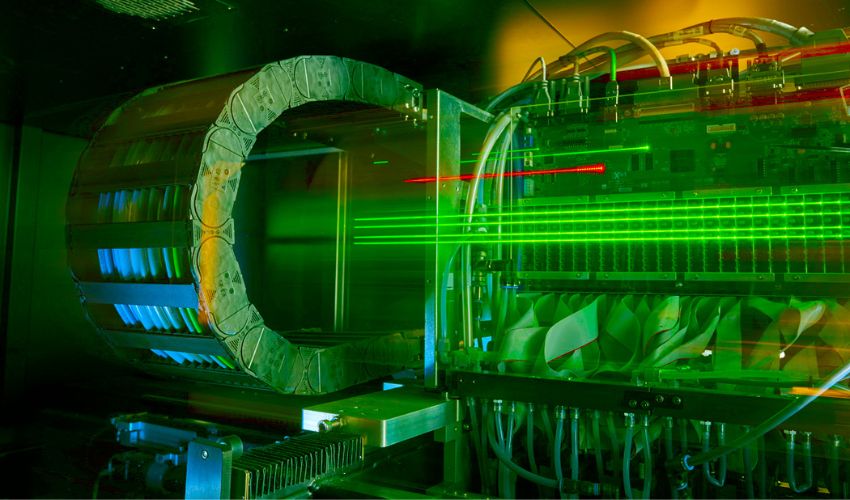
The rapidly-increasing commercialization in the 3D printing arena has already led to massive growth in specific verticals like ceramics and metal. A recent report suggested that the ceramic 3D printing market could reach 384 million USD by 2025. The metal market, which is considered one of the fastest growing in the AM sector, is expected to surpass $18B by 2032 for understandable reasons.
3D printing using the above materials enables the creation of complex parts with superior mechanical properties. NanoParticle Jetting™, the signature process of AM 3D printing leader XJet, is compatible with both ceramics and metals, offering an automated, safe, environmentally friendly path toward scale manufacturing of high-quality, geometrically complex parts. We spoke with the company’s CMO, Guy Zimmerman, to learn more about the technology, its benefits, and XJet’s unique approach.
3DN: Could you introduce yourself and Xjet?
My name is Guy Zimmerman. I joined Xjet recently as the CMO as the company gears up for growth. I have diverse experience, though most relevant is my background in global business including in the 3D printing sector. Meanwhile, Xjet is a 3D printer manufacturer that is addressing the most challenging segment in additive manufacturing, metals and ceramics. High quality, ready to use metal and ceramic parts that go into manufacturing and not into prototyping: that is the ambition using our own patented NanoParticle Jetting™ (NPJ) technology.
More from the desk
Six other notes from the rest of the bench.
 GuidesCONCR3DE: Rebuilding Palmyra Arch with 3D PrintingCONCR3DE is a Dutch company focused on using 3D printing to create environmentally friendly structures using their innovative technology and new materials. Some of their recent projects include recreating Palmyra Arch after it was destroyed by ISIS using their stone…
 NewsYouGov Study Shows the Majority of UAE Residents Think Government Should Invest in 3D PrintingFor the past few years, it has been clear that 3D printing is growing more mainstream as a technology. Now, that acceptance in the United Arab Emirates (UAE) has become clear thanks to a recent YouGov survey. It found that…
 NewsA New Benchmark for Industrial Stereolithography? Discover 3D Systems’ SLA 825 DualFor nearly 40 years, Chuck Hull’s curiosity and desire to improve the way products were designed and manufactured gave birth to 3D printing, 3D Systems, and the additive manufacturing industry. Since then, that same spark continues to ignite the 3D…
 NewsTop 5 Videos: HandsOnMetrology 3D Scanning Sprays Plus Atlas RobotsOn this week’s top 3D printing videos, we present the latest video from HandsOnMetrology, which thanks to 3D scanning sprays, can scan difficult surfaces, such as windshields. Next, discover the Atlas robots made by Boston Dynamics. Equipped with 3D printed…
 NewsWEBINAR: Large-Format SLA – How to Enhance Productivity for Higher Yields and Greater Part FidelityWhen most people think of stereolithography (SLA) or other resin 3D printing processes, they image a smaller build size. However, increasingly, we are seeing solutions that have been designed for large-format SLA. Not just that, but this industrial process is…
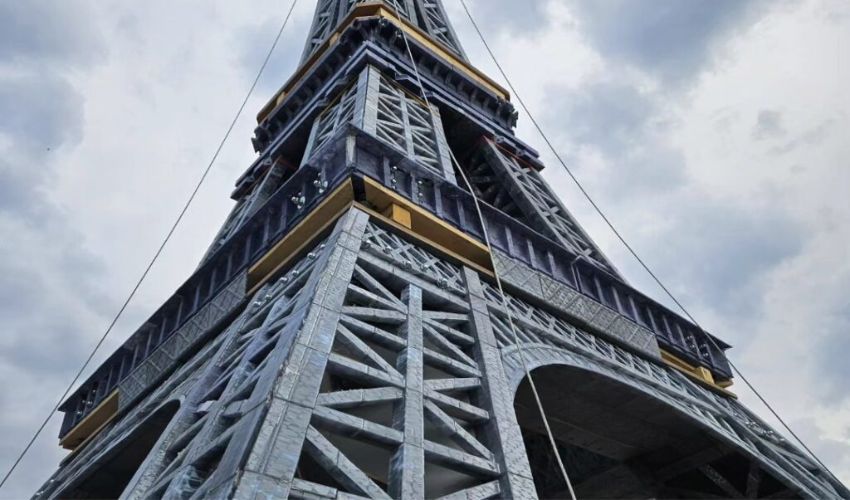 News3D Printed Eiffel Tower Made From Ocean Waste Marks Olympics in CzechiaOn Friday, July 26th, 2024, the Paris 2024 Summer Olympic Games officially opened! And since then we have seen incredible feats of prowess from athletes the world over in about 40 sports. But of course, not everyone can make it…