News
A 3D Printed Bike That Takes a Cyclist’s Body Into Account Could Be at the 2024 Olympic Games
3D-printed bicycles are becoming increasingly common, including those competing in the 2024 Olympic Games. And now we have yet another exciting example. The X23 Swanigami is a track bike developed by T°Red Bikes, Toot Racing, Bianca Advanced Innovations, Compmech and…
- 3 min read
- News
- Six more stories
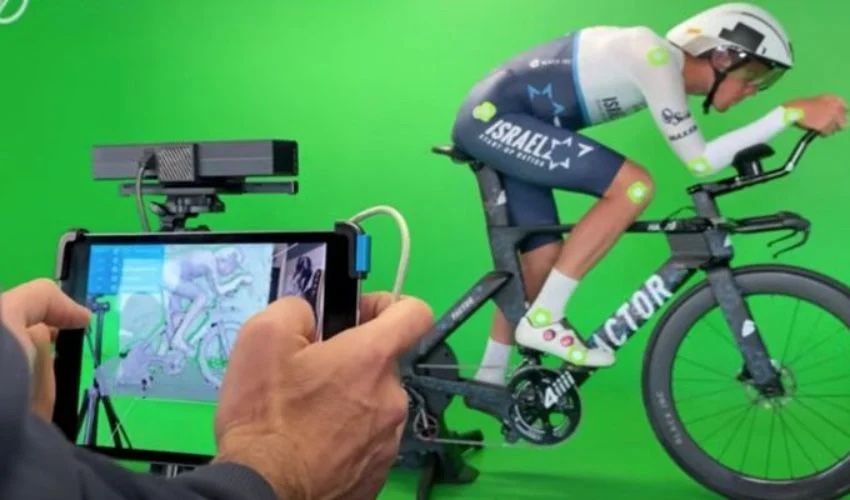
3D-printed bicycles are becoming increasingly common, including those competing in the 2024 Olympic Games. And now we have yet another exciting example. The X23 Swanigami is a track bike developed by T°Red Bikes, Toot Racing, Bianca Advanced Innovations, Compmech and the 3DProtoLab laboratories at the University of Pavia in Italy. It has been optimized for going fast, thanks in particular to the front triangle, designed to have an aerodynamic effect known as “washout”, a process used in aircraft wing design to increase stability. Moreover, additive manufacturing has been used to help create a more ergonomic and aerodynamic vehicle, with the cyclist’s body and the bike itself made into “digital twins” to get the best fit.
Indeed, the most surprising part of the X23 Swanigami is centered on the design. Thanks to 3D scans, it is possible to take into account the cyclist’s body, assigning it the role of a “wing” to propel the vehicle forward and reduce atmospheric pressure. In this way, each X23 Swanigami is printed specifically for the rider, with the aim of achieving the best possible performance. A scan of the athlete’s body is used to create a bike shape that balances the weight of the three factors that impact performance: the athlete’s strength, the air penetration coefficient and the rider’s comfort. “We didn’t design a new bike, we designed the cyclist,” asserted Romolo Stanco, co-founder of T°Red Bikes and director of Bianca Advanced Innovations, who also points out that cyclists are technically part of the bike.
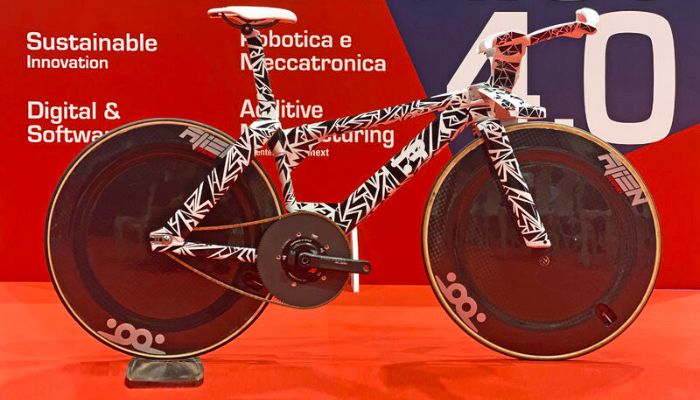
The bike has already made appearances at trade shows
The X23 Swanigami will be made from 3D-printed Scalmalloy. According to Toot Racing, this aluminum alloy has a good power-to-weight ratio. As for the vehicle’s handlebars, they will be 3D-printed from titanium or steel. Toot Racing chose additive manufacturing because it allows “precise control over the final geometry and material properties of the bike.” In addition, 3D printing enables the manufacturer to deliver prototypes quickly. Toot Racing reported that, using HP’s Multi Jet Fusion solution, it was able to supply a full-scale prototype of the X23 Swanigami in less than 24 hours.
More from the desk
Six other notes from the rest of the bench.
 NewsThe Industry Partners That Make RAPID + TCT the Most Relevant AM Event in North AmericaAs we know, 3D printing, along with other disruptive technologies, plays a key role in Industry 4.0 and helping society move towards smart production. This is why events and trade shows are so important for bringing together experts and exhibitors…
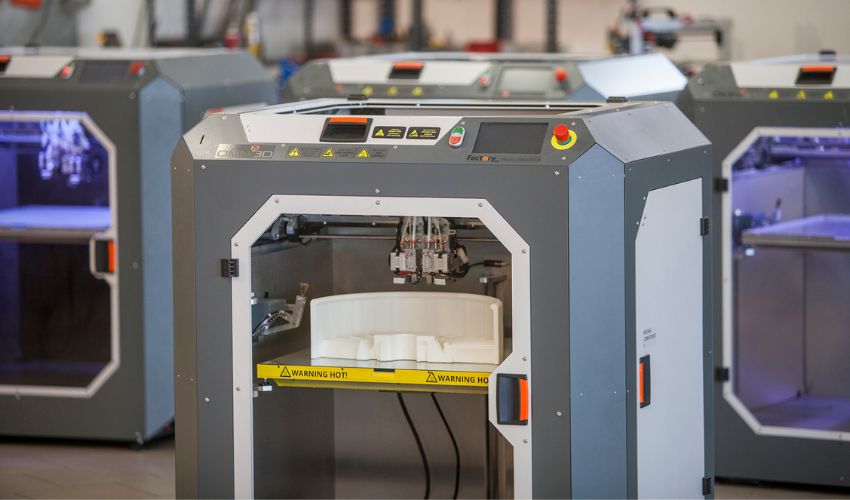 GuidesOMNI3D on its Solutions and the Applications of Industrial 3D PrintingOver the past few years, the 3D printing market has steadily moved towards greater industrialization, especially as it continues to expand. Indeed a recent report from Research and Markets showed that the market value of additive manufacturing would increase to…
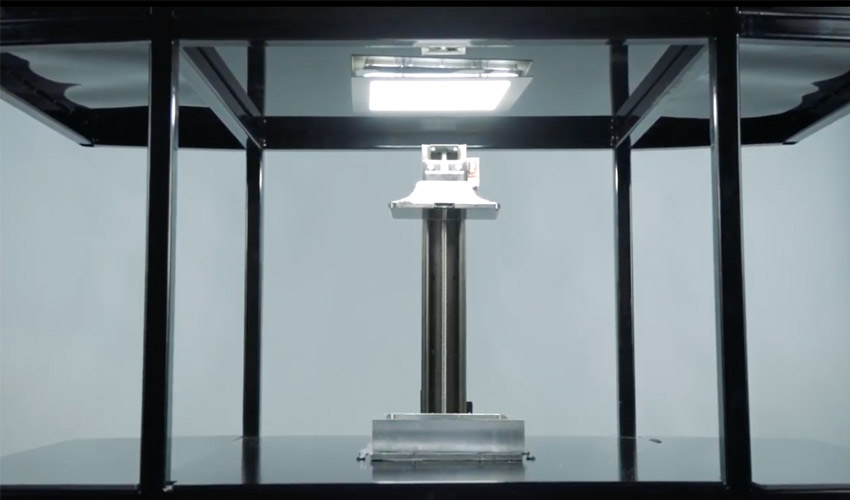 PrintersSource Form, the stand-alone 3D printer that uses photogrammetry to printAt the Virginia Tech Institute of Creativity, Arts and Technology, a team of researchers has just presented its brand new SLA 3D printer. Called Source Form, it looks like yet another SLA machine, but in reality, it should allow parts…
 News3D Printing with Light: it’s 100 times fasterAt the University of Michigan, researchers have developed a new 3D printing method which is 100 times faster than normal. The paper published in the journal Science Advances described the new process; it promises faster and more efficient small-scale manufacturing…
 NewsTop 5: The Dutch Navy is Integrating 3D PrintingOnce again Sunday is here and everyone can start to get ready for the week ahead. As we do every week, we have presented below five of the top 3D printing videos. Start off with a video that shows how…
 NewsTop 5 Videos: Exploring 3D Print Farms and AutomationTop 5 Videos is back! This month, we’re starting with a 3DExplained on how (and why) you could automate your 3D print farms. Then, we shift our focus to design, with our second video spotlighting 3D printed outdoor furniture, and…