News
US Army studies how to predict when metal AM parts will degrade or fail
As you may know, the US Army has been investing in additive manufacturing technologies to leverage the benefits of increased design freedom, shorter lead times, lower costs for unique parts, and increased performance. In fact, US Army researchers from the…
- 3 min read
- News
- Six more stories
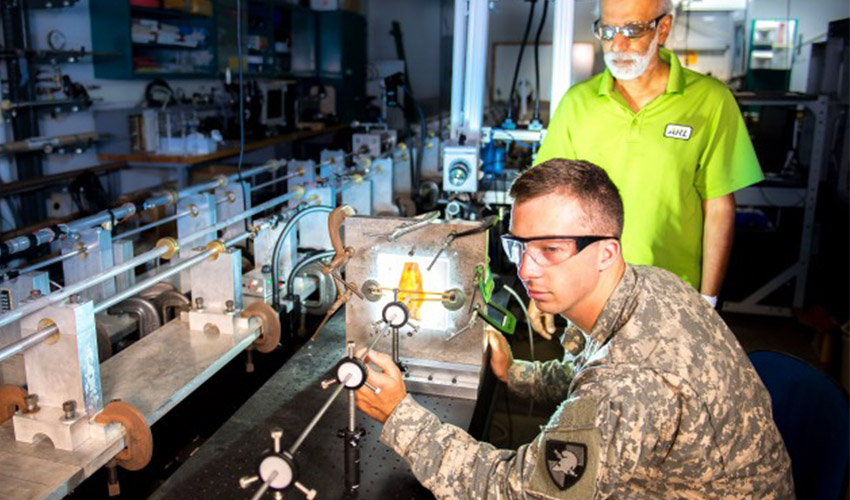
As you may know, the US Army has been investing in additive manufacturing technologies to leverage the benefits of increased design freedom, shorter lead times, lower costs for unique parts, and increased performance. In fact, US Army researchers from the CCDC Army Research Laboratory studied how to monitor the fatigue of additively manufactured maraging steel parts – which is of key importance to predict the maintenance these parts will require. This research could help soldiers maintain readiness as they will be able to predict when parts will degrade or fail and need replacement.
Their study was published in the International Journal of Advanced Manufacturing Technology, titled In-Situ Fatigue Monitoring Investigation of Additively Manufactured Maraging Steel, and looks specifically at how the US Army could detect and monitor the wear of metal additively manufactured maraging steel. Maraging steel are known for possessing superior strength and toughness without losing ductility. 3D printed using the Laser Powder Bed Fusion (LPBF) process, these parts benefit greatly from the AM process, however some features need to be checked. “3D printed parts display certain attributes, due to the manufacturing process itself, which, unchecked, may cause these parts to degrade in manners not observed in traditionally-machined parts,” explains Dr Jaret C Riddick, Director of the Vehicle Technology Directorate at the US Army’s Combat Capabilities Development Command’s Army Research Laboratory.
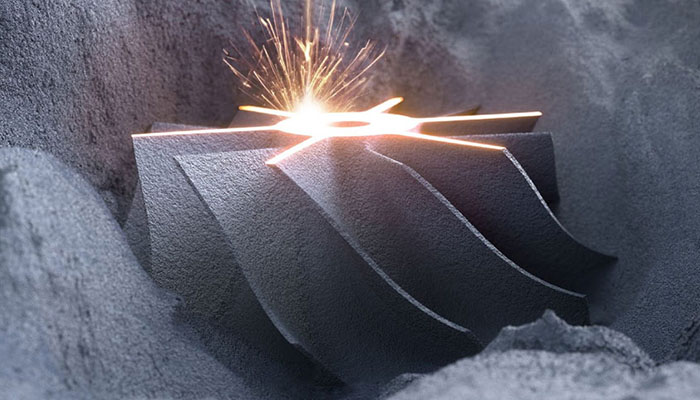
The laser powder bed fusion process
The best way to understand material fatigue is to consider a paper clip, and imagine bending it back and forth until it breaks. Taking different paper clips and repeating the process, they will break at different intervals depending on the internal imperfections associated with the steel. Dr Todd C Henry, a mechanical engineer at the laboratory, who co-authored the study explains in more detail: “Every real-world material and structure has imperfections that make it unique in terms of performance, so if the batch of paper clips take 21–30 cycles to break, what we would do today is after fifteen cycles throw the batch of paperclips away to be safe.” Essentially, the same holds true for 3D printed parts made of steel.
More from the desk
Six other notes from the rest of the bench.
 NewsTatyana McFadden Aims for Gold Medal at Paralympics with 3D Printed Gloves“Games wide open” is the underlying slogan of the 2024 Summer Olympic and Paralympic Games, opening in Paris later this week. Numerous athletes from all over the world will be doing their best to win the coveted medals in their…
 News3D printing in footwear: disrupting the shoe industry?3D printing is being incorporated into more and more industries, and fashion is no exception to this. The technology is opening up for new, creative possibilities and solutions. Something we’ve seen being utilised in a variety of ways from jewellery to costume…
 GuidesKelvin6k on Innovation in the Indian Construction 3D Printing SectorOne of the areas where we have seen rapid growth of 3D printing in recent years is in India. This is especially the case when it comes to the construction sector. With additive manufacturing poised as one of the solutions…
 NewsBASF & Natural Machine to Create Customized 3D-Printed Skincare Masks & Eye PatchesCompanies in the skincare sector have been creating innovative solutions by applying various 3D printing technologies. From cosmetics to bandages, to actual bio-printed skin that can be used to eliminate the need for testing products on animals, the 3D printing…
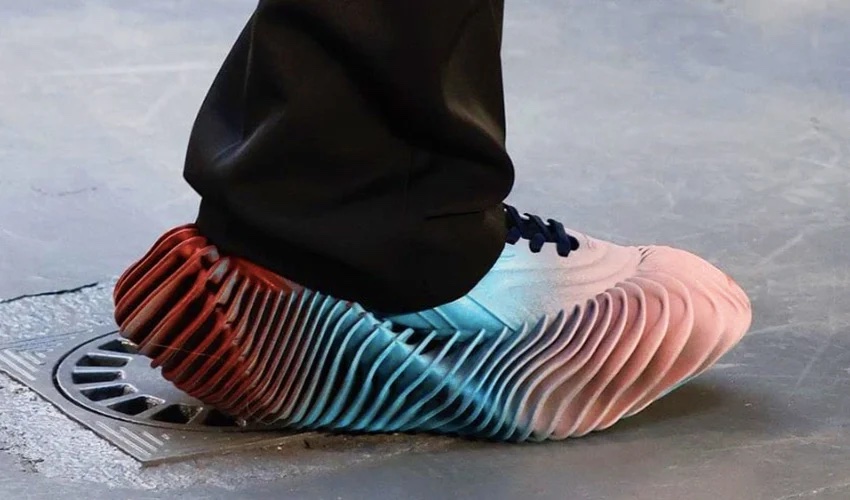 NewsReebok and Botter Have Unveiled a 3D Printed ShoeFrom January 17th to 26th, the city of Paris is welcoming the whole world to participate in the iconic Paris Fashion Week. This internationally known event is an opportunity for major brands to present their latest creations for the spring-summer…
 MaterialsIngeo 3D700, The New PLA Grade Biopolymer for Large Format 3D PrintingNatureWorks has developed a brand new PLA-Grade biopolymer which supplies a considerable reduction in warping and minimizes print failures, to add to its Ingeo range. Ingeo 3D700 is particular in that it is designed specifically for large format 3D printing,…