Guides
3D Printed Engines: Industry Projects and Miniature Models
The term engine, according to the Oxford English Dictionary, simply means ‘a machine with moving parts that converts power into motion’. With such a widely-encompassing definition, this term can be applied to any number of different sectors and applications, and…
- 3 min read
- Guides
- Six more stories
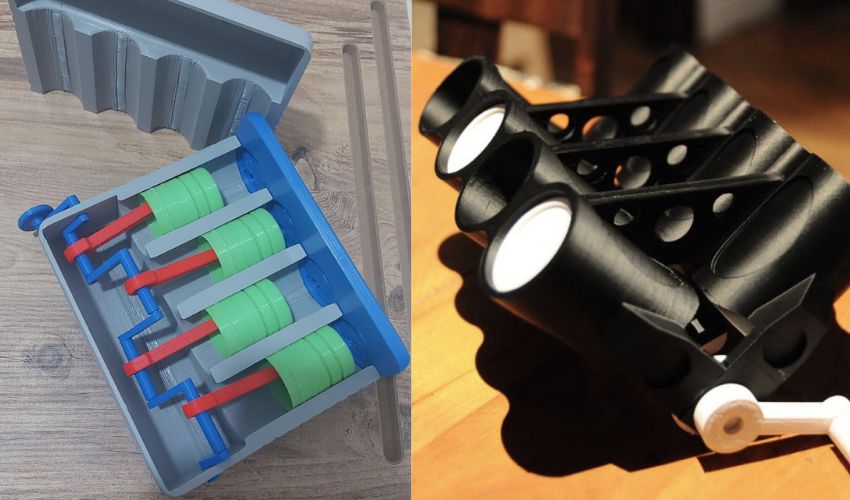
The term engine, according to the Oxford English Dictionary, simply means ‘a machine with moving parts that converts power into motion’. With such a widely-encompassing definition, this term can be applied to any number of different sectors and applications, and engines come in all sizes. Regardless of the use of the engine, many benefit from 3D printing technology with range of advantages compared to traditional manufacturing, from cost savings, time savings, and the ability to make geometrically complex identical parts. Below, you will find some examples of practical application of additive manufacturing for full-size engine parts in the industry, such as automotive and space. 3D printing is also useful for the creation of accurate engine models for education and decoration. We have also selected some of our favorite designs from three CAD file websites: Thingiverse, Cults, and MyMiniFactory.
Industrial Projects
Automotive
Firstly, let’s look at one example: automotive engines. The parts of a car engine which could be 3D printed include an engine block, piston, engine valves, combustion chamber, manifold, and oil filter. In 2018, Bugatti 3D printed an eight-piston monobloc brake caliper using titanium (the first series manufacturer to do so).
A further example is Velo3D’s M300 Tool Steel, an alloy comprised mainly of nickel which is often used in the automotive industry. It is used for many tooling applications such as High Pressure Die Cast (HPDC) inserts and injection molding. Velo3D is also heavily involved in the aerospace industry (more on that below).
More from the desk
Six other notes from the rest of the bench.
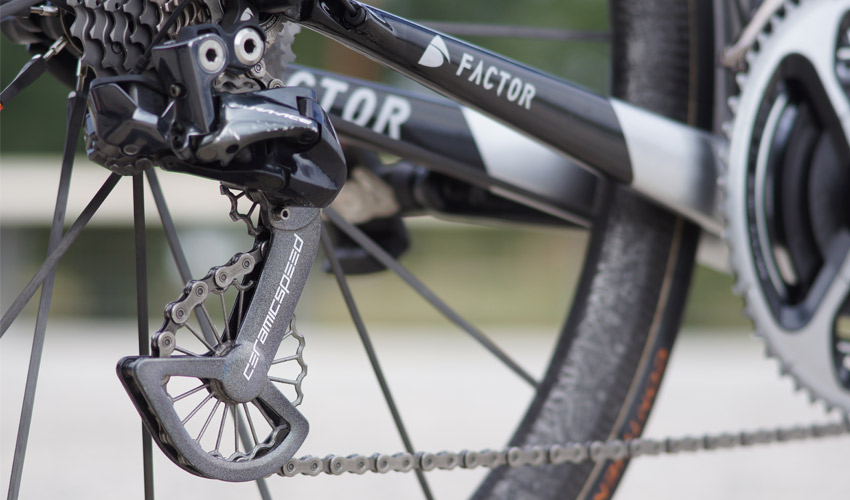 ApplicationsA 3D printed pulley can improve the performance of cyclistsThe Danish company CeramicSpeed and the Danish Institute of Technology (DTI) have worked together to produce a 3D printed titanium pulley for professional cyclists. The pulley is placed on the external gears of the gear shift and therefore subject to…
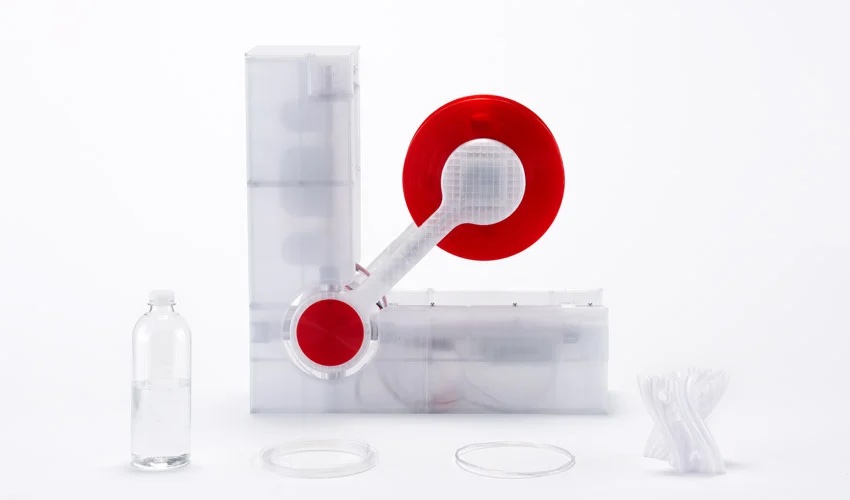 MaterialsPolyformer Turns Plastic Bottles Into 3D Printing FilamentsWhat if it was possible to turn a plastic bottle into filaments for 3D printers and thus participate in reducing plastic waste? To be able to do just that is the idea behind the open-source Polyformer machine, which was created…
 NewsTop 5 Videos: World’s First 3D printed Skull ImplantThis week we found the top 5 videos about 3D printing and the way additive manufacturing is changing production. The technology has infiltrated many sectors, from medical to automotive – check our selection of the week to keep up with the innovations! If you enjoy these, you&hell
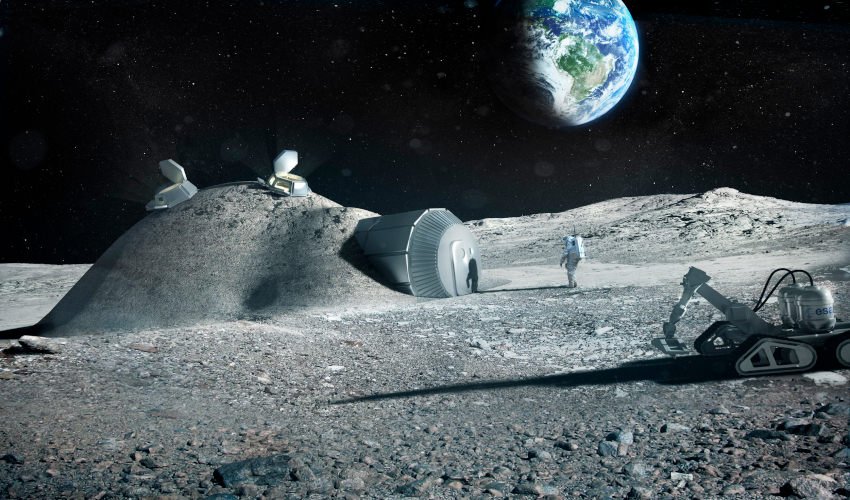 ApplicationsChina reveals plans to build 3D printed base on moonColonising space with additive manufacturing? China reveals its plans to be the first country to establish a 3D printed base on the moon. China plans to 3D print on the moon It’s the China National Space Administration (CNSA) which announced…
 NewsTop 5 Videos: 3D printed tires & Aortas!This week’s Top 5 Videos includes videos from a variety of sectors which 3D printing helps. These vary from tires, to racing cars, to parts of a human heart! Remember, a new Top 5 Videos is published every Sunday, so…
 GuidesDr. Markus Nemitz Talks 3D Printing and Swarm RoboticsA few years ago, we told you about an incredible project to create 3D printed robots for search-and-rescue operations. The man behind it, Dr. Markus Nemitz, has not stopped there. In the time since, Dr. Nemitz has continued to use…