News
Systems Reef 2, an Innovative “Breathing” Ventilation System Made Using 3D Printing
When it comes to finding new applications for 3D printing, there truly seems to be no limit. Case in point, the Australian architectural firm BVN and the University of Technology Sydney (UTS) have developed Systems Reef 2, an air distribution…
- 3 min read
- News
- Six more stories
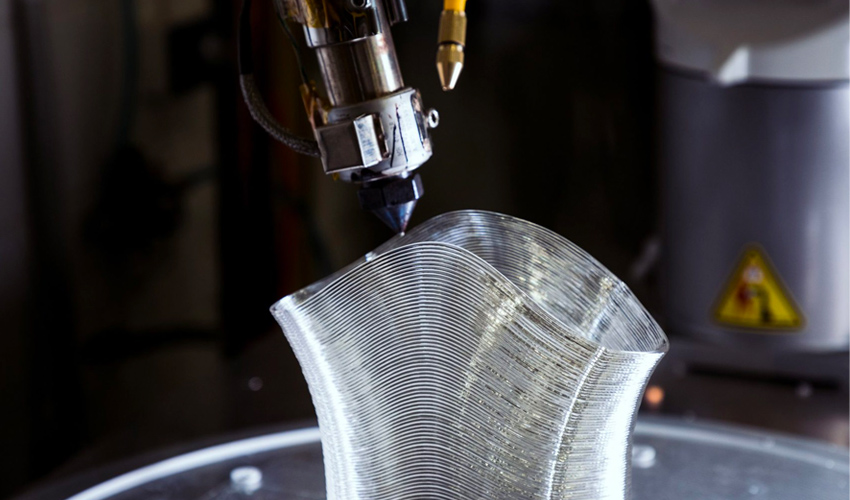
When it comes to finding new applications for 3D printing, there truly seems to be no limit. Case in point, the Australian architectural firm BVN and the University of Technology Sydney (UTS) have developed Systems Reef 2, an air distribution system made using 3D printing that, according to those responsible for the project, “breathes” like the skin of a frog. The interesting thing about this new solution is that it has 90% less embodied carbon than a standard air conditioning system, demonstrating its commitment to environmental sustainability.
When it comes to treating the air around us, additive manufacturing also has its role to play. We have seen this on numerous occasions, such as with the AMS Mini and AMS Auto, the 3D printed devices capable of filtering and cleaning the air. However, this time, we are not talking about an invention that purifies the air, but one that helps in the diffusion of air. All this in a more sustainable way thanks to the use of 3D printing.
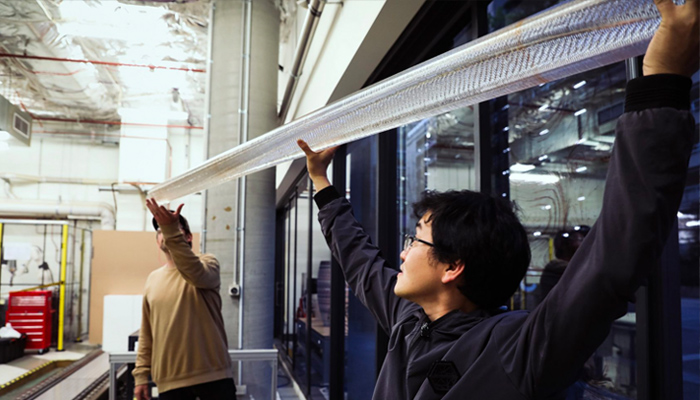
Project managers with one of the 3D printed parts of the Systems Reef 2 (photo credits: BVN / UTS)
3D Printing Was Used to Create Systems Reef 2
The idea arose from the many shortcomings the researchers observed in traditional air conditioners. Air conditioning systems are often made of sheet steel, with a high level of embodied carbon and the use of far more material than necessary. They also waste energy because they are structurally inefficient and difficult to replace after installation. According to Ninotschka Titchkosky, co-executive director of BVN, manufacturing has not changed much since their invention in the 20th century. “At the moment, the systems that we have, they’re really inflexible, they’re not particularly great for human comfort, they’re really expensive to change and they really limit the way we want to occupy buildings now in the 21st century, which is much more adaptive and agile,” she adds. Thus was born Systems Reef 2, or SR2, an air-conditioning system that integrates a computer-optimized shape and is made with 3D printing.
More from the desk
Six other notes from the rest of the bench.
 PrintersMastrex Is Making Metal 3D Printing More Accessible at RAPID + TCT 2026At RAPID + TCT 2026 this year, Mastrex is tackling one of the biggest barriers in metal additive manufacturing: cost. While laser powder bed fusion has long delivered high-performance parts in materials like titanium and Inconel, the price of entry…
 GuidesMore Than Shape 3D Prints Chocolate to Offer New Taste ExperiencesLately, more and more projects combining 3D printing and food are emerging. Earlier this year, we told you about the startup Revo Foods, which 3D prints salmon fillets from pea proteins, citrus fibers, vegetable oils and seaweed extracts, of course…
 ApplicationsMiddle ear transplant to cure deafness using 3D printing technologiesA group of researchers from South Africa have successfully completed a groundbreaking operation with the use of 3D printing technologies. In fact, it represents a big advancement for the medical field, as it is the first time a middle ear…
 NewsWho Not to Miss at RAPID + TCT 2024?RAPID + TCT 2024 is opening today! Attendees from all over the world have come to Los Angeles, California to attend the biggest North American event for additive manufacturing. But with features galore as well as more than 400 exhibitors…
 NewsNTU Singapore Researchers Are Using Recycled Glass for Sand 3D PrintingFaced with global warming, finding solutions to design environmentally friendly parts is now a problem at the core of many industries. This is why many scientists are working on this subject. Recently, researchers at Nanyang Technological University in Singapore (NTU…
 NewsUNDP Turns to 3D Printing to Build in ColombiaWe have heard it time and time again, one of the biggest crises facing different regions in the world is the lack of housing in different areas. Whether in the US, India, the EU or anywhere else, many countries are…