News
Students Bring Mathematical Models to Life Using 3D Printing
Students at the University of Illinois Urbana-Champaign have created new 3D models of mathematical surfaces and theorems. In a project spearheaded by the Illinois Mathematics Lab and the Champaign-Urbana Community Fab Lab, undergraduates at the university were able to recreate&he
- 3 min read
- News
- Six more stories
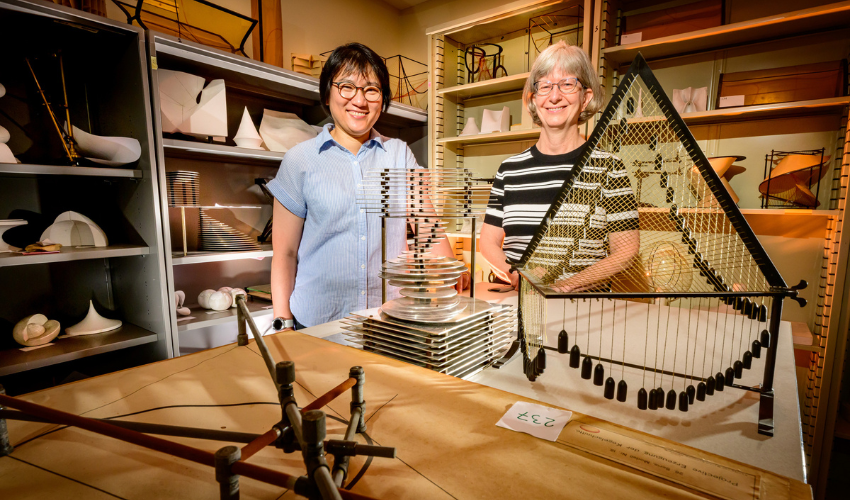
Students at the University of Illinois Urbana-Champaign have created new 3D models of mathematical surfaces and theorems. In a project spearheaded by the Illinois Mathematics Lab and the Champaign-Urbana Community Fab Lab, undergraduates at the university were able to recreate a selection of the university’s historic models with some dating to the 1800s, using FDM printing. The models are part of a 400-piece collection owned by the university’s mathematics department.
The collection itself includes visualizations of complex theorems constructed from plaster, wood, cardboard and metal. Many of the pieces were designed by an Illinois facility and previously used for classroom instruction and demonstration. The original pieces were imported from Germany and are part of one of the world’s largest collections of mathematical models. Mathematics librarian Sarah Park noted, “These are a department treasure. They offer unmatched educational value to students and researchers alike.”
![Student created version of Dandelin spheres [left] with original wooden model [right].](/assets/media/65251-02.jpg)
Student-created version of Dandelin spheres [left] with original wooden model [right].
Due to recent renovations at the university’s mathematical department, Altgeld Hall, the original models were taken out of storage. This relocation offered students a unique opportunity to document, study and digitize the historic models. Students were then able to select models and utilize software tools such as Mathematica and slicing programs to render them in 3D. The new models were then printed at the CU Community Fab Lab using plastic filament and optimized printing settings. Some of the re-created models include a conic section-proof Dandelin sphere, a Kummer surface, and other ruled surfaces using taut threads. Students were tasked with creating descriptions to accompany each newly printed model which allowed them to study the original equations from sources written in German.
More from the desk
Six other notes from the rest of the bench.
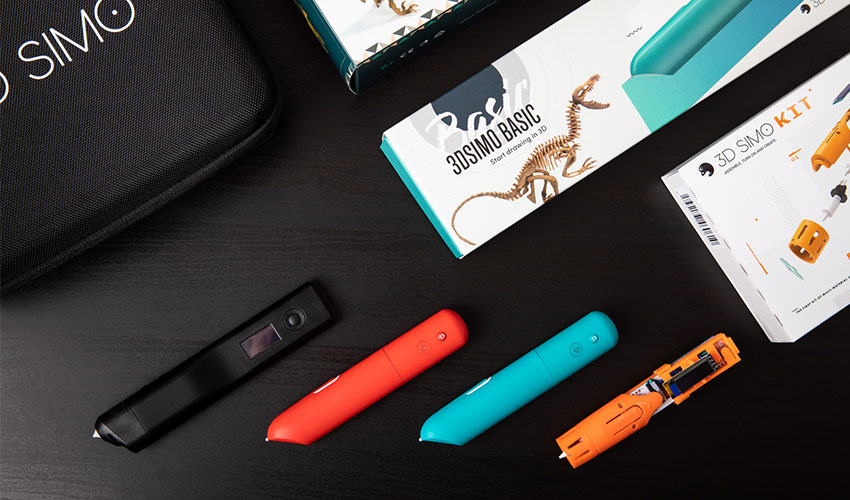 News3Dsimo multi-functional; from creative toys to professional toolsThe European producer 3Dsimo entered the market back in 2013 and specialises in their 3Dsimo multi-functional tools. The company is behind the world’s first multi-material 3D pen and have kept developing their products ever since. Now they cover categories and…
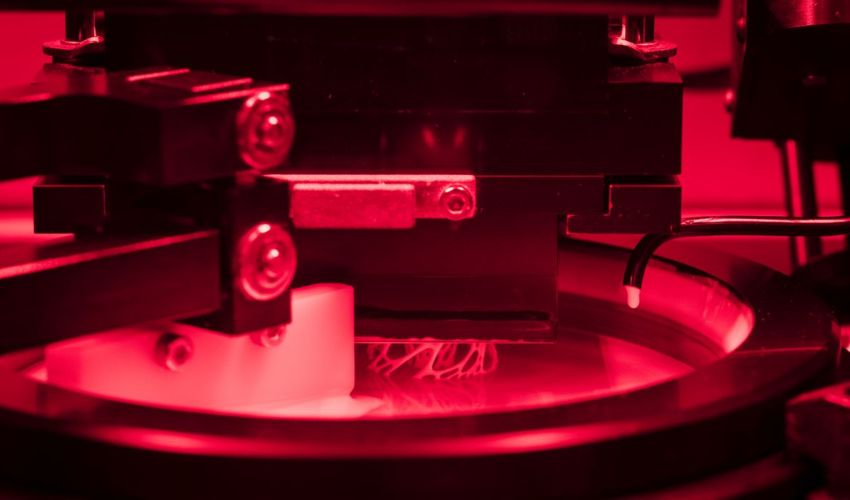 MaterialsCombining Ceramics and Metals in a Single Resin 3D Printing ProcessLast week, the city of Hanover, Germany, hosted the annual Hannover Messe, an event dedicated to the manufacturing industry and digital transformation. From robotics to artificial intelligence, the focus is on automation, technology, and digitalization. And among the exhibitors a
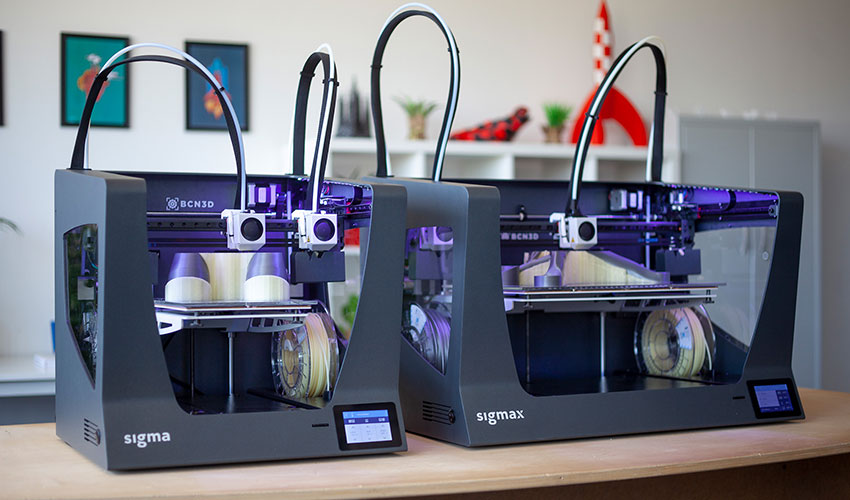 NewsBCN3D announces $3M in funding to boost its leadership in the IDEX 3D printing technologyThe last few months have been full of novelties for the Spanish company BCN3D. After the launch in 2018 of their new 3D printers, the Sigma R19 and the Sigmax R19, they are starting 2019 just as strong. In fact,…
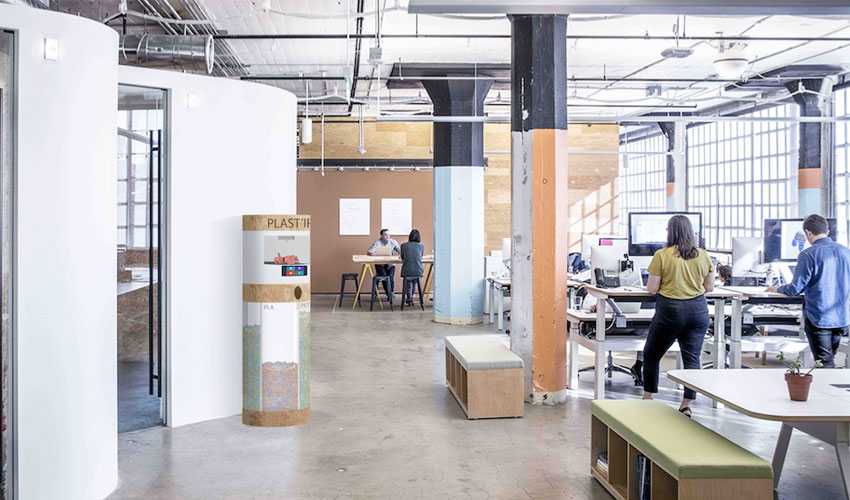 NewsPlast’if transforms employees waste into 3D objects3D printing is a technology that could help raise awareness about ecology and recycling issues: there have been many initiatives by companies to tackle those issues through this technology; whether it is to make objects more environmentally friendly or address social…
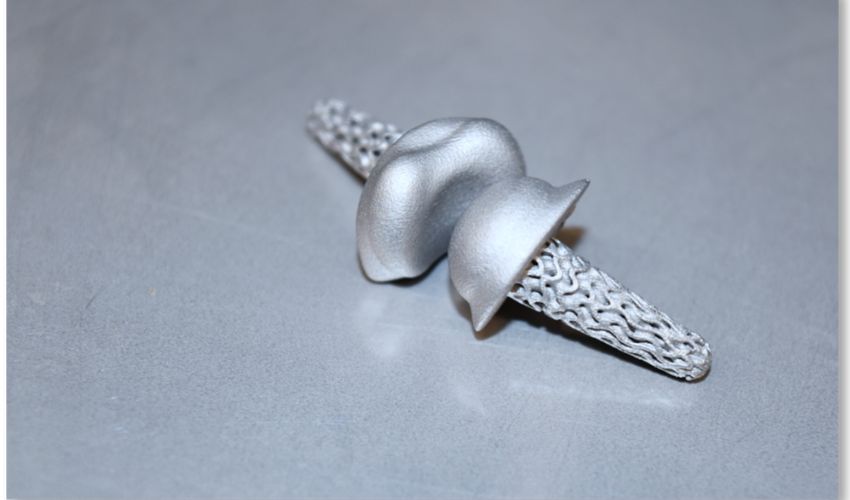 Applications3D Printed Finger Implants Could Revolutionize Rheumatic Disorder TreatmentWith 1 in 3 American adults living with doctor-diagnosed arthritis, a painful and difficult-to-treat condition, medical advances are essential for improving their quality of life. The Fraunhofer Institute, a German research organization with 76 bases across the country, has worke
 NewsCan 3D Printing Correct Color Blindness?3D printing could now treat color blindness according to a study conducted by Abu Dhabi’s Khalifa University of Science and Technology (UK). Otherwise known as color vision deficiency, this condition is an inherited eye disorder in which one or more…