Applications
Renishaw partners with IMR and nTopology to 3D print spinal implants
Renishaw announced not too long ago that it will be collaborating with Irish Manufacturing Research (IMR) and nTopology to demonstrate the advantages of additive manufacturing in the production of spinal implants. This collaboration also aims to show how much more…
- 3 min read
- Applications
- Six more stories
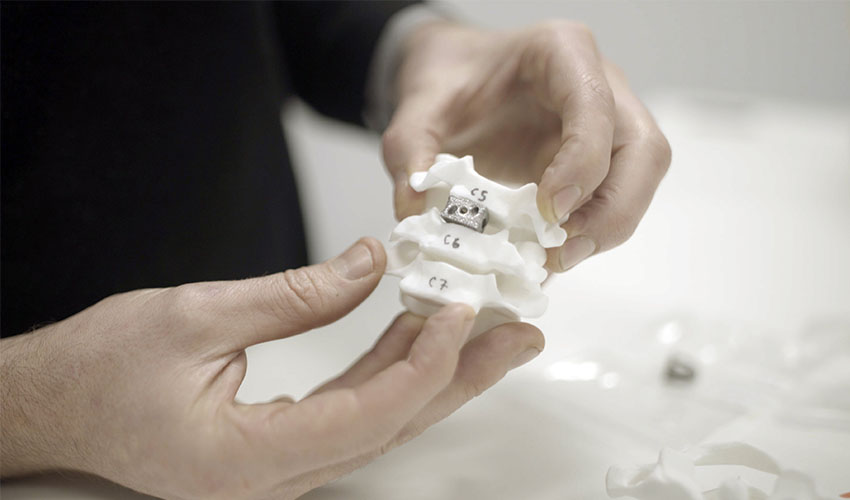
Renishaw announced not too long ago that it will be collaborating with Irish Manufacturing Research (IMR) and nTopology to demonstrate the advantages of additive manufacturing in the production of spinal implants. This collaboration also aims to show how much more streamlined the transition from design to additive manufacturing can be when working with partners.
Additive manufacturing revolutionising applications in the medical sector
Renishaw, based in the UK is a global engineering company and a leading company in additive manufacturing. The company supplies products used for applications as diverse as jet engine and wind turbine manufacture, through to dentistry and brain surgery. Their latest project focuses on developing a solution for patients with medical conditions that affect their spine. Conditions include degenerative disc disease, herniated disc, spondylolisthesis, spinal stenosis and osteoporosis. If the 3D printed spinal implants prove to be successful, they could help with surgery time for patients as well as lower the number of revision surgeries. Consequently, lowering healthcare resources and costs.
Earlier this year, it was researchers from the University of California, San Diego that were working on treating spinal cord injuries using 3D printing. Their technique involved 3D printing scaffolding around which stem cells could be implanted. The experiments on rats had shown promising results and they are now testing on larger animals.
More from the desk
Six other notes from the rest of the bench.
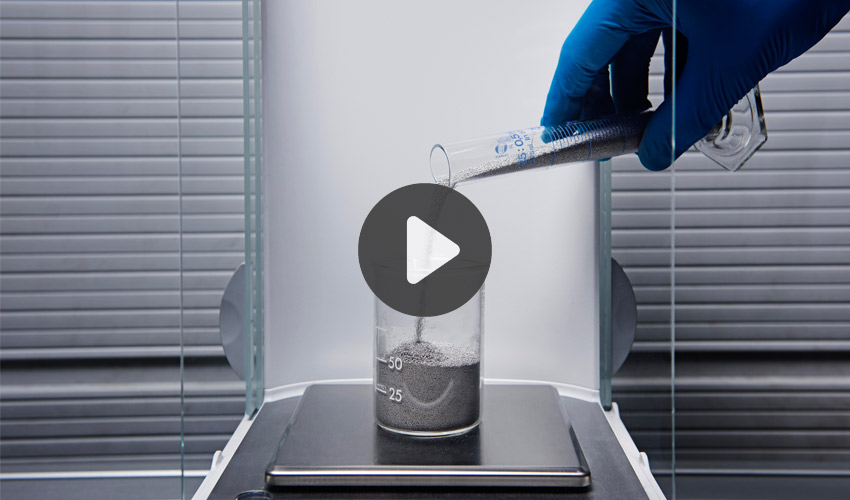 NewsTop 5 Videos of the Week: New titanium powder production plant for AMThis week we found the top 5 videos about 3D printing and the way additive manufacturing is shaping our society. The technology has infiltrated many sectors, from medical to automotive! Check out our selection of the week to keep up with the innovations! This week we…
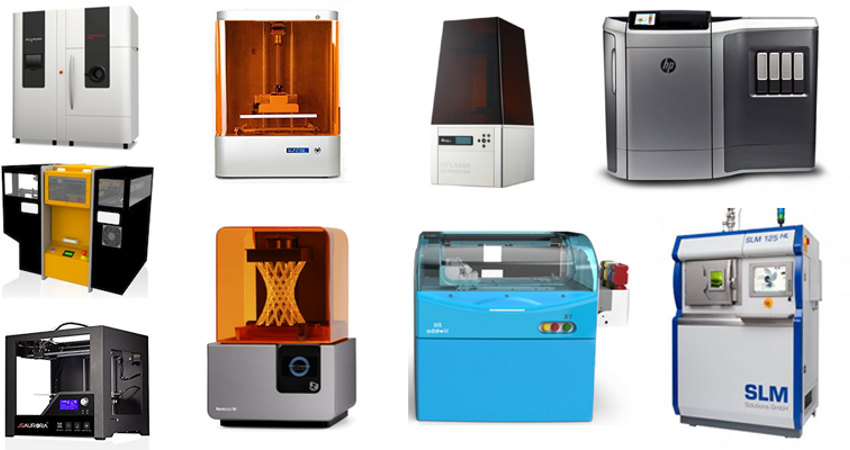 PrintersHow to choose a 3D printer: Experts give their advice!There are now hundreds of 3D printer manufacturers vying for market share in the 3D printing industry. Many wish to occupy the lucrative rewards that 3D printing is poised to bring. Therefore, it is difficult for someone to choose which…
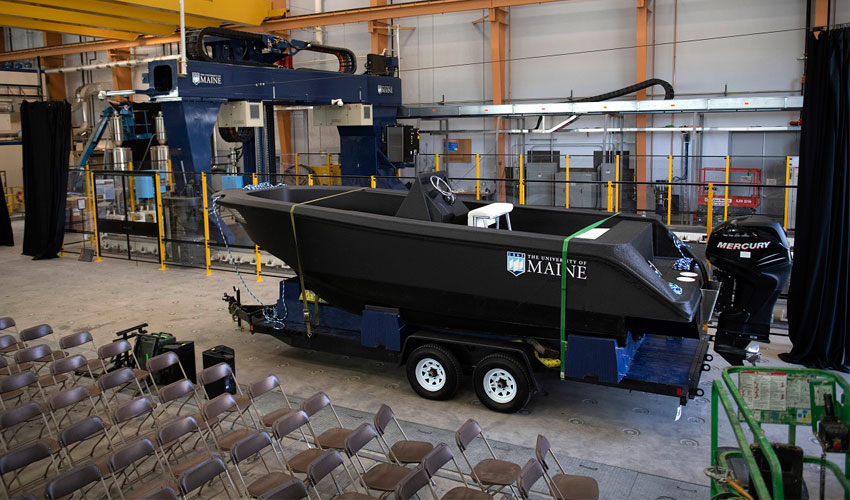 PrintersUniversity of Maine creates the world’s largest 3D printed boatA team of researchers from the University of Maine revealed the largest 3D printed part in the world. It is a boat, the 3Dirigo, designed on a large-format polymer 3D printer developed by the UMaine Advanced Structures and Composites Center.…
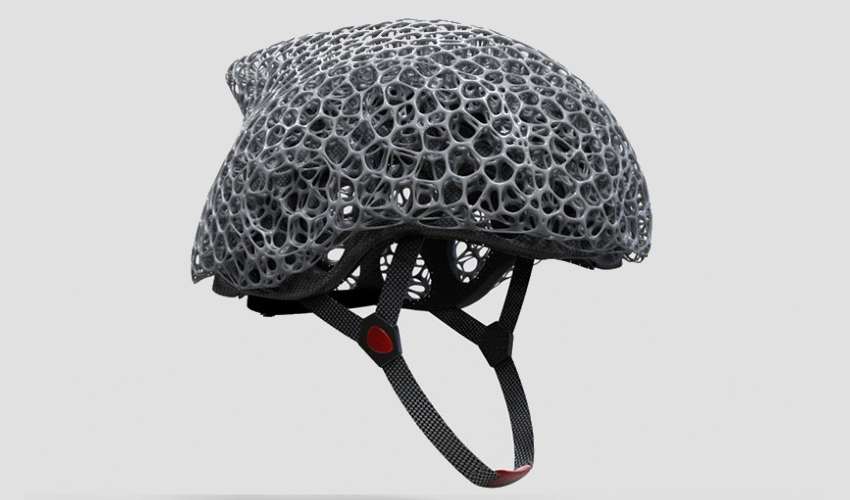 NewsVoronoi 3D printed bicycle helmet, safer and lighter?Different kinds of protective helmets are used for various physical activities and sports games. Invented for the first time many decades ago, this type of protective gear is re-developed whenever there is a new technology that is disruptive enough to…
 NewsFormula 1 releases new range of 3D printed perfumesFormula 1 is releasing a new collection of fragrances, the F1 Fragrances Engineered Collection, which includes a range of five luxury scents. Back in 2019, Formula 1 had launched its first line of fragrances using metal 3D printing technology, in…
 GuidesPrint2Taste Makes It Easier to 3D Print FoodYou don’t play with food, or do you? Print2Taste, founded in Freising in 2014, has an answer. With its 3D printers, the company offers users the possibility to playfully design and 3D print food. Easy handling and fast, high-quality results…