News
Slicelab builds furniture with 3D technologies
To create original designs and parts with complex shapes, additive manufacturing has proven to be by far the best solution. Several initiatives combining art and 3D printing have emerged in recent years, such as Scan the World. And more and…
- 3 min read
- News
- Six more stories
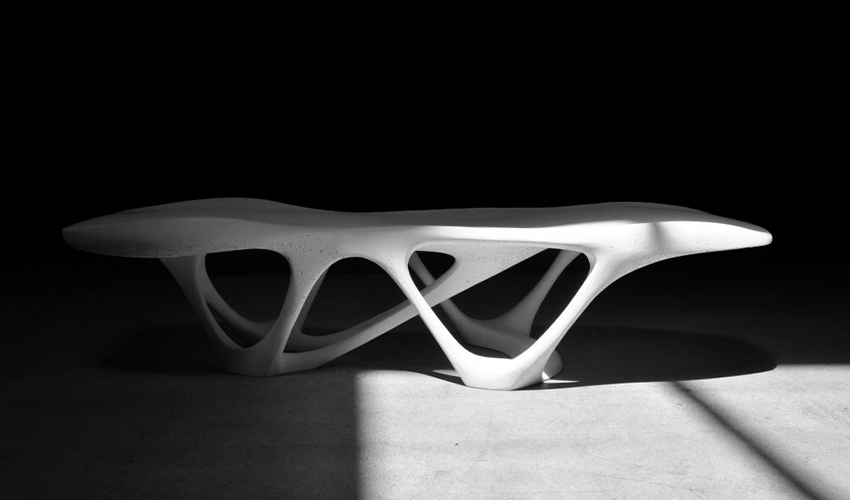
To create original designs and parts with complex shapes, additive manufacturing has proven to be by far the best solution. Several initiatives combining art and 3D printing have emerged in recent years, such as Scan the World. And more and more companies, like Slicelab, are joining the movement. Founded in 2012 and based in New York and Detroit, Slicelab is a multidisciplinary design studio that experiments with new ways of designing. Specializing in digital fabrication, the company offers architecture, product and furniture design services and provides expertise to other companies through manufacturing consulting. Recently, Slicelab has unveiled a concrete table, built using a 3D printed mold.
Named Delicate Density Table, the furniture has dimensions of 5’x17″x15″ (152.5 cm x 45.5 cm x 38cm) and weighs about 90lbs (86kg). Constructed in concrete, the Delicate Density Table was made possible through a combination of simulation and optimization technologies. The American company explains: “The intent of this project was to research a new fabrication and mold making method for complex concrete forms by using 3D printing. With concrete’s ability to take on any shape, it shares a strong similarity to how rapid prototyping is able to produce nearly any geometry. The potential of combining these two mediums was seen as a great opportunity.” In short, the Delicate Density table is an aesthetically pleasing and dense piece of furniture made possible by 3D printing.
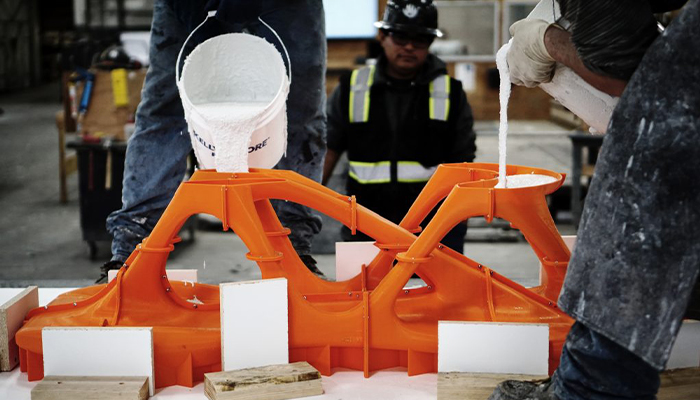
Filling the 3D printed mold with white concrete. (photo credits: Slicelab)
A PLA mold divided into 23 parts
Due to the large dimensions of the Delicate Density Table, Slicelab divided the digital model of the mold into 23 parts. This was necessary in order to optimize the different parts of the mold and to limit the number of supports needed. After printing, all the parts were assembled to form a PLA mold weighing 30 kg. Once the mold was formed, it was filled on the reverse side with white concrete, a method that provides a flawless and aesthetic surface. Finally, the mold was broken down piece by piece into the final piece – a concrete table.
More from the desk
Six other notes from the rest of the bench.
 NewsJapanese online platform sells fully 3D printed jewelryBy now we already know that one of the biggest advantages of 3D printing is that it allows almost limitless freedom of design. And who is enjoying it the most if not fashion designers? Finally having an opportunity to create…
 NewsWohlers Report 2019: materials saw record growthEvery year, the American firm, Wohlers Associates, Inc. unveils its industry-leading report on additive manufacturing. The Wohlers Report 2019 is therefore its 24th edition and contains wide-ranging data on AM materials’ development and consumption. The report showed a strong gro
 ApplicationsResearchers at ETH Zurich Study 3D Printed Breast TissueUnfortunately, research on the female body, particularly concerning health, remains largely neglected. Researchers at ETH Zurich now want to change this with their groundbreaking study of breast milk cells. Specifically, how breast milk is produced within the body has not…
 NewsTop 5 Videos: Apis Cor, 3D Systems & more!This week’s Top 5 Videos include a number of large business’ videos, in addition to some projects made by individuals. 3D printing giants such as Apis Cor and 3D Systems are in this list for announcing new projects and intentions.…
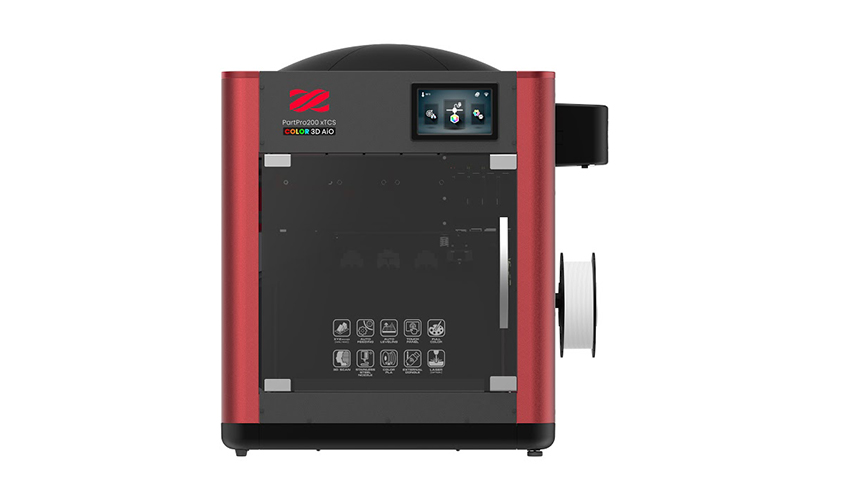 PrintersThe Da Vinci Color AiO to be presented at FormnextThere is not a big event related to additive manufacturing in which the Asian company XYZprinting does not present any of its novelties. This year in the third edition of Formnext, which will start tomorrow and continue until this Friday,…
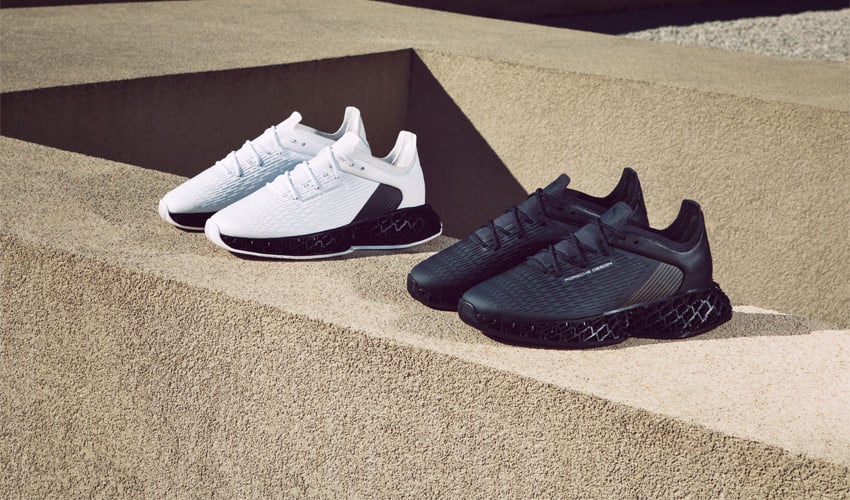 NewsPorsche and Puma Unveil New 3D Printed Sneakers, 3D MTRXPuma and Porsche Design, a brand dedicated to sportswear and accessories from the famous car brand, have partnered to design the 3D MTRX sneaker, whose midsole was 3D printed. The midsole has a lattice structure, but is inspired by the…