Applications
Shark Intestines Inspire 3D Printed Pipes
Sometimes, the answers to design questions are not hidden in plain sight, but rather, in shark intestines. Such was the case in a study conducted by researchers at the University of Washington. The team was on a mission to understand…
- 3 min read
- Applications
- Six more stories
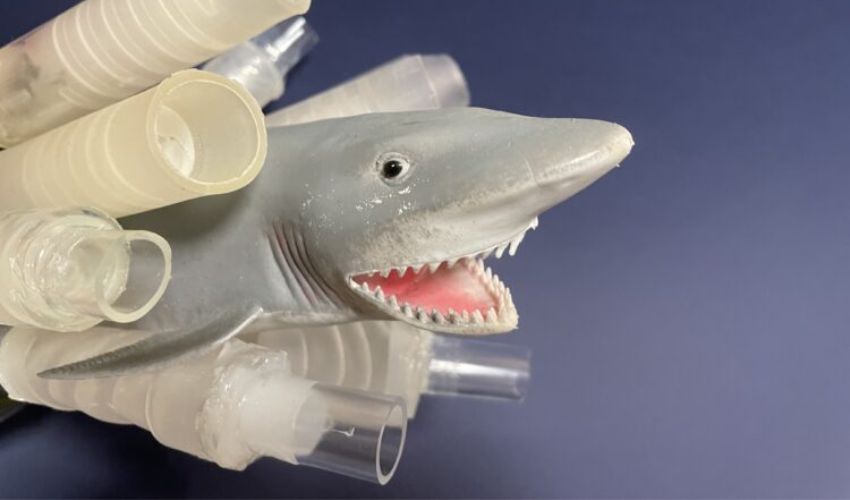
Sometimes, the answers to design questions are not hidden in plain sight, but rather, in shark intestines. Such was the case in a study conducted by researchers at the University of Washington. The team was on a mission to understand whether pipes designed like shark and ray intestines would promote asymmetric flow, meaning, the one-way flow of liquids. Their interest in the question was prompted by a 2021 publication that supposed “shark intestines may operate as Tesla valves,” and the University of Washington team wanted to test the claim. The National Science Foundation, the Washington Research Foundation, and the Fulbright Foundation funded this research.
Ido Levin, lead author of the study, explained his interest in the subject. “Flow asymmetry in a pipe with no moving flaps has tremendous technological potential, but the mechanism was puzzling,” he said. “It was not clear which parts of the shark’s intestinal structure contributed to the asymmetry and which served only to increase the surface area for nutrient uptake.”

These are eight of the research team’s pipes with various interior helices (photo credits: Ido Levin/University of Washington)
Many pipes, including human intestines, have liquid flow controlled by moving flaps. However, these flaps can fail and cause backflow. By contrast, shark and ray intestines contain helical structures that loop around a cylindrical hole, promoting flow down the digestive tract. The researchers at the University of Washington wanted to see if they could create pipes modeled after this structure and realized their designs did indeed promote the desired flow asymmetry. “The first measurement of flow asymmetry was a ‘Eureka’ moment,” Levin said. “Until that instant, we didn’t know if our idealized structures could reproduce the flow effects seen in sharks.”
More from the desk
Six other notes from the rest of the bench.
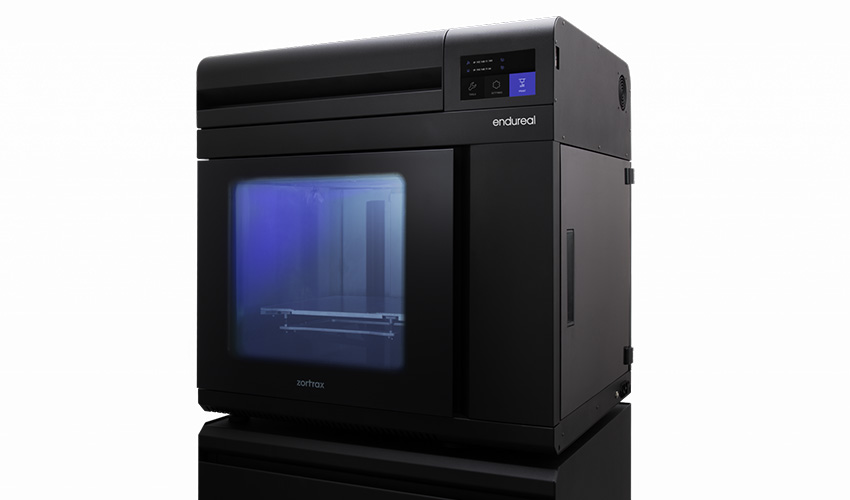 PrintersZortrax is launching a third generation industrial 3D printerZortrax is launching a third generation industrial 3D printer, designed for industry and production lines. It is named Endureal and will be unveiled at the TCT Show in Birmingham between the 24th and 26th of September. For Zortrax, this is…
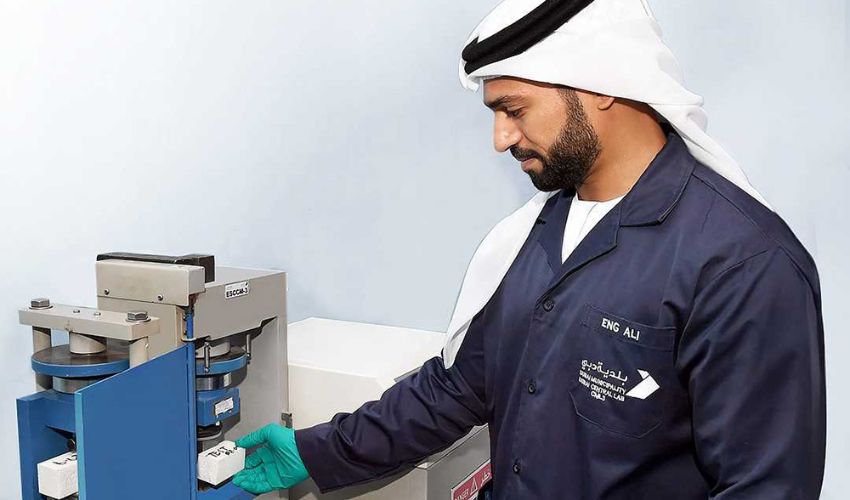 NewsDubai Launches World’s First Certification Program for the 3D Printing Construction SectorThe additive manufacturing construction sector has been growing exponentially due to its fast completion time and lower labor costs, with projects cropping up all over the world. Concrete 3D printing in particular has seen marked development in its construction practices…
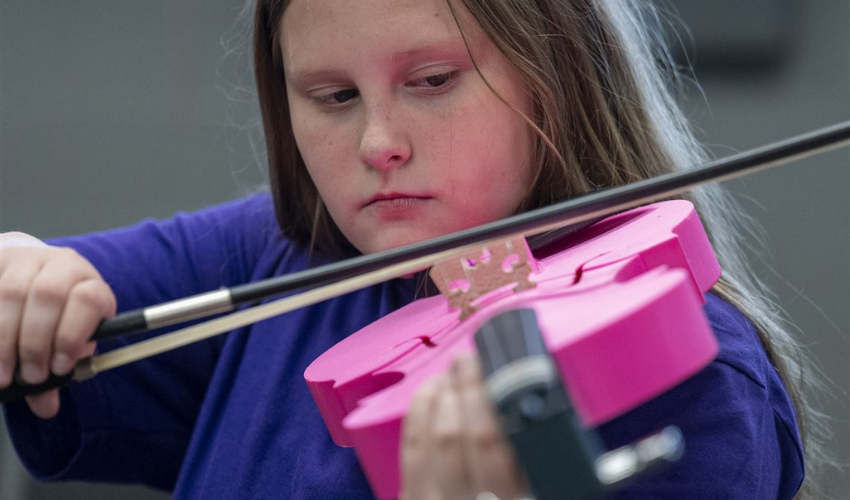 NewsPennsylvania School 3D Prints Violins to Make Music More AccessibleA rural school district in Pennsylvania has recently announced a new project that utilizes 3D printing to transform music education for children. The school is now providing affordable 3D printed violins to students who would otherwise not have access to…
 NewsTop 5 Videos of the week: Rick & Morty, 3D printed walls & more!This week’s Top 5 videos of the week are an interesting one. Some very innovative companies have created videos articulating how their new printers, processes, or structures will revolutionise industries. In addition, these companies pledge to use these to do…
 NewsInfographic: The Role of 3D Printing in the Construction SectorWorth an estimated value of $43.49 billion by 2031, 3D printing in the construction sector certainly seems to have a bright future ahead of it. And for good reason, this manufacturing method offers multiple benefits on different levels: a reduction…
 GuidesThe Top Websites to Download Free STL FilesAn STL file (short for stereolithography) is the most common format for representing the geometry of an object to be 3D-printed. Unlike formats such as OBJ, 3MF, or AMF, STL describes only the shape using a mesh of triangles, without…