Applications
Scientists Studying The Spread of Cancer Cells Through 3D Printing
Animal experimentation for medical purposes raises many questions, especially ethical ones. That is why a team of scientists from the Henry Royce Institute is 3D printing bone structures to study different forms of cancer. The aim is to see how…
- 3 min read
- Applications
- Six more stories
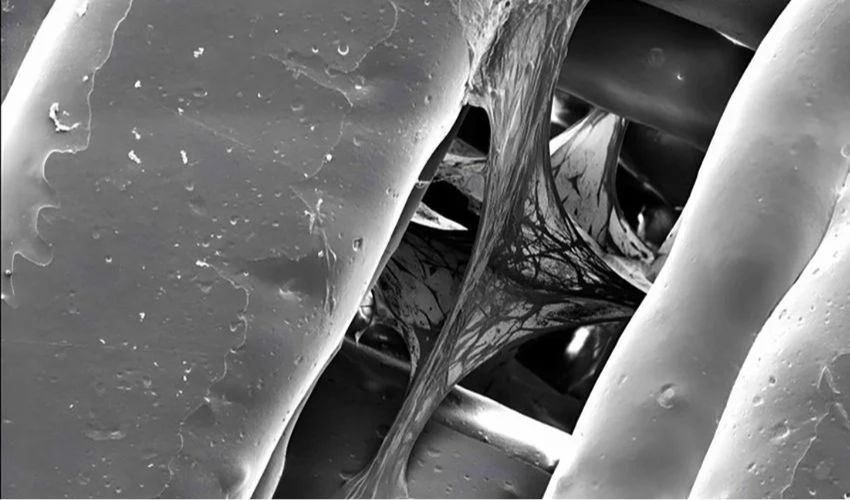
Animal experimentation for medical purposes raises many questions, especially ethical ones. That is why a team of scientists from the Henry Royce Institute is 3D printing bone structures to study different forms of cancer. The aim is to see how cancer cells evolve in an environment that resembles bone tissue. In this way, animal trials are considerably reduced, and researchers can speed up and multiply their tests. Should this practice be democratized?
Of course, this isn’t the first time we’ve mentioned this subject, and in the medical field, 3D technologies are often used to conduct trials and gain a better understanding of certain pathologies. They enable the creation of tailor-made structures, using a variety of materials, which facilitate the cultivation of cells of all kinds. Moreover, these structures can be designed according to local needs, and in principle within short lead times. The advantages of additive manufacturing in such cases are well understood: the work of the Henry Royce Institute is yet another example.
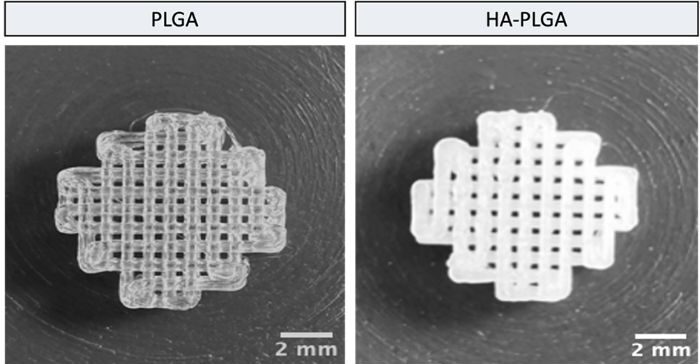
3D printed bone structures (Photo credits: Fatih Eroglu)
More concretely, the team is 3D printing bone structures to act as “homes” for cancer cells, particularly breast cancer cells. The aim is to study how they propagate in tissues. To do this, they use two materials, PLGA and HA-PLGA. PLGA is a biodegradable polymer that forms the basis of the bone model. The second is a mixture of PLGA and hydroxyapatite naturally present in bone. This makes for a more realistic model and an environment closer to natural bone tissue.
More from the desk
Six other notes from the rest of the bench.
 NewsSolidCAM Assists CNC Machine Shops in Adopting Additive ManufacturingAs we know, in the manufacturing industry, additive and subtractive technologies can be key resources when used complementarily. However, in many sectors, there are still barriers to the integration of 3D printing as a production method, whether due to costs,…
 NewsEvolve Puts STEP Technology in the Spotlight at RAPID + TCTAs RAPID + TCT continues, we are sitting down with some of the prominent exhibitors to learn more about their innovative technologies and how they are transforming additive manufacturing. Take for example Evolve Additive Solutions. The American company has been…
 NewsBiohybrid Jellyfish to Push Boundaries of Deep-Sea ExplorationExploring the mysteries of the ocean depths has long been an irresistible challenge for scientists. Like the vastness of space, the ocean remains largely uncharted territory, with its depths holding valuable information that could provide important insights into our planet’
 ApplicationsEric Schmidt, Former Google Head, Becomes CEO of Relativity SpaceFrom Sillicon Valley to space! Eric Schmidt, who was CEO of Google from 2001 to 2011, has taken over as CEO of Relativity Space. The news comes alongside a significant investment by Schmidt himself in the company, sources tell The…
 ApplicationsSURGE Aims to Predict Life of Critical Military Parts During ProductionThe Defense Advanced Research Projects Agency (DARPA) works to advance technology for United States national security. Created in 1958 in response to the Soviet Union’s 1957 launch of Sputnik, the agency positions itself as the nation’s commitment “to never agai
 NewsTOP 5 Videos: Trumpf and metal additive manufacturing …This week, Trumpf talks to us about metal additive manufacturing and more particularly about its TruPrint 5000 solution which incorporates particularly interesting features for the aerospace industry. Thanks to a reduced residual stress, the parts produced benefit from better geo