News
Saving Endangered Fish in New Zealand With 3D Printing
Due to overfishing, pollution, habitat degradation and other environmental concerns, marine species are more threatened than at any point in human history. Ranging from whales and dolphins to sea turtles to sharks and other fish, nearly 10% of marine life…
- 3 min read
- News
- Six more stories
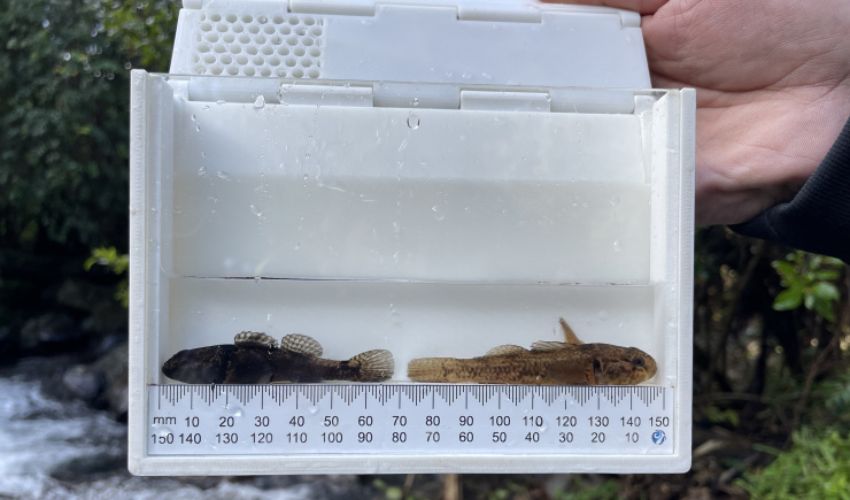
Due to overfishing, pollution, habitat degradation and other environmental concerns, marine species are more threatened than at any point in human history. Ranging from whales and dolphins to sea turtles to sharks and other fish, nearly 10% of marine life is threatened with extinction, with the number growing every day. And though it is a global problem, each country has its own challenges. Take for example New Zealand, where 76% of the 51 indigenous freshwater fish species are threatened with extinction or at risk of becoming threatened. To address this major threat, the National Institute of Water and Atmospheric Research, a Crown Research Institute started in 1992, has turned to an innovative solution: 3D printing.
When we think of New Zealand, we often think of the majestic mountains and beautiful scenery across the country. But it has been wracked with environmental concerns in recent years, with threats to native plants, animals and ecosystems especially mentioned as a priority issue. This includes of course NIWA’s efforts to help native fish species, namely through education, data gathering and of course research. This helps researchers to understand how to identify and protect the species. But how does 3D printing come in?
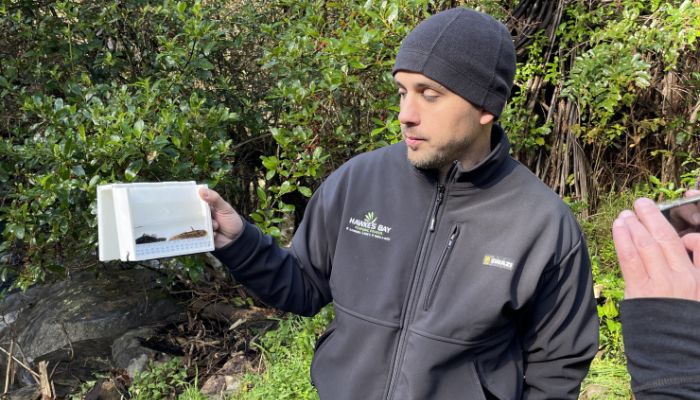
Andre Magdich (HBRC) shows the NIWA Fish & macroinvertebrate Photarium (photo credits: Cindy Baker, NIWA)
Using 3D Printing to Save Endangered Fish
Well, it all comes down to a small plastic rectangular box called a Photarium. Though on the outside it may seem unimpressive, they are indispensable tools for safely observing live fish in the fish in the field. This is because the box integrates a clear side and built-in ruler to allow fish to be studied without handling or having to be taken out of the water. Additionally, it blocks light to help reduce stress for the fish during transportation. The problem is that currently Photariums are only made in the US and not shipped to New Zealand.
More from the desk
Six other notes from the rest of the bench.
 NewsSolvay, L’Oréal and Ultimaker Join Forces For 3D Printing Design CompetitionFor Solvay’s 3rd Annual Additive Manufacturing Cup, the company is joining forces with L’Oréal, the world’s beauty leader, and Ultimaker, a global leader in professional 3D printing, to challenge students, engineers, and creators from around the world to create innovative…
 GuidesVandragon’s beautiful 3D printed boatsTino, also known as vandragon_de, has quickly gained popularity for his 3D printable boats. Starting his boating journey thanks to his son’s love for boats, he has quickly changed the 3D printing boat game. As we at 3Dnatives are always…
 ApplicationsUrtopia Titanium Zero: The Ultralight Electric Bike Designed Using 3D PrintingIn recent years, the electric bicycle has undergone a veritable revolution, becoming an increasingly popular transportation solution. The rise of innovative technologies, such as additive manufacturing, has enabled the development of increasingly high-performance models, combinin
 SoftwareStratasys Partners With Adobe For Streamlined 3D Printing Design WorkflowDesign software and 3D printers are the dynamic duo of the AM industry. Global additive manufacturing leader Stratasys has partnered with software giant Adobe to deliver a solution that streamlines workflow that enables engineers and designers to 3D-print models directly…
 Guides#3DStartup: MB Therapeutics and its 3D Printed, Customizable MedicationIn the field of personalized medicine, 3D printing is extending its scope beyond prostheses and implants to venture into an innovative field: medication. This technological advance opens up promising prospects for simplified treatments and personalized dosages tailored to patient
 NewsThe inventor of the microprocessor joins ROBOZE’s Advisory BoardIt was announced today that the world-famous physicist and inventor of the microprocessor, Federico Faggin, is joining the Advisory Board of ROBOZE, an Italian-American company that specializes in the design and production of the industrial 3D printers. The renowned physicist, wh