News
Revolutionary Glass Printing Technique Creates World’s Smallest 3D Printed Wine Glass
In a remarkable technological feat, researchers at the KTH Royal Institute of Technology have successfully 3D printed the world’s smallest wine glass. This tiny glass, with a rim thinner than a human hair, serves as a demonstration of a groundbreaking…
- 3 min read
- News
- Six more stories
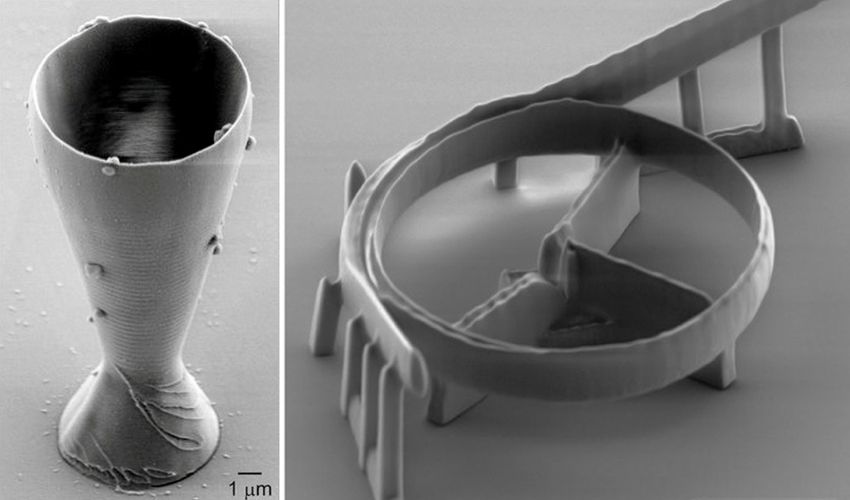
In a remarkable technological feat, researchers at the KTH Royal Institute of Technology have successfully 3D printed the world’s smallest wine glass. This tiny glass, with a rim thinner than a human hair, serves as a demonstration of a groundbreaking new technique for using silica glass structures in various applications. The development of this simplified method for 3D printing silica glass opens up a world of possibilities in fields such as telecommunications, robotics, and fiber-optic networks.
Silica glass, created by fusing pure silica at high temperatures, is known for its clarity and strength. It has diverse applications, including customized lenses for medical machinery used in minimally invasive surgery and microrobots capable of navigating extreme environments. Additionally, it is used in filters and couplers for fiber-optic networks.
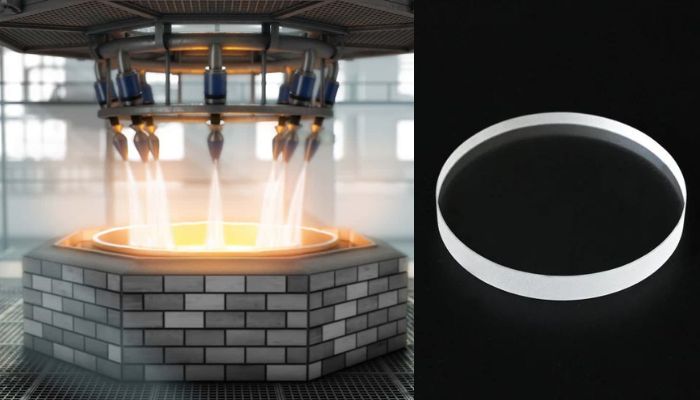
Traditional fused silica manufacturing entails a high-temperature process that creates glass by depositing layer after layer of tiny glass particles on a growing surface. (Photo credits: Corning)
Usually, creating silica glass structures required hours of extreme heat, reaching several hundred degrees. However, the new breakthrough technique eliminates the need for such thermal treatment, drastically reducing the energy required for printing. This innovative approach enables the glass to withstand extreme heat in various applications.
More from the desk
Six other notes from the rest of the bench.
 NewsInside 3D Tour: Visiting XJet’s Headquarters and Manufacturing Plant in IsraelStill not familiar with the Inside 3D Tour video series? In it, we visit the major manufacturers in the 3D industry to learn first-hand how different 3D printing methods are developed. The goal? To understand what processes the most cutting-edge…
 PrintersThe Da Vinci Color AiO to be presented at FormnextThere is not a big event related to additive manufacturing in which the Asian company XYZprinting does not present any of its novelties. This year in the third edition of Formnext, which will start tomorrow and continue until this Friday,…
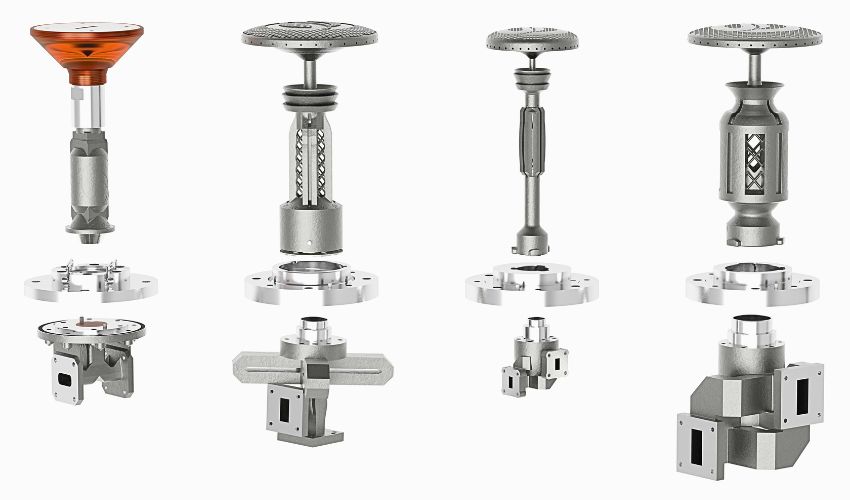 GuidesFrom Prototype to Full-Rate Production at RAPID + TCT: Garrett Hawkins on Scaling Additive in AerospaceIn aerospace additive manufacturing, you expect the story to start with rockets. This one starts with an ink cartridge. Years before working on aerospace antenna systems, Garrett Hawkins was a high school student measuring a printer cartridge with calipers, recreating…
 ApplicationsAirbus Qualifies Materialise and EOS to Make 3D Printed Flight-Ready PartsFor several years now, Airbus has been using additive manufacturing to produce and repair many parts for its aircraft. And by qualifying the technologies of Materialise and EOS, the European aircraft manufacturer is renewing its confidence in 3D printing. The…
 NewsAmphibio; the 3D printed gills that will allow us to breathe under waterJun Kamei is a Japanese designer specialising in biomimic design and materials. A few months ago he presented Amphibio, his final project for the Art Royal College in London, with three 3D printed “gills” for our future underwater. Will this make is possible…
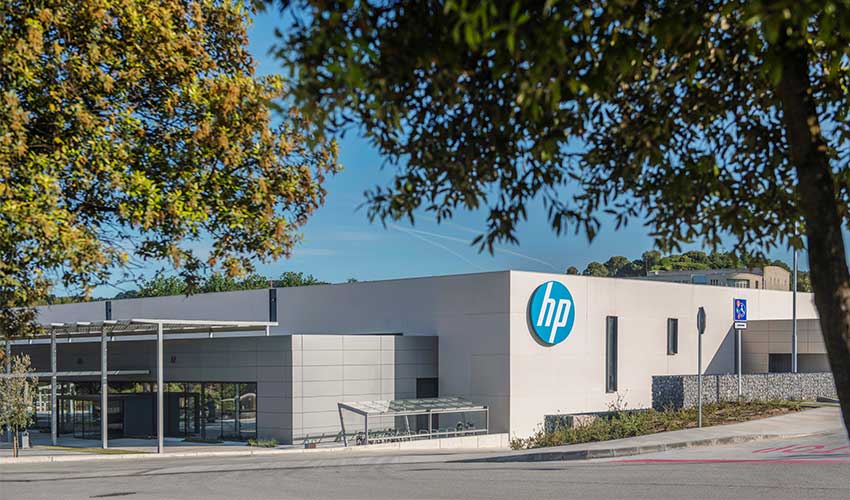 NewsWhat is HP’s 3D Printing Centre of Excellence in Barcelona?HP opened a new centre of excellence dedicated to 3D printing and digital manufacturing in the province of Barcelona, in Sant Cugat del Vallès to be precise. It is a 14,000 m2 space dedicated to innovation and the development of…