News
Researchers Use 3D Printing to Create Helical Tubes Inspired by Shark Intestines
Additive manufacturing is increasingly being used for research discoveries by laboratories and university teams. This is because the technology makes it possible to investigate elements and details that other methods cannot reproduce. Recall, for example, the recent example of an
- 3 min read
- News
- Six more stories
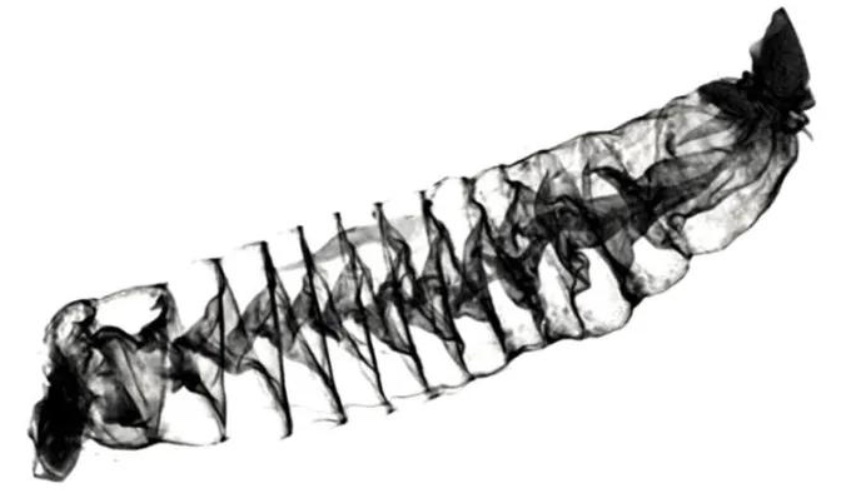
Additive manufacturing is increasingly being used for research discoveries by laboratories and university teams. This is because the technology makes it possible to investigate elements and details that other methods cannot reproduce. Recall, for example, the recent example of an Egyptian mummy, which, thanks to 3D technologies, was able to be studied without disturbing the artifacts. This is possible mainly because researchers can 3D scan the part that needs to be studied before obtaining a digital twin of the part and then reproducing it through 3D printing. And it continues to be done. For example, team of researchers at the University of Washington, led by physicist Ido Levin, has turned to 3D technologies to investigate the workings of the shark’s intestine in order to mimic it in a variety of applications, from developing helical tubes to developing so-called “soft robots,” or soft robots inspired by nature.
Contrary to popular belief, we don’t know much about what sharks eat or how their intestines work. The first images that led to a breakthrough on the topic were those released in 2021 by the team composed of researchers from California State University Dominguez Hills, University of Washington and University of California. The researchers used a 3-D scanner to scan dogfish shark intestines from specimens preserved at the Natural History Museum in Los Angeles and create 3-D images that could be studied.
More from the desk
Six other notes from the rest of the bench.
 NewsSketchfab: The Platform To Visualize And Download 3D ModelsSTL files are a key part of the 3D printing process, and today Many websites exist today to download them for free. The Sketchfab platform is one of the best known, mainly because of its wide variety of content and…
 PrintersBambu Lab Announces Recall of Popular A1 3D PrinterIt was not so long ago that we were telling you about the anticipated launch of Bambu Lab’s new A1 3D printer. Designed to be the company’s first ever bed-slinger 3D printer, it prompted serious interest, along with the A1…
 PrintersTop 5 Videos: Custom 3D-Printed Bicycle Seats From DQBD & StratasysIn this weekly video compilation, we will see how DQBD has implemented Stratasys 3D printing technology to create more comfortable, 3D-printed bicycle seats that are adapted to athletes. We will also be able to see the new test carried out…
 NewsPost-Processing Techniques That Allow Color in 3D Printed PartsTwo key benefits of additive manufacturing are the greater design freedom and customization that are possible when creating parts. However, not all 3D printers have the capability to create multicolor parts or parts with special finishes. For this, post-processing systems…
 NewsAMUG 2022: A Round Up of all the News From the EventAMUG 2022 is officially over! The annual AM conference “for users – by users” took place this year from April 3rd to 7th in the Hilton in Chicago, Illinois. Once again, attendees were treated to packed days full of conferences,…
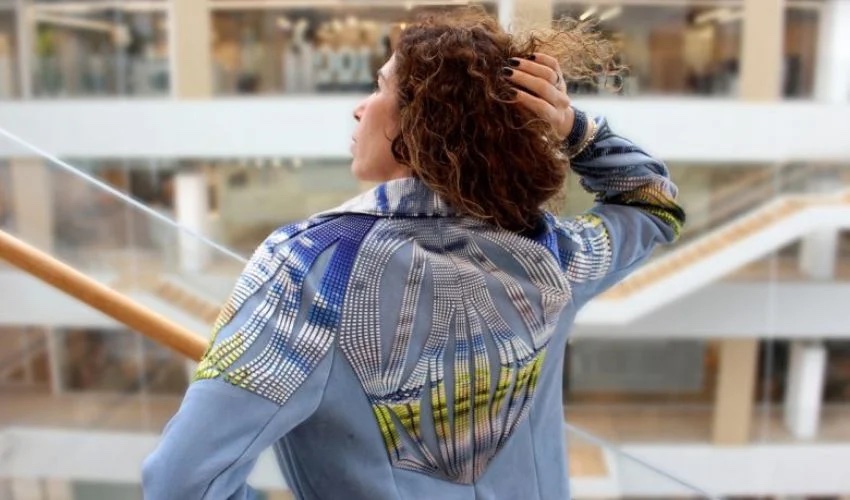 NewsThe 3D Printed SSYS 2Y22 Reflection Collection Revealed at Milan Design WeekJust recently, Stratasys announced its breakthrough in the fashion world with the launch of its J850 TechStyle. Now, the U.S.-Israeli manufacturer has unveiled its 3D printed SSYS 2Y22 Reflection Collection at Milan Design Week. Specifically, the collection includes highly exclus