Applications
Relativity Space selected by Lockheed for NASA’s space mission
The American startup Relativity Space specializes in the design and manufacturing of 3D printed rockets. In fact, Relativity is the world’s first autonomous rocket factory, and its Terran 1 is the world’s first 3D printed rocket with 95% of parts being…
- 3 min read
- Applications
- Six more stories
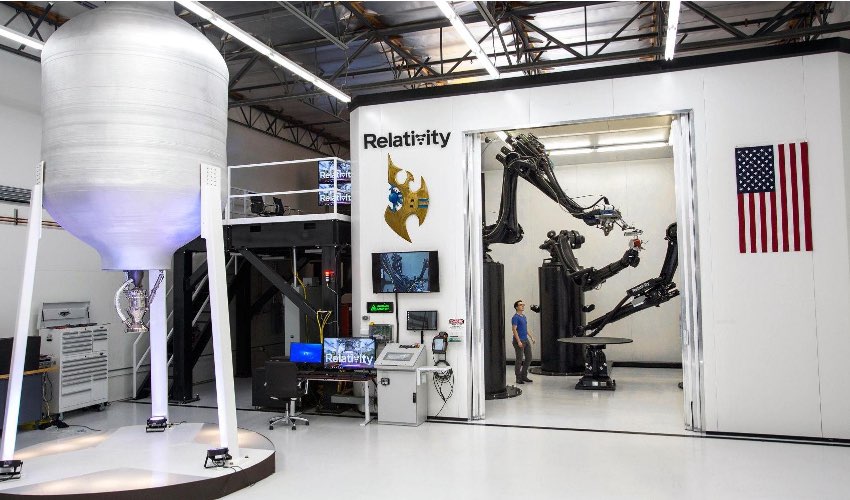
The American startup Relativity Space specializes in the design and manufacturing of 3D printed rockets. In fact, Relativity is the world’s first autonomous rocket factory, and its Terran 1 is the world’s first 3D printed rocket with 95% of parts being additively manufactured. Last year the company raised $140 million, adding to the 45 million already obtained since its creation in 2015. Recently, the LA-based startup has singed its first government contract with Lockheed Martin, the largest weapons manufacturer in the world. More precisely, Lockheed has picked Relativity for a major space exploration mission led by NASA.
Tipping Point is a program through which NASA awards contracts to the companies who develop transformative space technologies. The projects range from in-space testing of cryogenic systems to a 4G LTE network for the Moon. While Lockheed and NASA will design and build the cryogenic systems and payload for the space exploration program, Relativity Space has been selected as the launch provider for the mission. The plan is to launch Lockheed Martin’s cryogenic demonstration mission (CDM) payload aboard Relativity’s Terran 1 in October 2023.
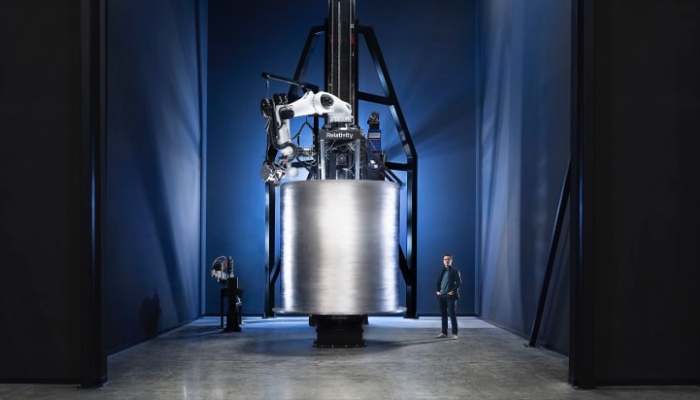
Relativity Space’s third generation 3D printer (All image credits: Relativity)
The Founder and CEO of Relativity, Tim Ellis, is confident that the company’s approach of 3D printing the entire rocket is an ideal solution for the mission. “If you look at the manufacturing tools being used today, they’re not much different from the last 60 years. It’s fixed tooling, giant machines that look impressive but only make one shape or one object that’s been designed by hand. And it’ll take 12-24 months to make it. With our 3D printed approach we can print the entire fairing in under 30 days. It’s also software defined, so we can just change the file to change the dimensions and shape. For this particular object we have some custom features that we’re able to do more quickly and adapt. Even though the mission is three years out, there will always be last-minute changes as you get closer to launch, and we can accommodate that. Otherwise you’d have to lock in the design now.”
More from the desk
Six other notes from the rest of the bench.
 NewsFirst 3D Printed Water Chamber Created in The UKRecently, British water supply company United Utilities and 3D printing service ChangeMaker 3D successfully demonstrated the use and benefits of 3D printed components in the UK water industry. The discovery, which is the result of a twelve-month-long collaborative work between&he
 GuidesPlasmics Combines Individual Requirements and High Quality Standards With Innovative FDM PrintingPlasmics, Austrian company based in Vienna, was founded in 2018. What is interesting about the company is that it seeks to develop pioneering 3D printing solutions that do not require years of specialist knowledge. This has lead to Plasmics estbalishing…
 News#TOP5 videos: 3D printing trends of 2019 and much more!We found the TOP 5 videos of the week related to 3D printing and collected the additive manufacturing here. You can enjoy even more 3D printing videos on the our youtube channel, as well as share your videos and comment on…
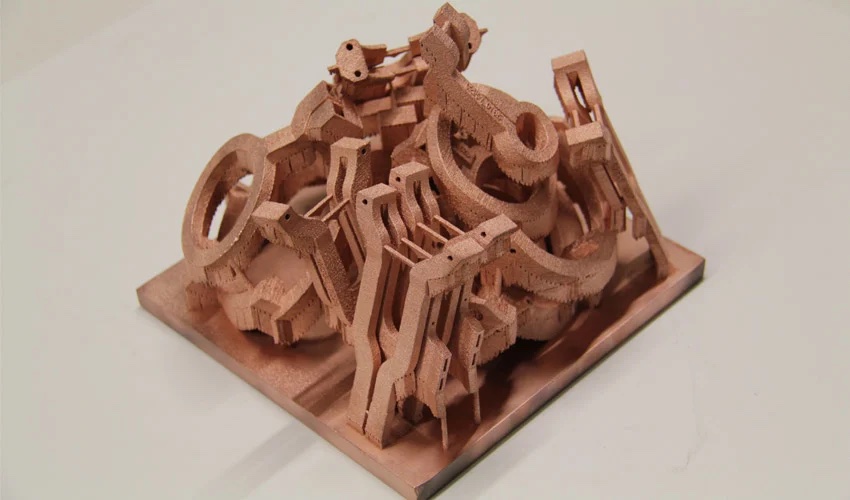 MaterialsGH Induction Has 3D Printed the Largest Pure Copper Induction CoilGH Induction has announced the creation of the largest 3D printed coil made of pure copper, made using electron beam melting (EBM). This is a key component used in electromagnetic induction technology to heat metal parts as efficiently as possible.…
 NewsWohlers Report 2024 Highlights the Growth of Metal Additive ManufacturingIt is once again that time of the year. Wohlers Associates, powered by ASTM International, has published their 29th annual report. The Wohlers Report 2024 has been compiled through surveys of the additive manufacturing industry, talking to 245 organizations including…
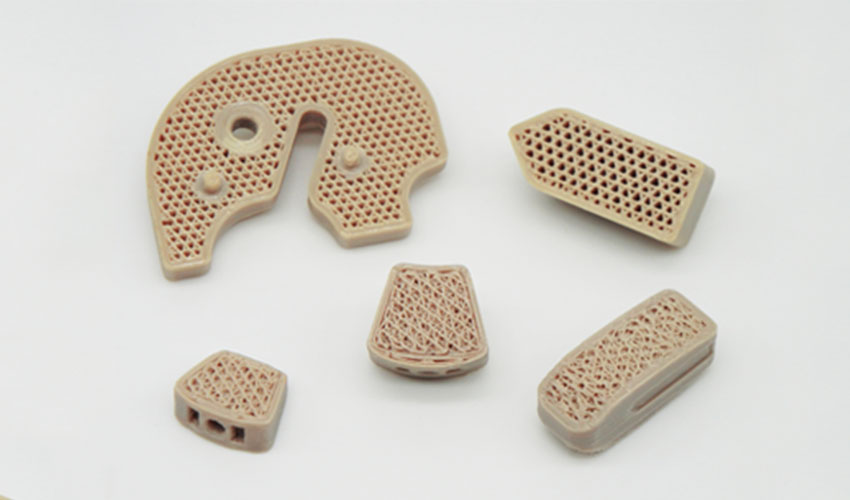 ApplicationsFossiLabs creates PEEK implants to promote bone growthFossiLabs, based in the US, is a startup focused on the development of FDM 3D printers to produce PEEK medical implant devices. As you may have noticed, high-performance thermoplastics such as PEEK have gained a lot of attention in the…