Guides
PSYONIC Creates a Bionic Hand Thanks to 3D Printing
Traumatic limb amputation affects over 50 million people globally. Many opt to adopt prostheses, but integrating them into daily life can be a challenging journey, filled with both physical and emotional hurdles. These devices significantly influence the way individuals engage&he
- 3 min read
- Guides
- Six more stories
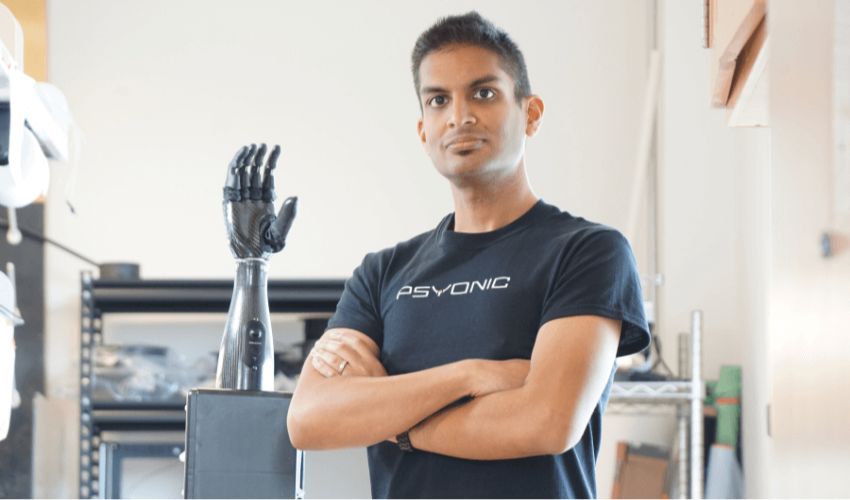
Traumatic limb amputation affects over 50 million people globally. Many opt to adopt prostheses, but integrating them into daily life can be a challenging journey, filled with both physical and emotional hurdles. These devices significantly influence the way individuals engage with their surroundings—whether it’s driving independently, participating in sports, or simply performing everyday tasks at home. At the core of this journey is autonomy. However, the reality of traditional prostheses is often disappointing. They can be basic, costly, and fragile, limiting accessibility for many. In fact, only around 10 percent of patients who need an advanced prosthetic arm can afford one. Yet, recent technological innovations offer a promising path forward, bringing renewed hope for those in need of prosthetic solutions.
PSYONIC, founded by Dr. Aadeel Akhtar, is leading the way in advancing prosthetic technology. The company’s mission is to make high-quality, high-performance robotic limbs accessible to everyone. Through cutting-edge 3D printing, PSYONIC has successfully developed a bionic hand that promises to transform the prosthetics landscape. We spoke with PSYONIC’s founder and CEO, Aadeel Akhtar, to delve deeper into this groundbreaking innovation and explore how 3D printing is enhancing the autonomy and quality of life for amputees.
3DN: Can you present PSYONIC and share your link with Additive Manufacturing?
PSYONIC is dedicated to developing cutting-edge robotic limbs, offering accessibility to both humans and robots. Since the beginning of our venture, one of our priorities has been to make our devices accessible through additive manufacturing technology. Over the past nine years, we have perfected our flagship product, the Ability Hand bionic hand, through nine successive iterations. Our beginnings were marked by the free 3D printing of hand models using FDM technology. Gradually, we moved towards designing our own models.
This approach has given us solid experience in using low-cost additive manufacturing to produce state-of-the-art bionic limbs. However, following ongoing discussions with patients and healthcare professionals, we identified the major problem they were experiencing: their high-end prostheses, custom-made by injection molding and machining, had a tendency to break due to their rigid composition. To solve this problem, we opted for a more flexible robotics approach, integrating materials such as silicone and rubber to complement the 3D-manufactured internal components, to confer greater resistance to impact. At the same time, we have introduced advanced technologies, such as SLA and SLS printing, into the manufacturing of our final products.
More from the desk
Six other notes from the rest of the bench.
 NewsLearn About Every Aspect of Additive Manufacturing at RAPID + TCT 2024At this point, it should be clear that the upcoming RAPID + TCT 2024 event will be far more than just a trade show with many different event features available with an Expo Pass. But one key reason that RAPID…
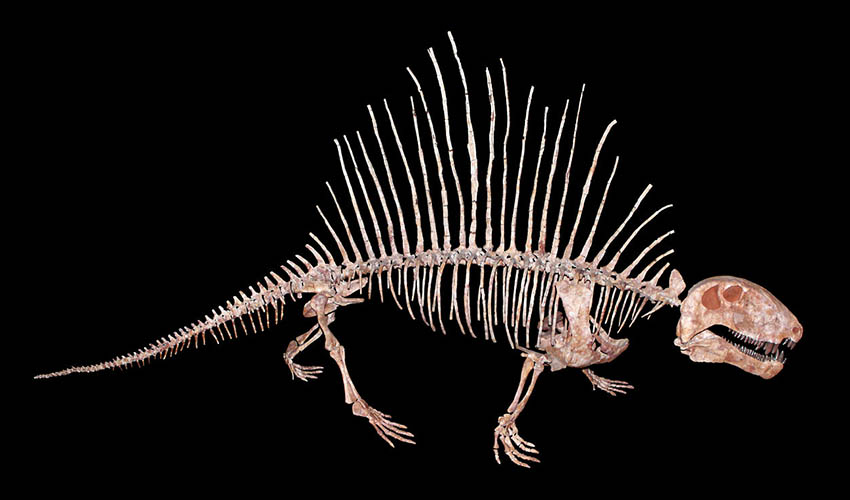 PrintersReplicating rare prehistoric fossils through 3D scanningAt the Texas Through Time museum, the fossilized skeleton of a Dimetrodon limbatus was 3D scanned by NVision, specialized in 3D scanning solutions. This will enable to 3D print an exact replica of the fossil skeleton. Usually, in order to…
 PrintersIndustrial 3D Printing With High Performance Polymers Can Replace Traditionally Made Metal PartsIt is certainly no secret that 3D printing is being integrated into more and more sectors. This includes more traditional manufacturing industries, where additive manufacturing is increasingly being adopted as a complementary technology to produce more lightweight yet still stron
 NewsTCT Asia 2026: What to Know Before You GoThe twelfth edition of TCT Asia, the leading event for the additive manufacturing industry in the Asia-Pacific region, is almost here! This year’s summit will host a wide range of technologies, presented by over 550 exhibitors. The atmosphere is designed…
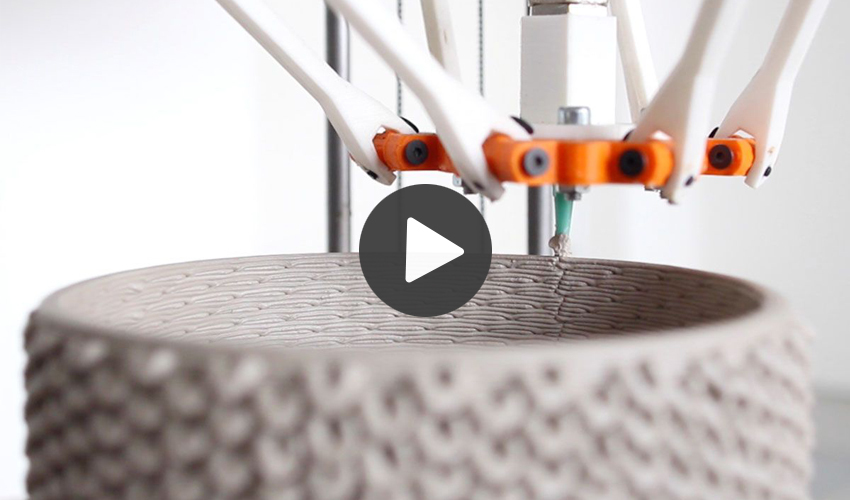 NewsTop 5 Videos: The opportunities of ceramic 3D printingThis week we found the top 5 videos about 3D printing and the way additive manufacturing is changing production. The technology has infiltrated many sectors, from medical to automotive – check our selection of the week to keep up with the innovations! If you enjoy these, you&hell
 NewsForward AM Innovation Award, an international competition to reward innovative startupsBASF 3D Printing Solutions is the subsidiary of German chemist BASF, dedicated to additive manufacturing and especially to the development of advanced materials. It now markets its solutions under the name BASF Forward AM. The company recently announced the launch…