Materials
All You Need to Know About POM for 3D Printing
Polyoxymethylene, better known as POM, is a thermoplastic used that is considered to be engineer-grade due to its properties. Discovered in 1920, it is currently one of the most widely used materials for injection molding, after polypropylene (PP) and polyamide…
- 3 min read
- Materials
- Six more stories
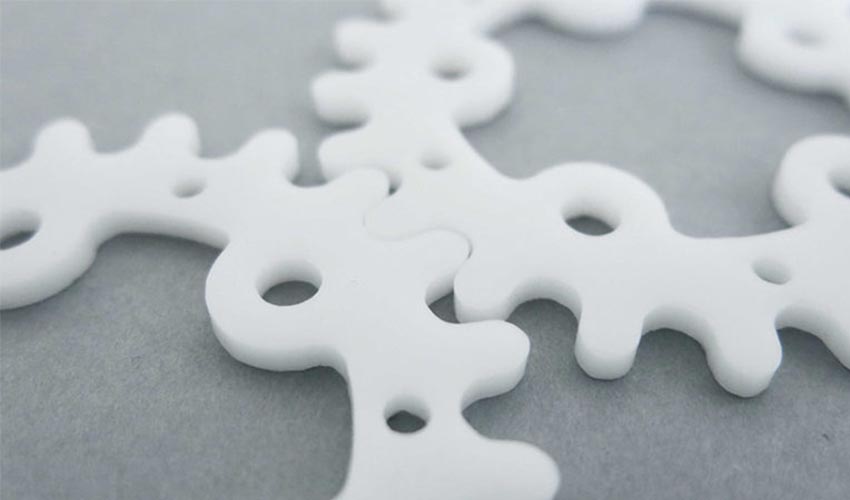
Polyoxymethylene, better known as POM, is a thermoplastic used that is considered to be engineer-grade due to its properties. Discovered in 1920, it is currently one of the most widely used materials for injection molding, after polypropylene (PP) and polyamide (PA). It is also becoming increasingly popular in 3D printing. POM is semi-crystalline (it has both amorphous and crystalline zones) and is white.
POM comes in two different forms: the homopolymer (POM-H), marketed by DuPont in the 1950s, and the copolymer (POM-C), marketed by Celanese in the 1960s. While POM-H consists of a single type of monomer, POM-C is composed of several types of monomers. As a reminder, monomers are reactive molecules that can combine to form polymers. The main difference between the two is that POM-H has better mechanical properties, but is less resistant to UV light. POM-C meanwhile has better thermal and chemical properties and therefore reacts better to temperature changes and chemical influences. For these reasons, it is POM-C that is mainly used in 3D printing, also because it is easier to extrude. Please note that in the 3D printing industry, POM is mainly available as a filament, so we will focus on this form.
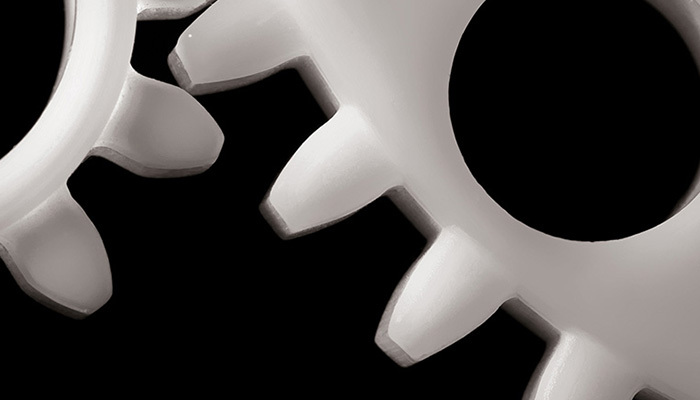
POM is available in white and easily colorable
Production and Characteristics of POM
In regard to the manufacturing of POM, a distinction must be made between homopolymer and copolymer. POM-H is mainly produced by the direct polymerization of formaldehyde. However, the material can also be produced by transition metal-centered cationic polymerization of trioxane (-CH2-O-)3. The end groups of POM-H are also closed by etherification and esterification to make the structure more stable with respect to the influence of acids or thermal loading. On the other hand, POM-C is produced by copolymerization of trioxane with dioxolane. To ensure stability, unstable end groups are degraded to formaldehyde by hydrolysis.
More from the desk
Six other notes from the rest of the bench.
 ApplicationsAustralian Students 3D Print Prosthetic Hand for ClassmateStudents from The Nature School in Port Macquarie have created a 3D-printed prosthetic hand for their classmate, Lois Agnello. Using an open-source design from Australian charity Free 3D Hands, the students spent months learning how to use a 3D printer…
 NewsFormnext 2021: A More Mature Exhibition Focused on IndustrializationFormnext 2021 closed its doors last Friday after 4 days of meetings and exchanges. This edition brought together 600 exhibitors from 35 different countries, spread over 3 halls of the Frankfurt Messe, along with about 17.8k visitors from 76 countries.…
 MaterialsBraskem Unveils All-New Sustainable 3D Printing FilamentsThe Brazilian petrochemical firm Braskem recently announced the release of its first line of sustainable 3D printing filaments. The petrochemical company, which is based in São Paulo, is known for being the largest polyolefin producer in the Americas. A market…
 ApplicationsHow Can Metal Additive Manufacturing Overcome Obstacles for the Creation of Core Parts?As additive manufacturing continues to mature and grow, one trend that has become clear is the increased importance of metal AM in a number of sectors. More and more, OEMs are adopting metal AM technologies as a way to create…
 ApplicationsRocket Lab Set to be Valued $4.1 billion Following MergerRocket Lab USA has just announced that it will become publicly traded in after entering into a definitive merger agreement with Vector Acquisition Corporation. The well-established end-to-end space company is a global leader in the launch, space systems and space…
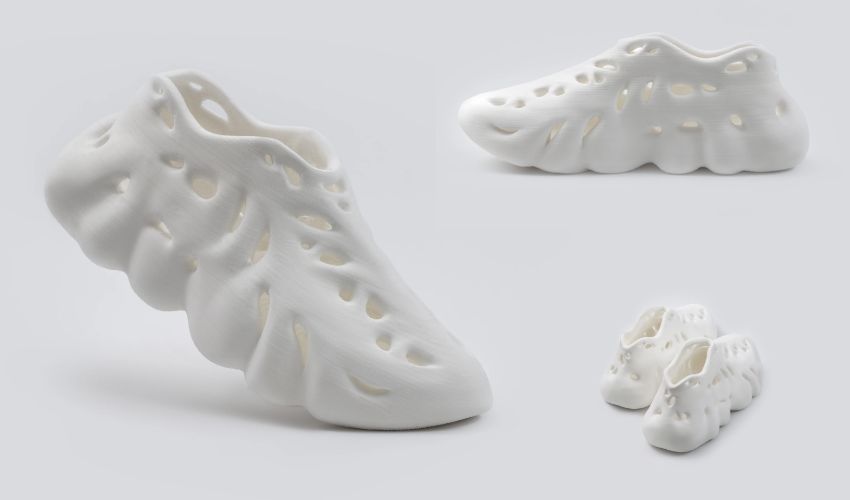 NewsELASTIUM-1, the World’s First Fully 3D Printed Foam ShoeFootwear made with additive manufacturing is a relatively recent revelation. Though the concept of 3D printing first entered the scene in the late 1970’s, it was only incorporated into the footwear industry three decades later in 2014, with adidas’s Futurecraft&hellip