News
ORNL 3D Prints Nesting Structures for Endangered Bats
Additive manufacturing has been playing an increasingly important role in endangered animal conservation. Earlier this fall, 3Dnatives reported on 3D printed bird decoys to encourage nesting among endangered seabirds, and now, just last week, the Oak Ridge National Laboratory rev
- 3 min read
- News
- Six more stories
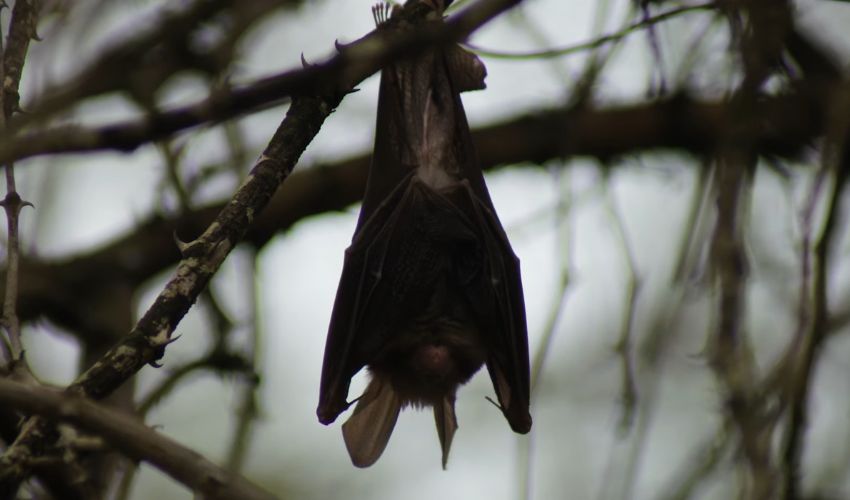
Additive manufacturing has been playing an increasingly important role in endangered animal conservation. Earlier this fall, 3Dnatives reported on 3D printed bird decoys to encourage nesting among endangered seabirds, and now, just last week, the Oak Ridge National Laboratory revealed their work with biomaterials to 3D print artificial nesting structures for bats.
The Oak Ridge National Laboratory is located in Tennessee, a state that’s also home to several species of endangered tree roosting bats. The bats’ impact might go under the radar because they are nocturnal, but bats play a critical role in maintaining balanced ecosystems. According to the United States Geological Survey, bats save U.S. agriculture billions of dollars per year in pest control by eating insects. Estimates range from 3.7 to 53 billion dollars annually—and that’s not even accounting for costs saved by bats eating insects in forests, or their importance as crop and plant pollinators.
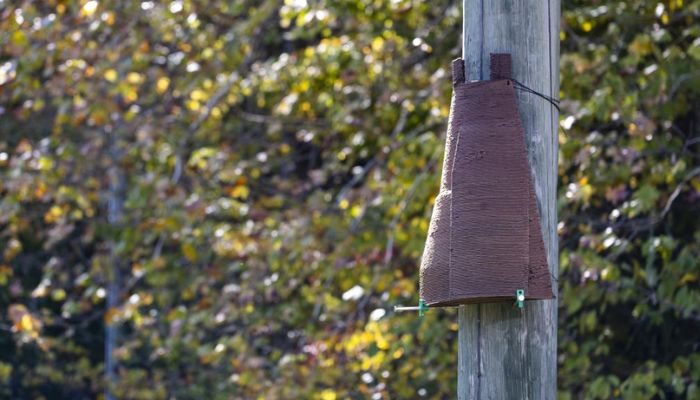
A prototype of the 3D printed nesting site for bats (Photo credits: Carlos Jones/ORNL, U.S. Dept. of Energy)
Conservationists have attempted to support endangered bat populations with traditional artificial nesting sites These man-made nests often succeed in attracting bats. However, they can come with unwanted side effects: they can attract too many bats, and once settled, these bats won’t leave.
More from the desk
Six other notes from the rest of the bench.
 NewsInfographic: 3D Printing in the Food IndustryWe have already told you about the use of additive manufacturing in numerous sectors. This includes of course applications in aerospace, medicine, construction and automotive, among others. In addition to these sectors, it has also found its way into the…
 NewsUSA Is Leading the Charge in Additive Manufacturing InnovationThe European Patent Office (EPO) has just published a new report on the 3D printing market, showing among other things, that the number of patent applications in the international market grew at an average annual rate of 26.3% between 2013…
 NewsUCF and UT win research award for their 3D printed Photon FunnelsThere is nothing that makes one prouder than viewing their alma mater in the news, especially for new innovations in 3D printing. Last month, the University of Central Florida (UCF) and the University of Texas at El Paso (UT) made…
 NewsThe Top Videos of Formnext 2023The most important international event on 3D printing, Formnext 2023, took place in Frankfurt last week. Much of the 3Dnatives team attended the event in person to acquire the most interesting news from the world of 3D printing. The big…
 NewsRapid + TCT 2021: A Round-Up of the News from the EventAfter over a year of exclusively virtual events, slowly in-person 3D printing conferences are coming back. The most recent one was Rapid + TCT which took place this week (September 13-15th, 2021) in Chicago. Rapid + TCT is one of…
 ApplicationsWith the RDRE, NASA Has Demonstrated That Engines Made With AM Are Suitable for Deep Space MissionsWe are still barely into 2023, but already the year has shown to be a promising one for additive manufacturing in space. Earlier this week we told you about the ESA which has included 3D printed parts on a rover touching…