News
NIST to Promote Metal Additive Manufacturing Through Nearly $4M in Grants
More than ever, we are seeing that governments are investing in additive manufacturing as a way to promote more sustainable, clean manufacturing. The United States especially has been pushing the technology as a part of its build back better framework.…
- 3 min read
- News
- Six more stories
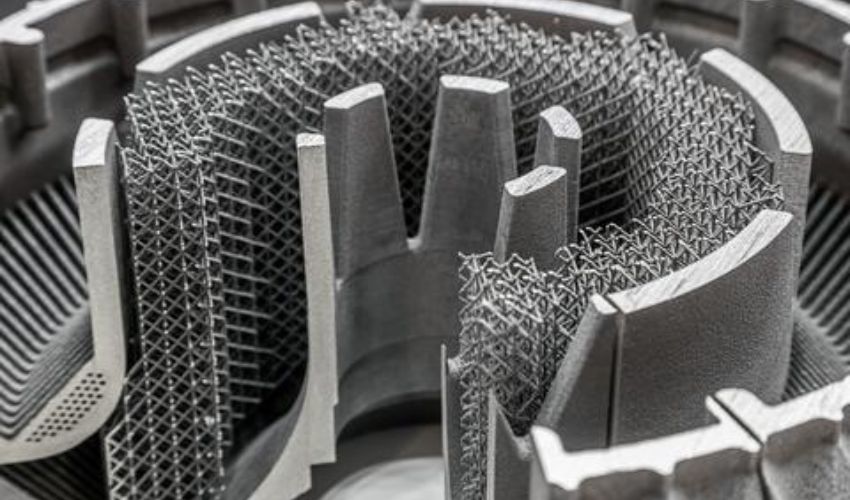
More than ever, we are seeing that governments are investing in additive manufacturing as a way to promote more sustainable, clean manufacturing. The United States especially has been pushing the technology as a part of its build back better framework. And now, we are seeing the continued commitment the US government has for AM. The U.S. Department of Commerce’s National Institute of Standards and Technology (NIST) has awarded $3.7 million in grants to help address current and future barriers to widespread adoption of metal additive manufacturing. This will be done through NIST’s own research as research projects at The Research Foundation for the State University of New York, Colorado School of Mines, Auburn University and General Electric.
Though interest in 3D printing has significantly increased since the pandemic showed its true capabilities, in the past year we have seen a clear push to adoption of AM in industry. This was notably seen in May when the Biden Administration launchd its AM Forward Initiative. In this, the Biden Administration highlighted adoption of AM as a way to improve the competitiveness of small and medium sized manufacturers as well as to bolster supply chain resiliency in the long-term. This latest push from NIST, which is part of the US Chamber of Commerce, shows their continued commitment to promoting additive manufacturing in the longterm.

Photo Credits: NIST
Commenting on the decision, Under Secretary of Commerce for Standards and Technology and NIST Director Laurie E. Locascio explained, “The U.S. can take a leading role in developing the measurements and international standards that will help accelerate adoption of these important 3D-printing technologies. To compete globally, we need to invest in programs such as this that bring together our best minds in industry, academia and government to solve important technical challenges.” As might be expected, NIST is especially interested in addressing qualification through new measurement methods and standards.
More from the desk
Six other notes from the rest of the bench.
 NewsJoint Venture Between Amaero And Abu Dhabi Firm Will Foster Metal Additive ManufacturingAdditive manufacturing is gaining momentum worldwide, but in certain parts of the world it is less established than in others. In a significant move towards the adoption of the technology in the Middle East, the Australian firm Amaero International Limited,…
 NewsFormula 1 releases new range of 3D printed perfumesFormula 1 is releasing a new collection of fragrances, the F1 Fragrances Engineered Collection, which includes a range of five luxury scents. Back in 2019, Formula 1 had launched its first line of fragrances using metal 3D printing technology, in…
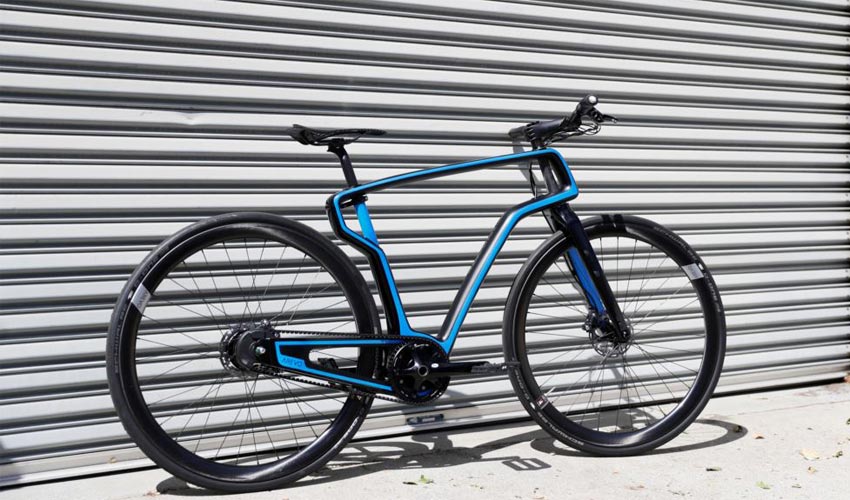 NewsThe startup Arevo 3D prints a bicycle from carbon fibersArevo is an American startup that has just unveiled a new bike with a frame that has been 3D printed from carbon fibers. The bike was created to show the possibilities offered by additive manufacturing. Arevo is well known for…
 ApplicationsNASCAR to Implement 3D Printed Parts in Next Gen Racecars3D printing in the automotive industry is no longer a new topic. The sector has rapidly adopted 3D technologies for not just prototyping and R&D, but also the production of end-use parts in everything from electric cars to luxury vehicles.…
 NewsTOP 5 videos of the week: Airbus, Fidget Spinners and more!A new selection of the best 3D printing videos of the week, just for you! Find our TOP 5 videos of the week below and tell us what your favorite video is in a comment or on our Facebook and Twitter page.…
 NewsTop 5 Videos: 3D printing prosthetic arms, and moreThis week we found the top 5 videos about 3D printing and the way additive manufacturing is changing production. The technology has infiltrated many sectors, from medical to automotive – check our selection of the week to keep up with the innovations! If you enjoy these, you&hell