News
MX3D Unveils its 3D Printed Pipeline Clamp for the Oil & Gas Industry
MX3D, an AM company perhaps best known for its installation of a 3D-printed metal bridge in Amsterdam earlier this year, has unveiled their latest project, a 3D printed pipeline clamp for the Oil&Gas industry. The part was made and tested…
- 3 min read
- News
- Six more stories
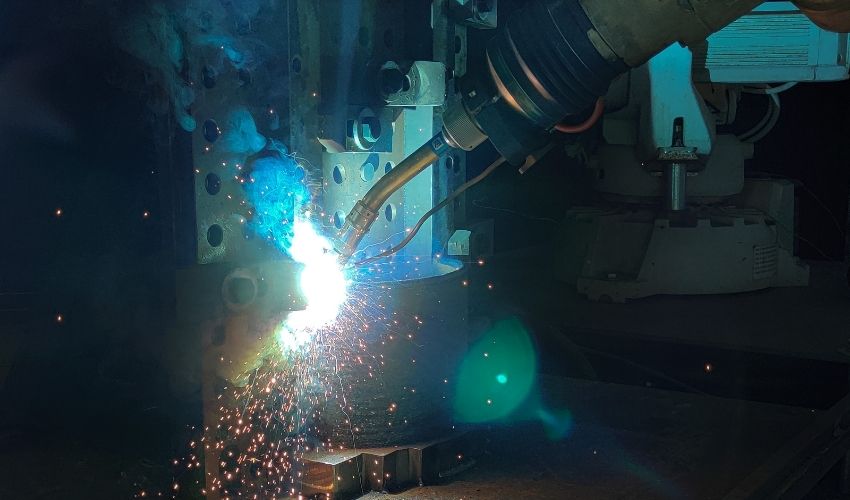
MX3D, an AM company perhaps best known for its installation of a 3D-printed metal bridge in Amsterdam earlier this year, has unveiled their latest project, a 3D printed pipeline clamp for the Oil&Gas industry. The part was made and tested in collaboration between MX3D, Team Industries and TiaT and created using a hybrid approach which included MX3D’s robotic Wire Arc Additive Manufacturing (WAAM) process. Ultimately, the part was able to be tested and certified, with a high level of assurance, showing the usefulness of WAAM in the Oil&Gas sector.
Additive manufacturing (AM) has been gaining in popularity in the oil & gas sector, as well as in the energy sector in general. In fact, already this year, we have seen a 3D-printed safety critical component that was made by Vallourec and Total which was installed on an offshore oil rig. Additionally, 3D-printed safety critical parts were also installed at a nuclear plant in Alabama. Though perhaps not as widespread as in other industries, AM is useful for the industries not just for the ability to make complex parts, but for the short lead times which MX3D notes are critical especially in oil and gas. This is because these shorter lead times not only save money, but also help to decrease environmental, human and safety risks.
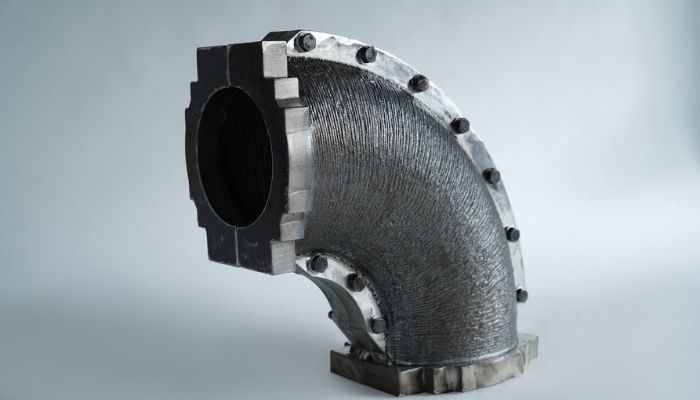
The 3D printed clamp was made using a hybrid WAAM process (photo credits: MX3D)
The 3D Printed Pipeline Clamp
In this specific case, a pipeline clamp was created. These are designed to be installed on damaged or leaking pipework and are key in the industry has a way to prevent incidents and increase run times of an installation before maintenance would be required. Since repairing a pipeline could take up to 2 to 3 weeks, potentially losing 100k to 1M EUR per day, having the ability to quickly make a clamp could help companies save a significant amount of money. Plus, since current repair processes typically rely on CNC milling or specialized manual labor, 3D printing is beneficial as CNC machining is known for its high material waste (about 80% of the original material) and specialized labor in the field is scarce.
More from the desk
Six other notes from the rest of the bench.
 NewsMeta Has Acquired Luxexcel, Establishing a Foothold in the 3D Printing SectorMeta, the parent company behind the Facebook, WhatsApp and Instagram, announced a few days ago the acquisition of a company specialized in the manufacturing of 3D printed lenses, Belgian-Dutch Luxexcel. This business had already raised several million euros to market…
 ApplicationsWEBINAR: The Role of FDM 3D Printing in Automotive and MotorsportsWhen it comes to automobiles and especially motorsports, speed is key. As such, teams and manufacturers are constantly looking for ways to optimize weight on their vehicles. Enter 3D printing. Additive manufacturing is quickly being adopted in the automotive sector,…
 ApplicationsStratasys Showcases Automotive Applications at RAPID + TCT 2025While at RAPID + TCT 2025, one thing that was very obvious was the prevalence of applications on the show floor and in conference sessions. This follows a trend that we have seen for quite some time now, with companies…
 NewsTest Form ENRegister and win a Bambu Lab PS1 3D Printer! * Required Email * First Name * Last Name * Company * Country * 3D Printing IndustryAerospaceAutomotive and transportArchitecture / ConstructionDesignConsumer GoodsEducationElectronicManufacturingMakers / FabLabMedicalOil and GasOther
 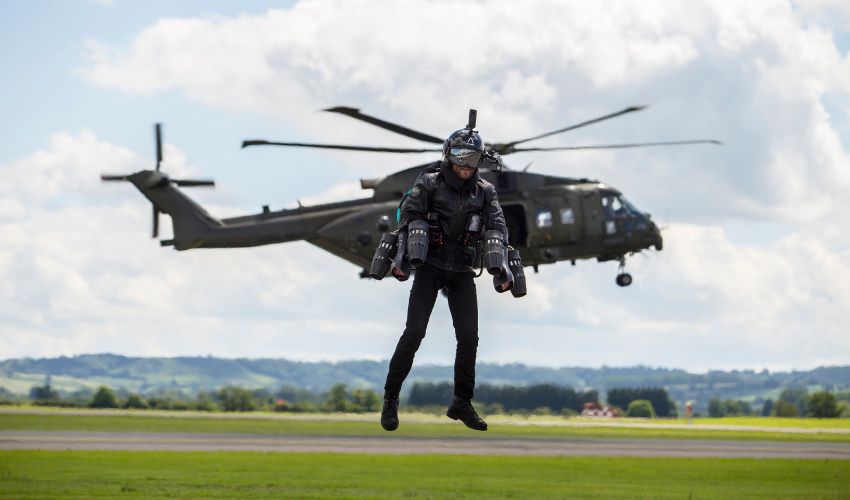 ApplicationsGravity Industries, The Company That Lets You Fly With 3D printing!It is possible to fly… no, really! We have always heard that in the future it would be possible to fly and the future has arrived, it is today. This has been made possible thanks to today’s featured company: Gravity…
 NewsBoeing protects aeronautical additive manufacturing with AssembrixAeronautical and aerospace builder Boeing recently announced a new partnership with Assembrix, an Israeli company known for their industrial additive manufacturing platform. Their program allows you to oversee the entire digital process, from design to production and verification