Guides
Miele on the 3D4U project and the benefits of using 3D printing in the home appliances market
Miele, the German manufacturer of high-end domestic appliances and commercial equipment, revealed back in May that it would make free STL files for household appliance accessories available through its 3D4U project. As you may know, one of the benefits of…
- 3 min read
- Guides
- Six more stories
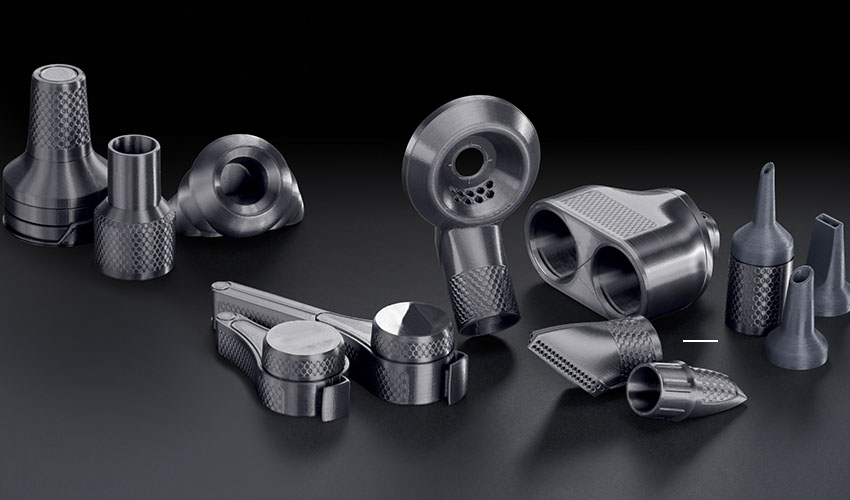
Miele, the German manufacturer of high-end domestic appliances and commercial equipment, revealed back in May that it would make free STL files for household appliance accessories available through its 3D4U project. As you may know, one of the benefits of additive manufacturing is that you can print one-off parts at a relatively low cost, therefore producing spare parts for your home becomes viable with this technology. From drill attachments for vacuum cleaners to coffee clips, Miele is giving wider access to 3D models that have been designed to be of use in people’s home. Additionally, they are defining the best 3D printing parameters to print these parts. In order to learn more, we talked to David Buhl, in charge of the technical development of 3D4U!
1. Can you present yourself and tell us about your relationship with 3D printing technologies?
3D4U was developed by a team at Miele comprising over 30 experts who contributed their expertise at various phases of development. Technical development was coordinated by myself, David Buhl. I personally have a background in mechanical engineering and innovation management and have gathered experience at Miele in the fields of blue-sky research and product engineering in various product fields. My relationship with 3D printing is both professional and personal. Professionally, I have known 3D printing for many years from prototype development. Many components used, say, on the new Miele Triflex HX1 rechargeable handstick were tested in preliminary trials as 3D printed parts. Privately I own a DLP-3D printer and members of our team own FLM printers from various manufacturers. So we at Miele are also very inquisitive and also involved in the 3D printing scene in a private capacity.
2. Can you tell us more about the 3D4U project and why Miele decided to launch it?
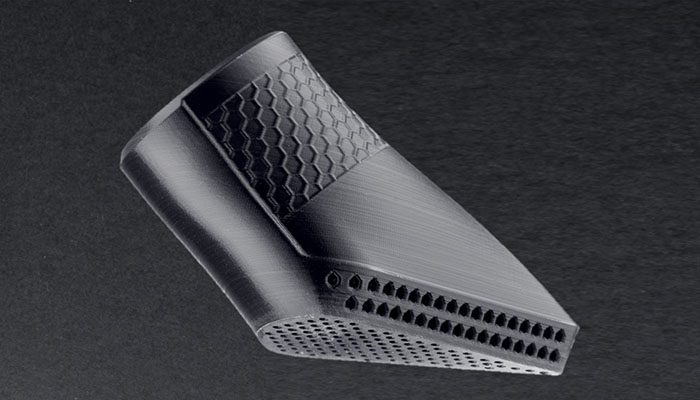
From activities in our spare time in the 3D printing fraternity, we know just how difficult it is to create really good 3D data records for printing. Frequently, several printing trials are required before a model has the desired properties. Of course, there are ready-to-use models on the Internet, for instance on Thingiverse, which have been created by committed scene members. As a result, there are data records for Miele vacuum cleaners created by private persons. This proves therefore that there is a need for templates. At the same time, it is very time-consuming for private persons to create high-quality 3D data records. With 3D4U, we have been able to resolve this to the benefit of our customers, and have already published records for a series of components. These parts extend the already considerable range of Miele accessories.
More from the desk
Six other notes from the rest of the bench.
 SoftwareThe Carbon Design Engine Automates the Process of Design to 3D Print LatticesCarbon has announced that its innovative 3D printing technology, the Carbon Design Engine software, is now available to all of its subscribers. This design generator allows users to automate the process of creating performance-orienting 3D printed lattices, saving time and&hellip
 NewsSwissloop Tunneling Has Integrated a 3D Printer into a Tunneling Machine for Elon Musk’s HyperloopSwissloop Tunneling is an association of students located at ETH Zurich whose goal is to revolutionize the construction of tunnels. For several months now, it has been working on its “Groundhog Alpha” model, a 7-meter (nearly 23′) long machine that…
 NewsAMUG 2021: A Round-Up of all the News from the EventAMUG 2021 has officially ended! As you probably know, the Additive Manufacturing User Group (AMUG) association has been organizing this conference since the 1990s, this year it took place on May 2 – 6, 2021, in Orlando, Florida. The conference…
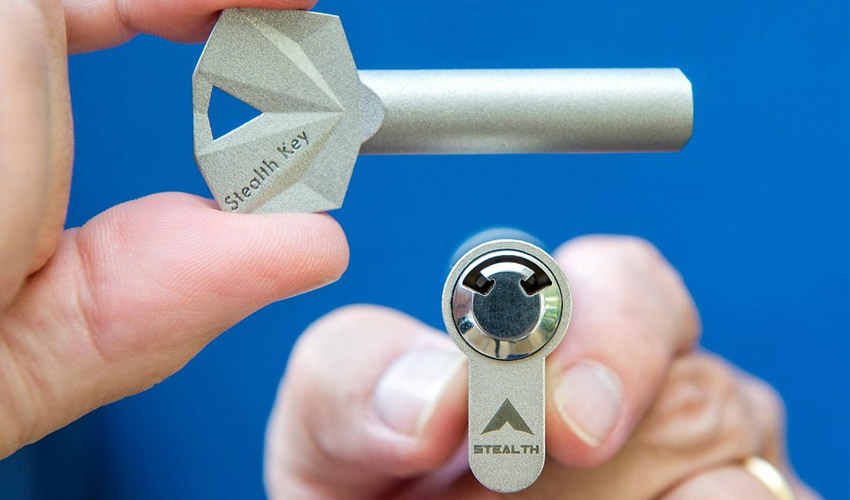 NewsFieldmade and UrbanAlps 3D print secure keys on demandThe young Swiss company, UrbanAlps had created a metal 3D printed key, hiding security functions inside its mechanism to make it impossible to scan it, in order to protect it. The company has just announced a collaboration with Fieldmade, a…
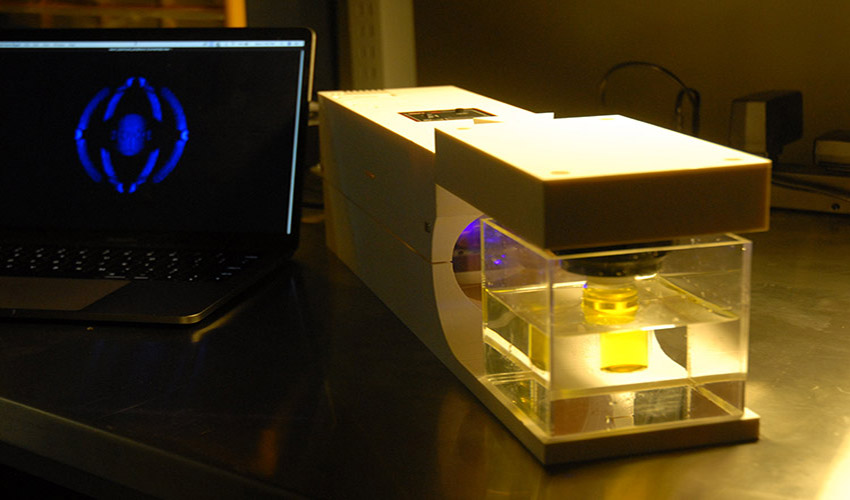 PrintersNew 3D Printing Process Solidifies Objects with Rays of LightResearchers at the University of California, Berkeley, developed a new 3D printer that uses a special light-sensitive resin that solidifies into objects in a matter of minutes. The researchers nicknamed their machine the “Replicator” after the Star Trek device that…
 Applications3D printing to treat spinal cord injuriesResearchers from the University of California, San Diego, have successfully treated rats with spinal cord injuries using 3D printing. Their research offers hope for people with the same injury. 3D printing to help heal spinal cord injuries The Researchers from…