Materials
Material Testing of 2PP 3D Printed Parts Has Been Successful
There is now a wide variety of processes in the field of innovative 3D printing technology. One of these is so-called two-photon polymerization (2PP), which is often used in applications for 3D printing in the micrometer range, such as in…
- 3 min read
- Materials
- Six more stories
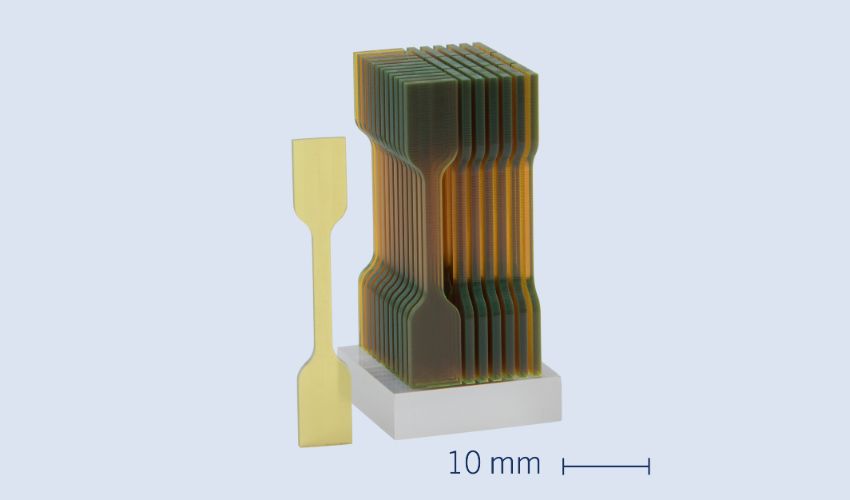
There is now a wide variety of processes in the field of innovative 3D printing technology. One of these is so-called two-photon polymerization (2PP), which is often used in applications for 3D printing in the micrometer range, such as in micro-optics and micromechanics. The process is also attractive for industrial applications and high-volume production. Considering that this method is used for high-precision applications, the standardization of material testing of 2PP 3D printed parts is highly relevant. This ensures, for example, that the parts produced have a certain level of quality and safety.
Now, in a multinational collaboration as part of a study by researchers from the Vienna University of Technology (TU Wien), the California Institute of Technology (Caltech) and RWTH Aachen University as well as material experts from UpNano GmbH, standardized material testing of (macroscale) 2PP 3D-printed parts, such as 35 mm test specimens in accordance with the ISO standard, has now been achieved for the first time. Through this, it has been possible as well to learn more about the mechanical properties of these parts.
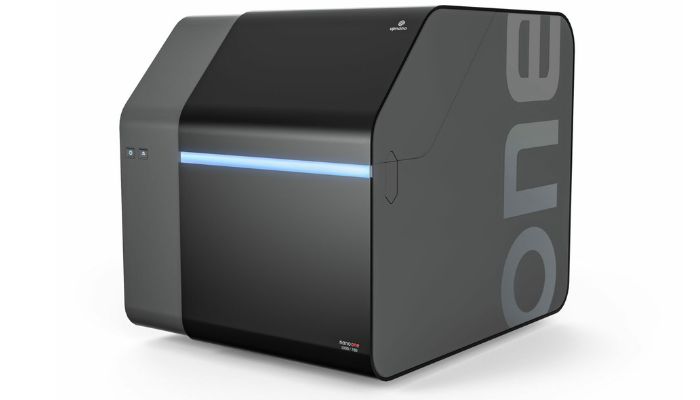
The NanoOne 2PP 3D printer
The study, which was published in “Advanced Materials”, represents the first testing of 2PP 3D-printed bulk samples with regard to their mechanical properties in the mm to cm range using standardized methods. The new findings are significant in that they help 2PP 3D printing to develop into a manufacturing method for mass production. This follows from the fact that the study establishes procedures for material testing that can meet the requirements of ISO standards. The study was carried out using the NanoOne 2PP 3D printer and resin materials. The research team’s results show that UpNano’s UpPhoto and UpDraft resins for macroscopic test specimens not only outperform traditional resin-based 3D printing with acrylic resin (ETA/TTA) in terms of material quality, but also require no post-treatment as they solidify quickly on their own.
More from the desk
Six other notes from the rest of the bench.
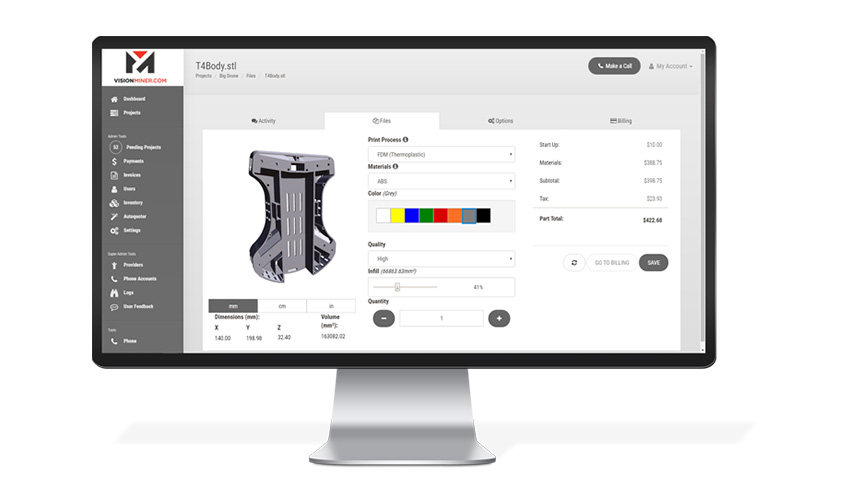 SoftwareHow One of the Fastest Growing 3D Printing Service Manages Hundreds of Their ProjectsFor 3D printing service providers, managing day to day operations requires using many different tools such as billing, inventory, project management, and 3D file analysis. Effective communication and collaboration with clients are at the core of leading successful projects. Howev
 ApplicationsMade In Space will send first commercially-developed plastic recycling facility to ISSIn November, Made In Space plans to send the first commercially-developed plastic recycling facility to the International Space Station (ISS). More precisely, it plans to send it on Northrop Grumman’s commercial cargo resupply flight. This plastic recycling facility, named Braske
 Applications3D printing system uses hybrid living materials to make biomedical toolsHybrid Living Materials (HLMs) are formed by combining living and non-living components such that the resulting composite takes on the properties of both. At MIT’s Media Lab Mediated Matter group, researchers have been studying how 3D printing technologies can control…
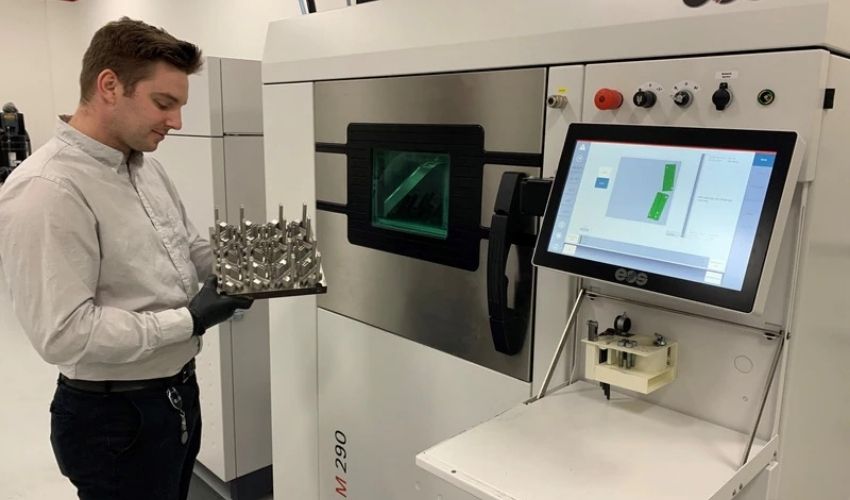 NewsASTM Introduces New AM Operator Certification ProgramRecently, ASTM International announced a new certification program for metal 3D printer operators. Called the Powder Bed Fusion – Laser Beam (PBF-LB) Machine Operator Certification program, it was developed by the ASTM International Additive Manufacturing Center of Excellence (AM
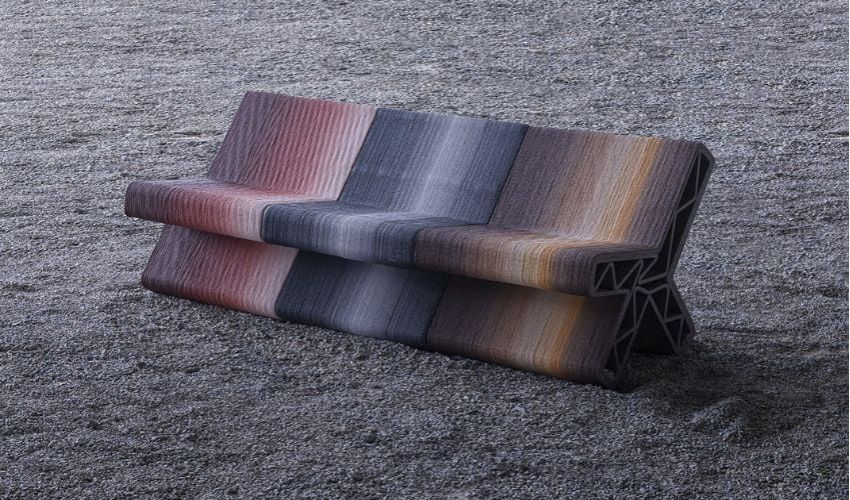 NewsBENTU DESIGN 3D Prints Street Furniture Using Construction WasteThe construction industry is undoubtedly one of the world’s biggest generators of waste. Depending on the statistics and what is included in this waste, it is estimated that 2 to 3 billion tons are produced each year—accounting for 30 to…
 NewsTop 5 Videos: 2020 Christmas Edition!This week we found the top 5 videos about 3D printing and the way additive manufacturing is changing production. The technology has infiltrated many sectors, from medical to automotive: check our selection of the week to keep up with the innovations! If you enjoy these, you&helli