News
EPSRC has launched the DfAM network in the UK for greater collaboration on AM design research
The Engineering and Physical Science Research Council (EPSRC) officially launched its Design for Additive Manufacturing (DfAM) Network in the UK last week. The project aims to bring together a community of DfAM academic researchers, industry and others in the field…
- 3 min read
- News
- Six more stories

The Engineering and Physical Science Research Council (EPSRC) officially launched its Design for Additive Manufacturing (DfAM) Network in the UK last week. The project aims to bring together a community of DfAM academic researchers, industry and others in the field to increase communication, collaboration and to develop future research opportunities. DfAM as a concept is not new, a notable example is topology optimization. Additionally there have been recent examples of DfAM, such as RMIT and five-axis additive manufacturing. Still, it has not been used to its full potential in the AM sector even. This network aims to remedy this, bringing together people who will collaborate, discuss and promote DfAM through the UK.
What is DfAM?
Design for AM is not a new concept. It aims to optimize a product design in order to make it easier to produce, whether that is by making it cheaper, faster or more efficient. It builds off of a concept present in traditional manufacturing, design for manufacturability or DFM. One well-known example in 3D printing is Topology optimization, a part of numerical design which allows users to find, thanks to mathematical formulas, the optimal material distribution in a given volume subjected to mechanical constraints. In recent years, we have increasingly seen examples of DfAM in the additive manufacturing sector. Recently, for example, we saw it implemented by RMIT when they experimented with design in order to develop patterns that allowed for stronger concrete 3D printing. Another recent development is the new research study in the Journal of Additive Manufacturing on five-axis additive manufacturing, a concept recently developed to allow manufacturers to build parts without printing support structures.
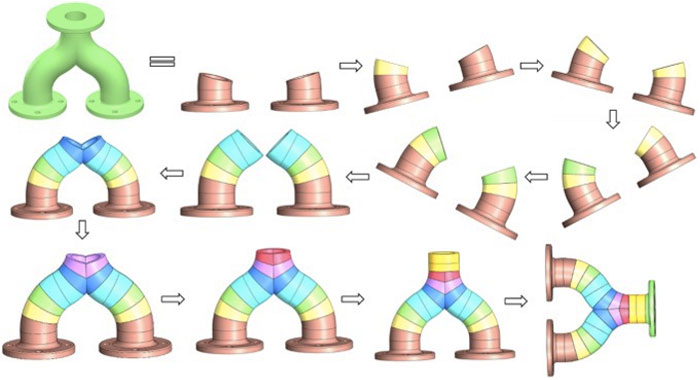
An example of 3D printing process without supports (photo credits: Xinyi Xiao, Penn State)
However despite these advancements, the concept is still underutilized in the AM sector, despite the fact that DfAM is of great importance to the field. This is because it it allows AM to reach its full potential with cheaply and efficiently produced parts that are able to use more imaginative designs. The creation of the DfAM network marks the first time a network dedicated to the promotion and use of DfAM has been created in the United Kingdom.
More from the desk
Six other notes from the rest of the bench.
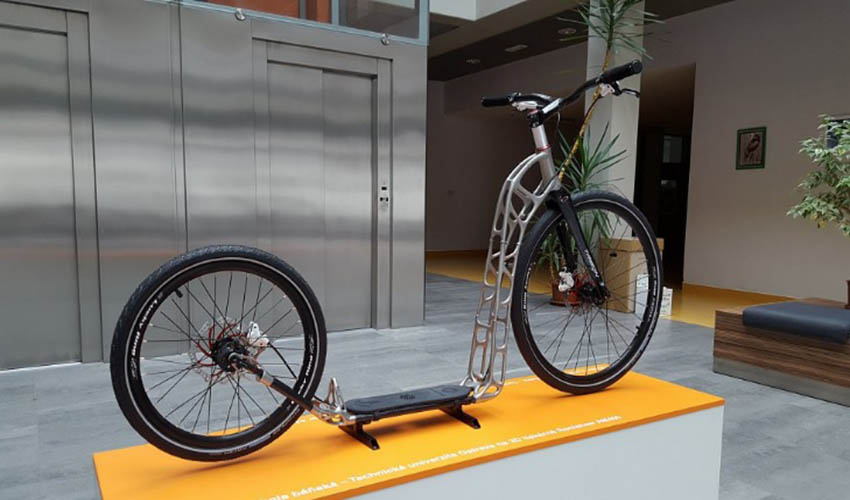 Applications3D Printed Scooter: collaboration between Czech researchers & Renishaw3D printing has been used to produce vehicles to offer cost-effective, eco-friendly and lightweight solutions to the automotive industry. Additively manufactured vehicles are not widely available yet as the technology is still developing and improving every year but many projects
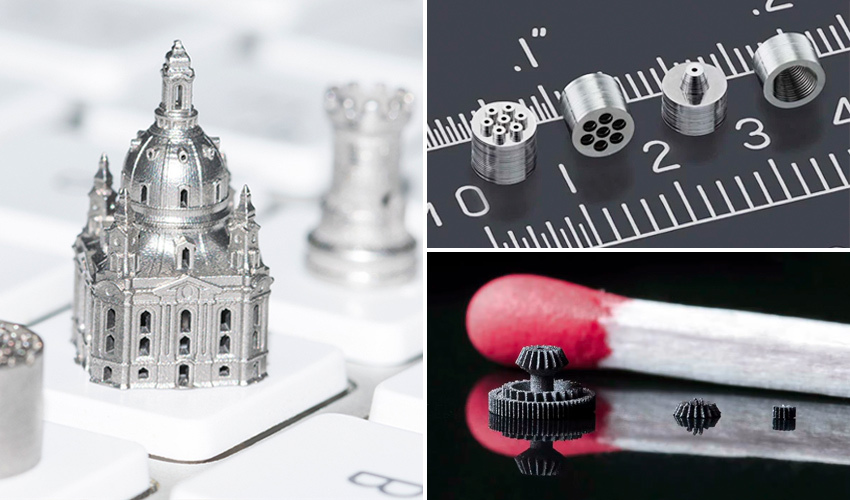 GuidesThe Best Micro 3D Printing Solutions On the Market3D microprinting, also known as micro-scale printing, is a micro-fabrication technique that allows the design of very small sizes, at the micrometer scale and below. Particularly popular in the electronics industry, it is growing steadily, with more solutions available on…
 NewsFits You is a Line of 3D Printed Bras Designed to Fit Every WomanColombian designer Neyla Coronel is revolutionizing the world of women’s underwear by using 3D printing to make customized lingerie. Throughout history, women’s underwear has undergone several innovations, but Coronel’s project, called Fits You, marks a new mile
 NewsTop 5 Videos: Wood 3D Printing by Saint-Honoré-ParisWelcome to our compilation of this week’s most compelling 3D printing highlights. This week’s edition kicks off with our very own video, focusing on Saint-Honoré-Paris and how it is using wood 3D printing for window displays and mannequins. Next up,…
 NewsTatyana McFadden Aims for Gold Medal at Paralympics with 3D Printed Gloves“Games wide open” is the underlying slogan of the 2024 Summer Olympic and Paralympic Games, opening in Paris later this week. Numerous athletes from all over the world will be doing their best to win the coveted medals in their…
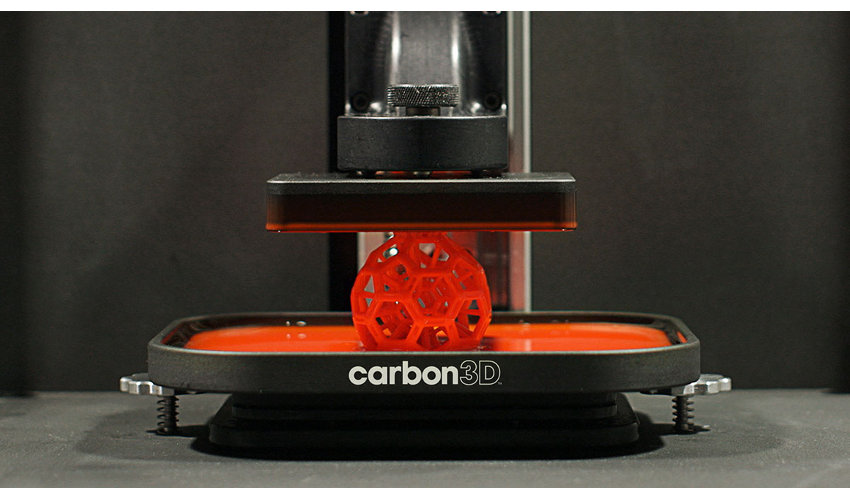 NewsCarbon 3D receive $200M Investment to bring Adidas Futurecraft 4D WorldwideYou may remember Carbon 3D from their TED Talk about “What if 3D printing could be 100 times faster?” Carbon 3D are known for designing super-fast 3D printers for use in design and manufacturing, and have announced a $200M funding…