Printers
Creaform Makes Scan-to-CAD Seamless For Additive Manufacturing
There are numerous reasons to combine 3D scanning and 3D printing. Reverse engineering and its ability to customize and reconstruct obsolete parts is just one example of the versatility of the duo. While high-quality 3D scanners can capture detailed geometry,…
- 3 min read
- Printers
- Six more stories
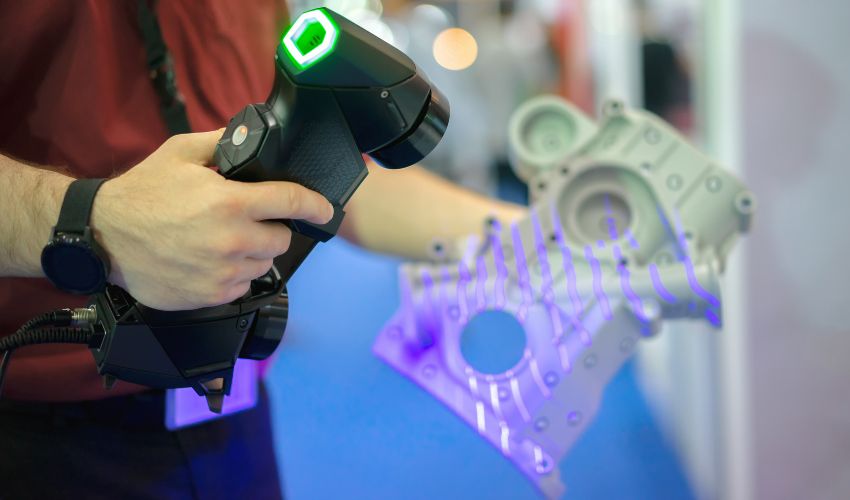
There are numerous reasons to combine 3D scanning and 3D printing. Reverse engineering and its ability to customize and reconstruct obsolete parts is just one example of the versatility of the duo. While high-quality 3D scanners can capture detailed geometry, transforming that raw scan data into a clean, parametric CAD file suitable for printing is another challenge entirely. Furthermore, converting scan data into a usable CAD file for further processing can be both time-consuming and labor-intensive. In a world where everything seems to work at the touch of a button, this is no longer appropriate. Scan-to-CAD solutions that simplify the transition from scan data to CAD models, thus eliminating efficiencies and enabling companies to overcome various obstacles, are the key.
Let’s first take a look at why the transition from scan-to-CAD can be full of hurdles when using traditional processes. Once the scan has been successfully completed, the data needs to be cleaned up and prepared for further processing. The first step is to align the scan data correctly. Without proper reference points, alignment issues can occur which, in turn, lead to dimensional inaccuracies, causing users to lose time when making adjustments. Secondly, it is important to clean the scan data, as raw data contains noise or gaps that are unnecessary for further processing and could also affect the accuracy of the CAD model. Additionally, converting mesh-based scans into smooth, parametric CAD models is especially challenging for complex or organic shapes, adding further complexity to the process.
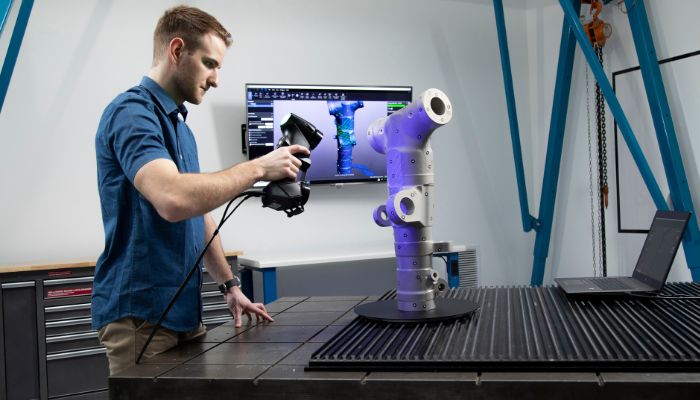
Needless to say, quality assurance steps take a significant amount of time, often requiring switching back and forth between different capture tools and CAD software. This time-consuming process is also costly, potentially delaying product launches and requiring trained professionals. So how can a seamless, efficient transition from scan data to CAD model be achieved?
More from the desk
Six other notes from the rest of the bench.
 ApplicationsPOSTECH 3D Print First-of-its-Kind Lung ModelAs winter gives way to spring the newly bloomed flowers and warm weather bring with them dust, unperceived by most but an anguish to those suffering from respiratory diseases. For them, this year and last, tainted by Covid-19, has amplified…
 NewsWEBINAR: Ceramic Additive Manufacturing at Industrial Scale: Use Cases, Design Guidelines, and LimitationsTechnical ceramics offer unparalleled properties, from extreme heat resistance to exceptional corrosion protection. When combined with the design flexibility and precision of additive technologies, this material is becoming a indispensable for industries ranging from medical and
 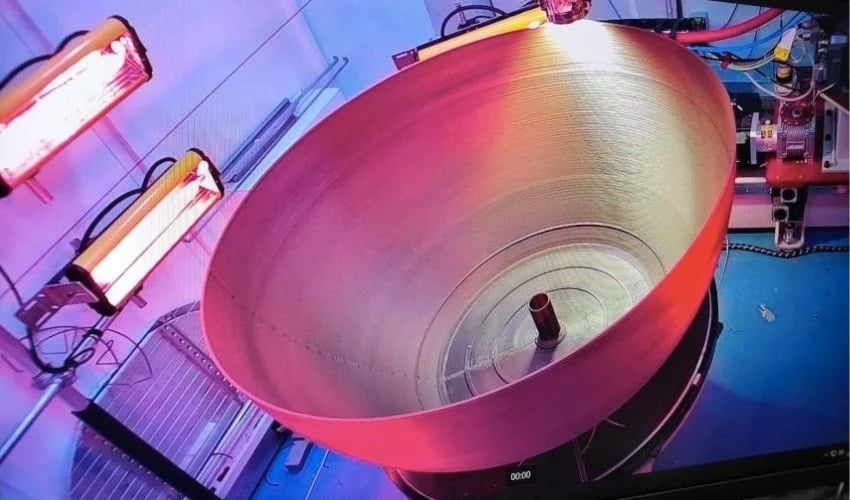 ApplicationsThe first 3D Printed Cryogenic Tank for Storing Liquid HydrogenThe AIMEN technology center recently completed the manufacture of a 3D printed cryogenic tank for storing liquid hydrogen, a world first. This innovation marks a key milestone for the aeronautical industry, which is faced with an ever-more urgent need to…
 NewsThe Top Videos From Formnext 2022Hello 3D printing enthusiasts. We have had a busy week in the world of additive manufacturing with the recent success of Formnext from the 15th to 18th November. If you already have the post-Formnext blues fear not, because we have…
 ApplicationsCollins Aerospace Opens New Additive Manufacturing CenterAmerican company Collins Aerospace recently announced the opening of its new additive manufacturing center located in Monroe, North Carolina. The company, which is a subsidiary of the multinational Raytheon Technologies Corporation, opened the additional location for the expansio
 NewsWhy Nano Dimension Is Selling Markforged and What Stratasys GainsThe additive manufacturing sector is once again making headlines with news that revives one of the market’s most active chapters. Nano Dimension has announced the signing of a definitive agreement to sell Markforged to Stratasys, in an all-cash transaction valued…