News
BCN3D Reveals its New Resin Technology, VLM, for Multi-Material 3D Printing
Already present for 10 years on the FDM printer market, BCN3D has reached a turning point today with the unveiling of a new technology. After 3 years of research and development, the Barcelona-based manufacturer will be releasing its “Viscous Lithography…
- 3 min read
- News
- Six more stories
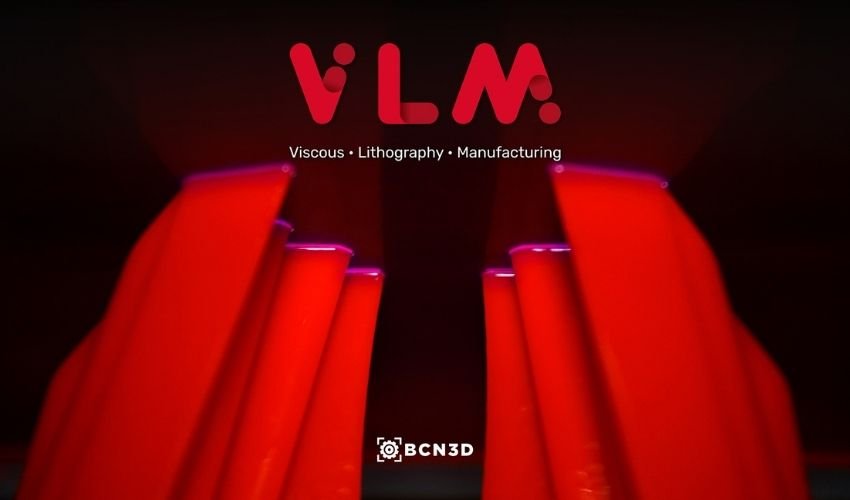
Already present for 10 years on the FDM printer market, BCN3D has reached a turning point today with the unveiling of a new technology. After 3 years of research and development, the Barcelona-based manufacturer will be releasing its “Viscous Lithography Manufacturing” (VLM) technology. As the name implies, it is a printing technology for viscous resins based on stereolithography. Sharing many similarities with the mSLA and DLP processes, BCN3D’s VLM technology is actually very different from them. But how exactly does it work?
Viscous Lithography Manufacturing Technology
The new technology was revealed in a press conference from BCN3D on March 2nd. There, we learned that through the use of a viscous resin, BCN3D is able to temporarily fix (in suspension) the material under the film (in the form of a roll) that carries it from the resin cartridge to the printed part. This resin is then cured by a UV-A light source masked by a monochrome LCD screen. Once the layer is produced, the film moves the non-polymerized resin into a filtration system for reuse.
Since the VLM system uses independent resin cartridges and a moving film, VLM printers do not have a resin vat. Thus, parts are produced directly on a printing plate and do not soak in resin. In addition, it offers the possibility to print different materials simultaneously, which was previously impossible with other resin technologies, opening up a number of new applications. By using a roller, BCN3D avoids contamination between materials. It should be noted however that when printing multi-materials, part of the resin cannot be reused to avoid contamination, leading to slightly more waste.
More from the desk
Six other notes from the rest of the bench.
 NewsInfographic: The Role of 3D Printing in Sports and the OlympicsAdditive manufacturing has gained in popularity in many sectors, including the world of sports. More and more companies are experimenting with 3D printing to design more comfortable and safe equipment, or to improve athletes’ performance. Furthermore, with the upcoming 2024
 PrintersCurious about 3D printing in color? then let us explain!These are always questions that may arise as you begin taking an interest in 3D printing, and one of these areas where we see many questions asked is when it comes to 3D printing in color. Most people, when 3D…
 PrintersObsidian: Kodama’s latest 3D printer for only $99The Kodama Kickstarter campaign, which ends in less than 24 hours, is already a huge success. After exceeding its initial target of $100,000 in less than 3 minutes, the company has so far managed to raise a total of $1.48…
 ApplicationsNew 3D Printed Gummies Combat Nutritional DeficienciesImagine having a gummy made just for you, with the right amount of iron, vitamin D or any other nutrient your body needs. A team of researchers from the Universitat Politècnica de València (UPV), in collaboration with the University of…
 News3DExpress: Shapeways Declares BankruptcyIt has been a particularly interesting week for additive manufacturing. Between the end of RAPID + TCT and the huge announcements that we saw (including Nano Dimension’s intention to acquire Desktop Metal in the coming months), there was so much…
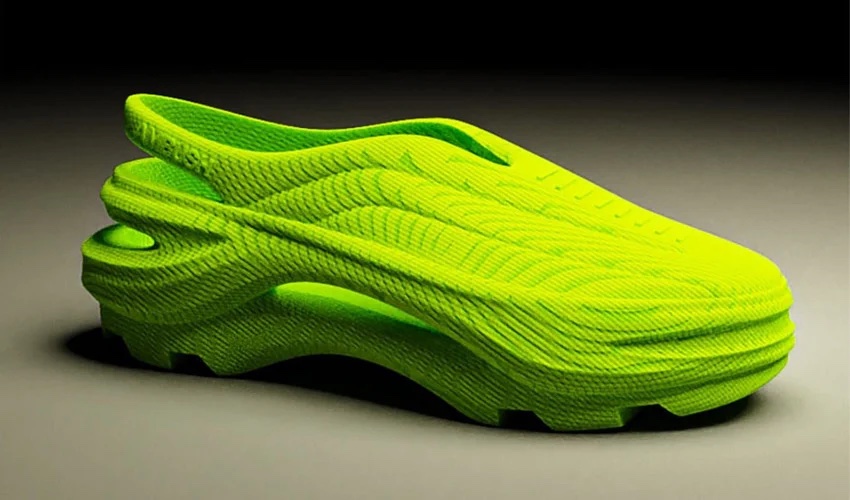 NewsAMBUSH 3D Prints a Shoe That is Wearable in the MetaverseShoe brand AMBUSH is launching a new project that is quite unique in the fashion world: Aapair of 3D printed shoes that can be worn both in the metaverse and in everyday life. The shoes which are called 100S were…