News
BASF Opens World’s First Production Plant for 3D-Printed Catalysts
BASF, a leading global manufacturer of catalysts for the chemical industry, announced that it opened the world’s first production plant for 3D printed catalysts, located in Ludwigshafen, Germany. The plant will produce X3D® catalysts on an industrial scale. Increasingly, we
- 3 min read
- News
- Six more stories
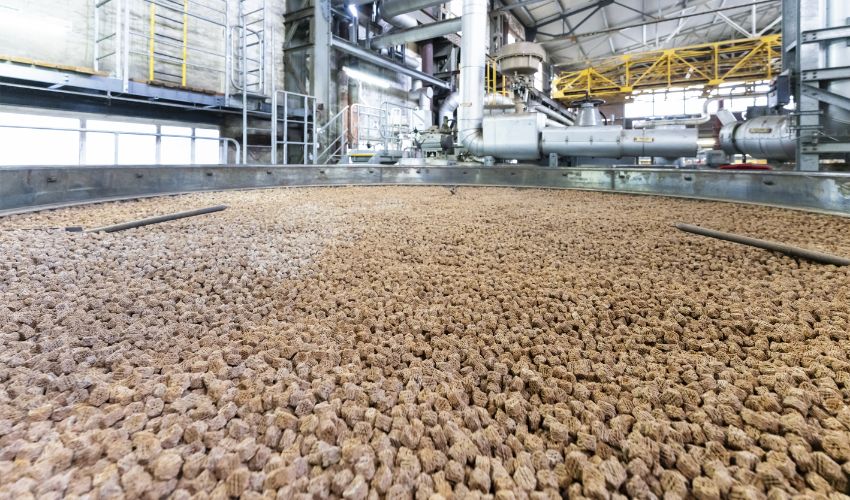
BASF, a leading global manufacturer of catalysts for the chemical industry, announced that it opened the world’s first production plant for 3D printed catalysts, located in Ludwigshafen, Germany. The plant will produce X3D® catalysts on an industrial scale. Increasingly, we are seeing additive manufacturing being used for production. So why was AM chosen to mass-produce catalysts?
What Are Catalysts? Why 3D Print Them?
In chemistry, catalysts are any substance that increases the rate of a chemical reaction with a reactant, without itself being consumed. Since 2019, BASF has been 3D printing catalysts with its proprietary X3D® technology, combining proven active materials with a new shaping methodology. According to the company, X3D® results in high reactivity and greater design freedom. So, these 3D printed catalysts reduce costs, lower emissions, and increase efficiency.
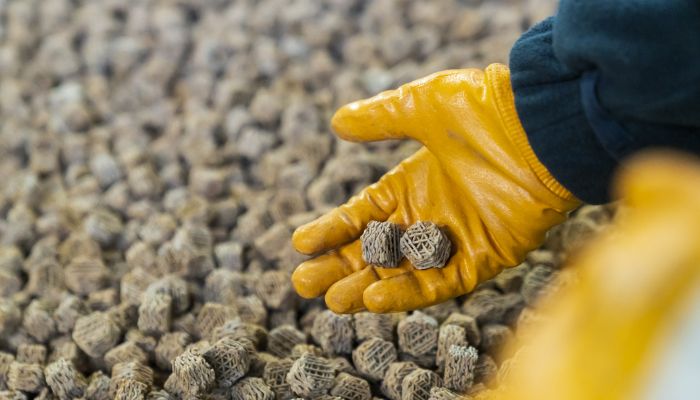
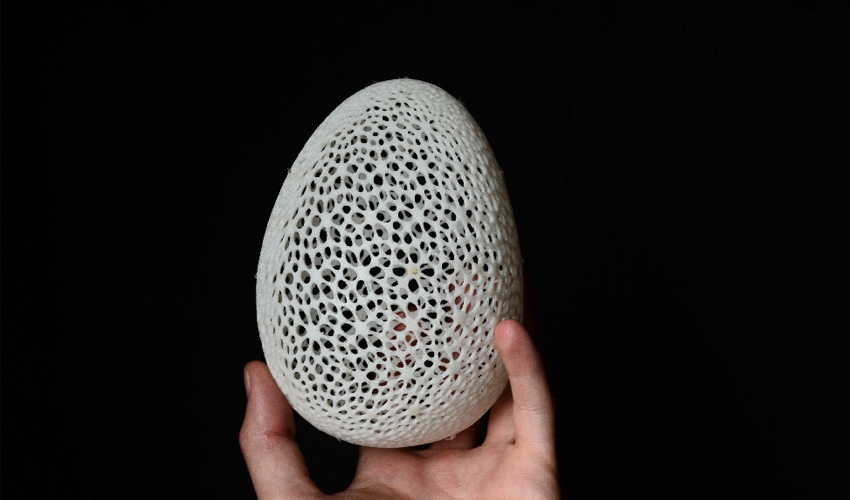
BASF’s X3D catalysts combine high mechanical stability with an open structure.
The X3D catalysts are optimally designed, with geometries that have high mechanical stability and an open structure. This significantly reduces pressure drop in reactors while simultaneously increasing the catalytically active surface area. This allows users to achieve higher reactor throughput and improved product quality, while consuming less energy than conventional catalysts.
More from the desk
Six other notes from the rest of the bench.
 NewsWEBINAR: Breaking Boundaries With Pellet 3D PrintingCurrently, more and more companies are considering taking advantage of the benefits offered by pellet 3D printing. As some of the greatest challenges facing companies are the material limitations associated with filament production, the interest in using pellets instead has&helli
 ApplicationsVeterinary 3D Printing Helps in Dog’s Hip SurgeryWhether on two legs or four, and regardless of fur, feathers or hair, advances in medical 3D printing have been benefitting humans and animals alike. The veterinary world in particular has seen many 3D printed prosthetic limbs and parts with…
 Printers3Dnatives Lab: Testing the Einstar 3D Scanner From SHINING 3DFounded in 2004, SHINING 3D is a Chinese manufacturer of both 3D printers and 3D scanners. With a particular focus on the medical and dental sectors, the brand has grown internationally in recent years and now has offices in China,…
 ApplicationsLocal Motors receives $1bn for ‘Olli,’ the 3D Printed Autonomous BusLocal Motors are an American company based in Arizona, known for 3D printing a variety of vehicles over the years. A few days ago, they announced investments of $1bn in the launch of their 3D printed autonomous vehicle, the ‘Olli’.…
 ApplicationsMexican students develop 3D breast prosthesesThis year alone in the United States will more than 266,000 women be diagnosed with breast cancer. This disease is the one that attacks most women in the world, and often leads to a mastectomy. This process can be painful and difficult,…
 NewsThe World’s First 3D Printed Fiberglass PoolAmerican pool company San Juan Pools recently unveiled what it claims to be the first-ever 3D printed fiberglass pool. In a late segment of the TV morning show Fox and Friends, the pool was presented for the first time on…