Guides
Artha France: A 3D Printed Lumbar Belt to Assist the Visually Impaired
Today, 3D printing applications in the disability sector are diverse, covering areas such as the manufacture of customized prostheses, custom hearing aids, and even adapted vehicles. The Parisian start-up Artha France, in partnership with Sculpteo, a major player in 3D…
- 3 min read
- Guides
- Six more stories
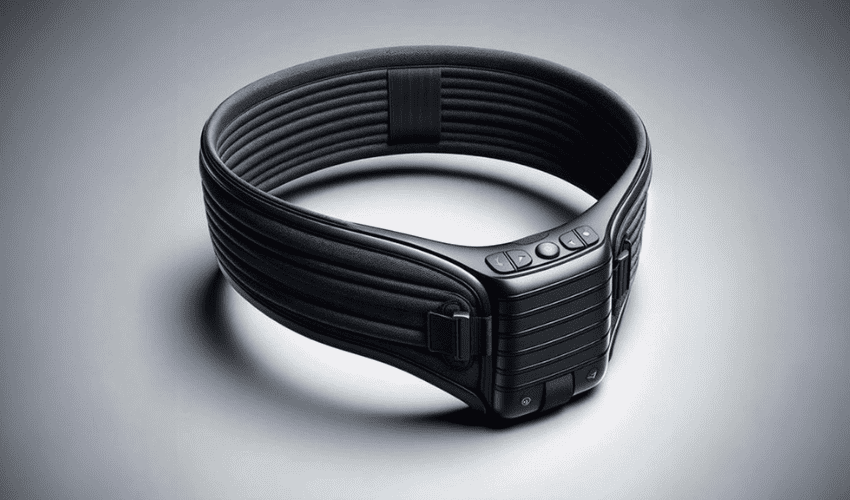
Today, 3D printing applications in the disability sector are diverse, covering areas such as the manufacture of customized prostheses, custom hearing aids, and even adapted vehicles. The Parisian start-up Artha France, in partnership with Sculpteo, a major player in 3D printing in France, has recently successfully completed the testing phase of an innovative device. This product aims to improve the quality of life for people with visual impairments. It consists of a lumbar belt equipped with a camera, which can be discreetly attached to glasses. Since 2020, 140 individuals have participated in trials in various contexts, such as using a computer, driving a car and navigating the streets of Paris. This promising advance could represent a valuable solution for increasing the independence of those affected.
Artha France aims to make its innovation accessible to all, while ensuring that quality and performance are maintained. This initiative has resulted in the manufacture of a lumbar belt using 3D printing technology. We had the opportunity to talk to Louis de Veron, co-founder of Artha France, to learn more about this breakthrough and understand how 3D printing is helping to support people with disabilities.
3DN: Can you introduce yourself and tell us about Artha France?
Artha France is a company dedicated to creating innovative technological solutions to improve the lives of visually impaired and blind people. Our project goes beyond simple innovation; it represents a real revolution for those who depend on their tactile and auditory senses to perceive the world around them. Our vision is to build a future where autonomy and sensory perception are not limited by vision. We want to enable blind and visually impaired people to develop a whole new perception of their environment, gain independence in their movements, and enhance their daily safety.
More from the desk
Six other notes from the rest of the bench.
 Guides3D-LINE on Combining Concrete and Plastic 3D Printing for Design and ArchitectureThere are a number of players in the concrete 3D printing field, particularly in the renewable energies sector. Among them is 3D-LINE. This is a brand of the company V-Concept, founded in 2017. It specializes in concrete and plastic 3D…
 Printers3Dnatives Lab: Testing the Artec Leo 3D ScannerOver the years, the manufacturer Artec 3D has made a name for itself in the professional 3D scanner market thanks to the success of its portable Eva and Spider models. More recently, the manufacturer has evolved its range with the…
 ApplicationsFDA approval for K2M 3D printed spinal implantFollowing a line of 3D printing innovations in medicine this year, such as 3D printed ovaries and skin, the latest medical innovation in 3D printing comes out of the K2M headquarters in Leesburg, Virginia with their announcement of their FDA…
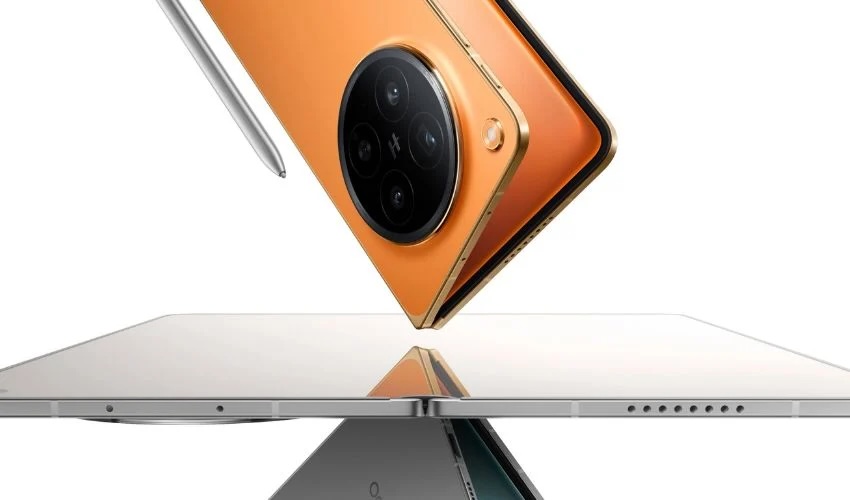 NewsOPPO Uses 3D Printing to Create a Crease-Free Foldable SmartphoneAre we seeing a new trend in additive manufacturing? Just last week, we told you about Apple’s new products and their use of this technology. This week, it’s Chinese manufacturer OPPO’s turn, as the company has announced a new foldable…
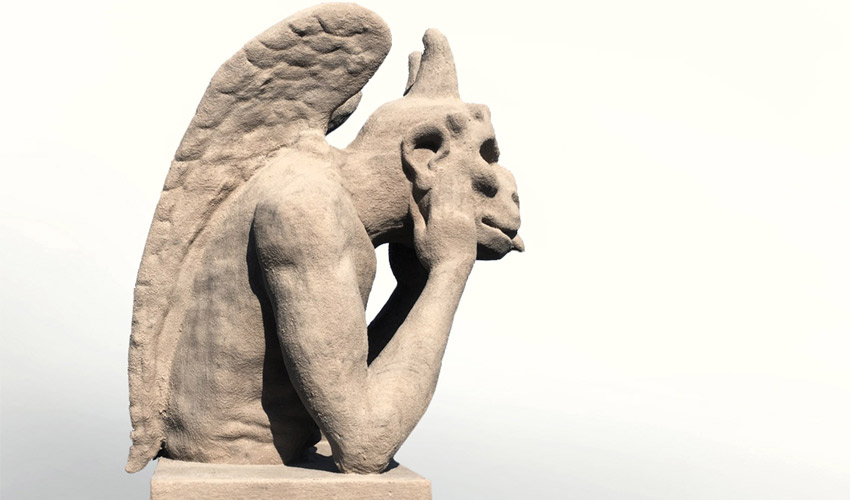 NewsConcr3de wants to 3D print the lost parts of Notre-Dame using its 3D technologyConc3de, the stone 3D printer manufacturer has suggested to use its 3D printing technology to rebuild the Notre-Dame gargoyles following the fire on April 15th. The Dutch company has experience in restoring historical heritage using 3D technologies, for example it…
 ApplicationsUniversity of Mississippi Researchers Design 3D Printed Implant to Ensure that Chemotherapy Targets Only the TumorA group of researchers at the University of Mississippi has created tiny capsules loaded with an anticancer drug and incorporated them into a small implant produced using 3D printing. The idea is to place this implant next to the tumor…