News
Anywaves uses ceramic 3D printing for its satellite antennas
Based in Toulouse, Anywaves is a spin-off company from the Centre National d’Etudes Spatiales (CNES) which aims to become the main manufacturer of antennas for small satellites in the world. It is with this in mind that it approached French…
- 3 min read
- News
- Six more stories
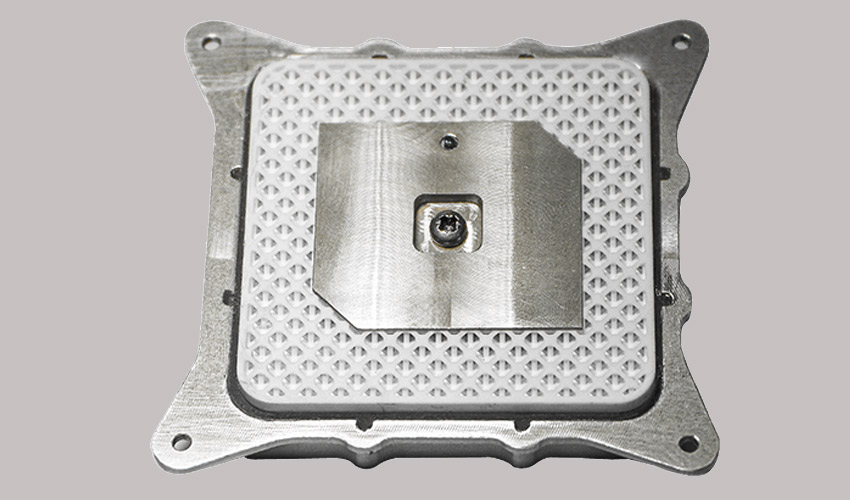
Based in Toulouse, Anywaves is a spin-off company from the Centre National d’Etudes Spatiales (CNES) which aims to become the main manufacturer of antennas for small satellites in the world. It is with this in mind that it approached French ceramic 3D printer manufacturer, 3DCeram. Together the companies began to design a new antenna. This partnership was formed during a discussion about the technical specificities of the antenna, desired mechanical properties and economic aspects of the project through 3DCeram’s service 3D-AIM. From there the companies began developing a new type of ceramic antenna for future small SmallSats satellites.
For a few years now, additive manufacturing has become an increasingly used in space, making headlines with 3D printed rockets and satellite parts, and even a 3D printer that works in zero gravity! The aerospace industry has long since demonstrated its trust in 3D printing technologies, aware of their ability to reduce cost and increase efficiency. 3D printing is also an interesting solution for astronauts needing to design spare parts or other objects in case of an emergency during their mission. Anywaves has in any case taken the leap, turning to the 3D-AIM service of 3DCeram dedicated to companies in this demanding sector. The service’s objective is to support companies wishing to additively manufacture ceramic pieces. For 18 months, the two companies worked on the development of a GNSS L1 / E1 band antenna guided by a strict three-step process : feasibility analysis, discussions between design and manufacture, and risk analysis.
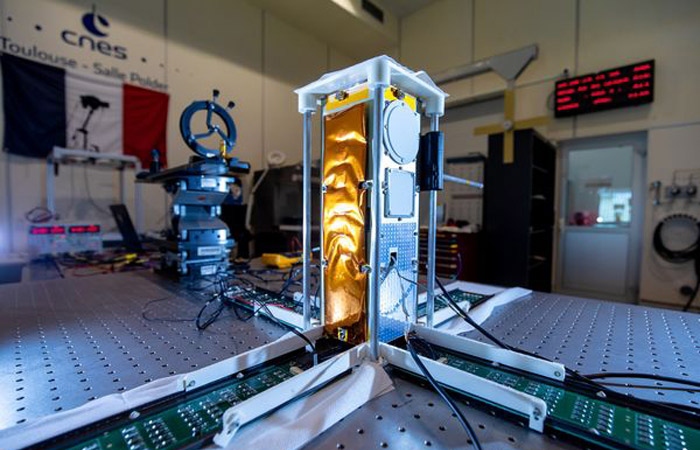
CNES’s Eyesat satellite is equipped with two antennas developed by Anywaves (photo credits: CNES / Tronquart Nicolas)
The three-step design process
Before opting for ceramic additive manufacturing, it was first necessary to assess the related risks and therefore define all the technical and economic requirements of the antenna. 3D-AIM explains that it examined the CAD file produced by Anywaves from all possible angles: printing process, post-processing, debinding and sintering. The second step was modifying the CAD model in coordination with the results of the analysis obtained in the first phase.
More from the desk
Six other notes from the rest of the bench.
 NewsTop 5 Videos of the Week: groundbreaking 3D printed building in Dubai…This week we found the top 5 videos about 3D printing and the way additive manufacturing is shaping our society. The technology has infiltrated many sectors, from medical to automotive! Check out our selection of the week to keep up with the innovations! This week we…
 NewsCOBOD and GUtech Have 3D Printed a World Record Breaking Construction Project in OmanThis year, we have already seen a number of projects within the construction industry that have used additive manufacturing. Whether remarkable for its height, quantity or sustainability, these types of projects can benefit significantly from the advantages of 3D printing.&hellip
 NewsTop 5 Videos: NASCAR and 3D Printing at the 24 Hours of Le MansFor this week’s top 5 videos, we’re taking you to one of the world’s most famous automotive events, the 24 Hours of Le Mans. We had the opportunity to interview Hendrick Motorsports to learn about their use of 3D printing…
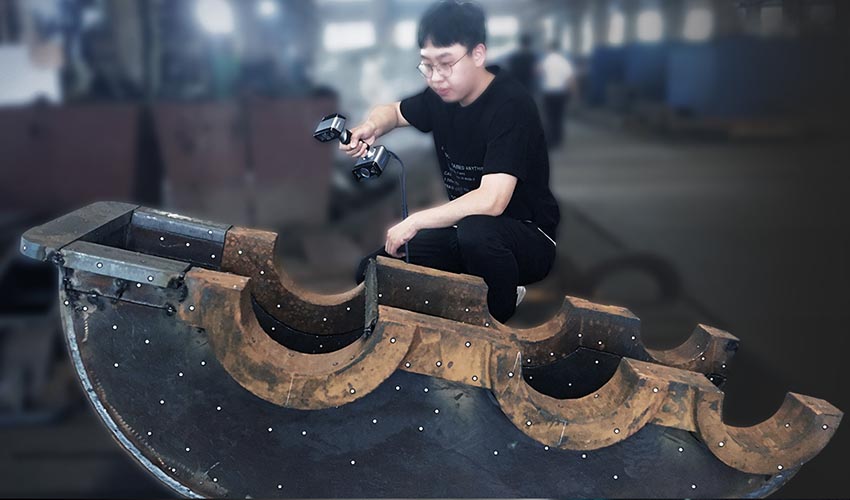 PrintersSHINING 3D releases the EinScan H series, making industrial scanners accessibleSHINING 3D, a leading company covering the 3D digital workflow from 3D Digitizing, through Intelligent Design, to Additive Manufacturing has been a pioneer in the industry since 2004, the year it was founded. Covering the entire AM workflow from 3D…
 NewsTOP 5 Videos of the Week: Kodak, Makerbot, & more!This week’s Top 5 Videos of the Week contains a variety of interesting videos published in the last seven days. Since there were a number of exciting videos posted from large companies in the 3D printing industry this week, we…
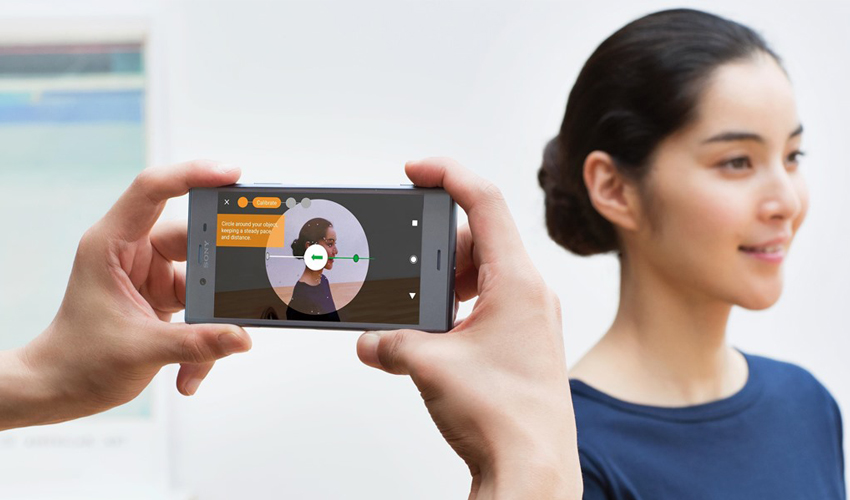 Printers3D scan directly into your Sony with the Xperia XZ1 and XZ1 CompactWhat if your phone could become your new 3D scanner? This is what the Japanese manufacturer Sony wants to offer with their new phones, the Xperia XZ1 and the XZ1 Compact. These two new phones will have the ability to…