News
AML3D Created the Largest, Verified Oil & Gas Piping Component Using 3D Printing
Additive manufacturing in the oil & gas industry is continuing to grow. AML3D has announced that they have made the largest, verified, metal oil & gas high-pressure piping component using 3D printing. It was created using AML3D’s Wire Additive Manufacturing…
- 3 min read
- News
- Six more stories
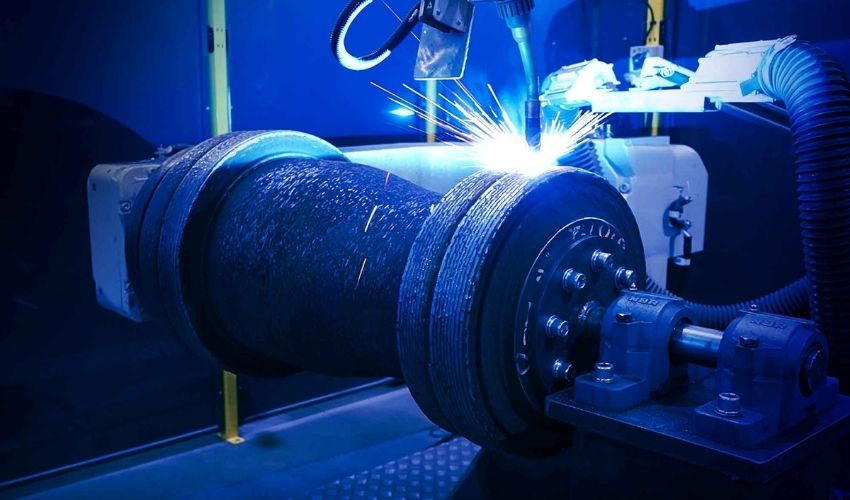
Additive manufacturing in the oil & gas industry is continuing to grow. AML3D has announced that they have made the largest, verified, metal oil & gas high-pressure piping component using 3D printing. It was created using AML3D’s Wire Additive Manufacturing (WAM®) process which has can also be used for applications in Aerospace, Defence, Maritime, Manufacturing, Mining and more. Additionally, the was made in accordance with strict safety considerations, notably meeting the highest American standards for parts in the industry.
The announcement of this comes a mere few weeks after MX3D used its own DED-derived technology, WAAM (Wire Arc Additive Manufacturing), to create a safety critical part for the oil & gas industry. Also verified by Lloyd’s, the clamping part was created using a hybrid approach and was hoped to decrease environmental, human and safety risks. This shows the increased importance of AM in areas like oil & gas and notably in subsea applications. AM has found a home in the sector as it allows users to quickly make complex parts.
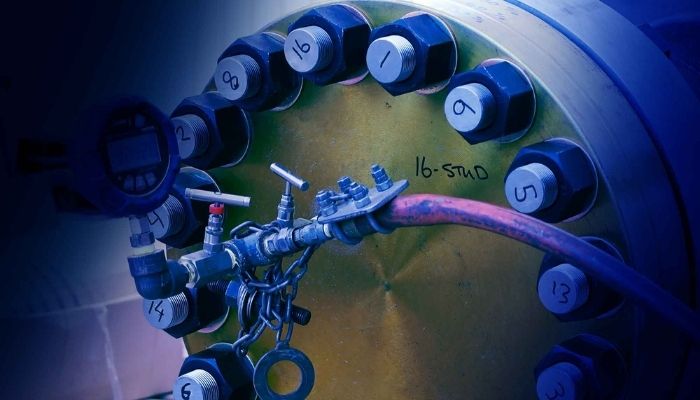
WAM® DN400 to DN300, Schedule 160 reducing spool undergoing testing with TruShape, witnessed and verified by Lloyds Register (photo credits: AML3D)
What do we know about the 3D printed, oil & gas part from AML3D?
The part was made using AML3D’s patented WAM process which combines combines an electric arc with certified welding wire in a Directed Energy Deposition (DED) process. According to the company, it is notably as it can be used to print large metal parts an open free-form fabrication environment using localised inert gas, eliminating the need for a chamber. The high-pressure component was printed in one piece and showed improved material properties and was manufactured in significantly less time than traditional methods.
More from the desk
Six other notes from the rest of the bench.
 NewsWho Won the 2026 DINO and Technical Competition Awards? A Look at AMUG 2026The Additive Manufacturing Users Group (AMUG) presented its prestigious DINO (Distinguished INnovator Operator) Award for additive manufacturing expertise and service to six individuals at the 37th annual AMUG Conference held March 15-19, 2026, in Reno, Nevada. AMUG representativ
 NewsNew Balance launches 3D printing platform with FormlabsNew Balance, the company based in Boston and one of the leaders in athletic wear, just launched a new platform created with 3D printing technology from Formlabs. The new platform is called TripleCell – it has been and will be…
 GuidesBatch.works, 3D printing sustainable decorative objectsIn the design sector, 3D printing makes it possible to achieve high levels of geometric complexity while offering a high degree of customisation. These are two key advantages that interest many creators today, regardless of their core business. Today, we…
 ApplicationsNew Frontier Aerospace Successfully Tests Its 3D Printed Mjölnir Rocket EngineMjölnir refers to the hammer of the thunder god, Thor, in Norse mythology. The hammer is used as both a devastating weapon and as an instrument to deliver blessings. The Washington-based startup New Frontier Aerospace (NFA) gave its 3D printed…
 NewsMoving additive manufacturing from prototyping to productionEvery year, the 3D printing service Sculpteo publishes its annual report The State of 3D Printing, a study that provides more information on the use that professionals make of additive manufacturing. It also provides an overview of market trends, the…
 NewsInside RAPID + TCT 2026: Exhibitors You Can’t MissGood morning, Boston. RAPID + TCT 2026 officially opens its doors, bringing together key players across the additive manufacturing industry for one of the year’s most important events. Kicking off April 13 with its conference program, followed by the exhibition…