News
Additive manufacturing to treat polluted waters
As we know, nowadays 3D printing offers the possibility of creating complex objects that can be reproduced quickly, easily and without much effort. With this idea in mind, a research team from the universities of Tasmania and the Balearic Islands…
- 3 min read
- News
- Six more stories
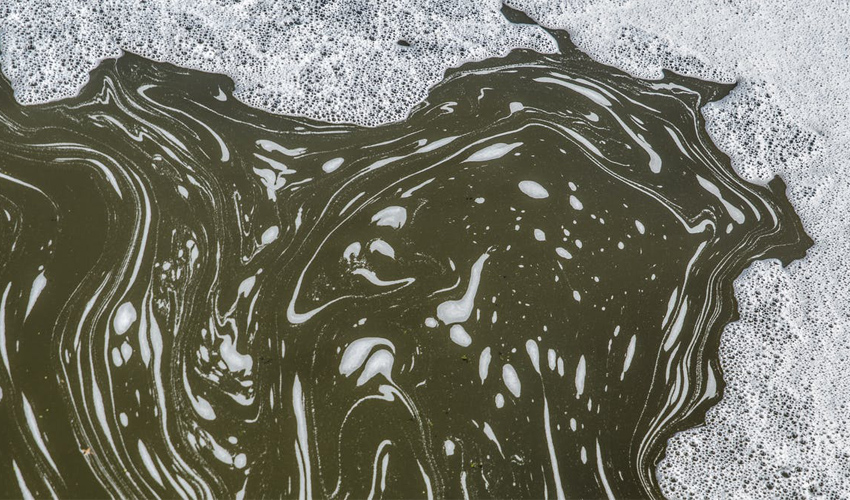
As we know, nowadays 3D printing offers the possibility of creating complex objects that can be reproduced quickly, easily and without much effort. With this idea in mind, a research team from the universities of Tasmania and the Balearic Islands decided to use this technology to purify polluted water. Andreu Figuerola, Fernando Maya and Gemma Isabel Turnes, are the authors of this project, which was funded through the Spanish State Research Agency (AEI) and the European Regional Development Funds (ERDF). It is interesting to know how additive manufacturing methods are increasingly present in the fight against environmental pollution, and how many organizations are integrating this technology to launch initiatives that contribute to this movement.
Unfortunately, it is not uncommon to hear news about different incidents that lead to environmental damage and pollution. For example, not so long ago, there was an environmental disaster in Spain, when the Mar Menor suffered. Mar Menor is a coastal saltwater lagoon, in which thousands of organisms were devastated due to the effects of pollution of anthropogenic origin. As a result, many natural ecosystems have been destroyed. Water, being absolutely indispensable for humans needs special attention and care. But how did the researchers manage to integrate additive manufacturing into the water purification process?
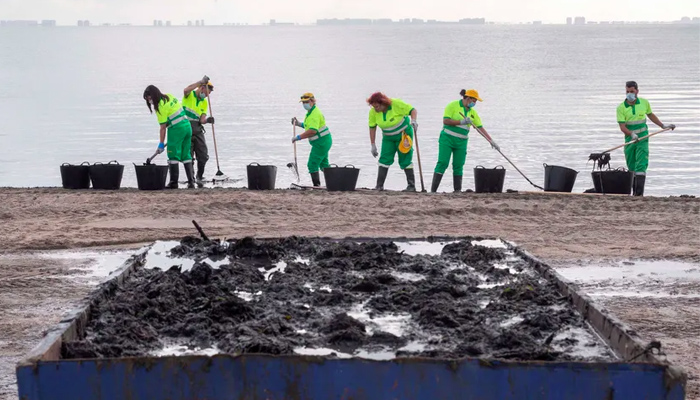
Image credits: Marcial Guillén/EFE
Additive manufacturing for water treatment
To treat the water, there exist several methods consisting of quite a few stages that depend on the origin of the water (fluvial, industrial, residual, etc). In our case, the research team used 3D printing to manufacture devices coated with adsorbent materials capable of purifying aqueous solutions with different industrial dyes. In other words, they developed a support piece consisting of a module with interconnected channels to incorporate the adsorbent materials. The complex design increases the surface area within the module and, therefore, the amount of material that can be included.
More from the desk
Six other notes from the rest of the bench.
 ApplicationsZENOS, the open-source 3D printed arm prosthesis for cyclistsIndustrial designer Chan Lee, based in New York, has developed ‘ZENOS’, the 3D printed arm prosthesis for mountain bike riding and cycling. The project was developed for amputees who require a prosthesis for sports activities such as mountain biking and…
 Applications3D Printed Boat Boosts Naval Innovation in the NetherlandsIn a previous analysis of 2025 3D printing trends, we mentioned how the defense sector is showing increasing interest in additive manufacturing, to the point of integrating it as a key technology in its operations. A new application for the…
 MaterialsRENCA Makes History With World’s First Geopolymer HouseSustainability in construction has become a global imperative, urging the industry to seek innovative solutions to reduce its environmental impact. RENCA, a pioneer in sustainable geopolymer materials for 3D printing in construction, has achieved a groundbreaking milestone by usi
 SoftwareZ-Suite, The Free Slicer from ZortraxIn the world of 3D printing, the quality of the final product depends not only on the hardware used but also on the software that prepares the files. That’s why we invite you to discover Z-Suite, a slicer developed by…
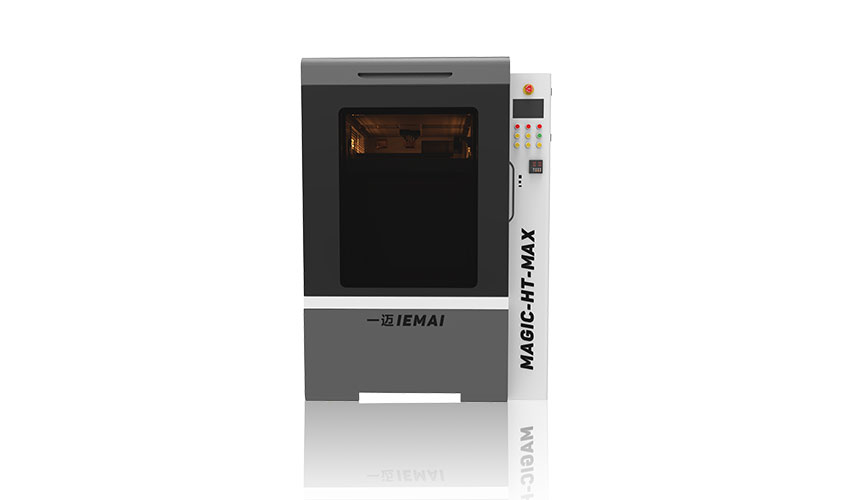 PrintersMAGIC-HT-MAX, the large format 3D printer for HPPsIEMAI 3D is an Asian manufacturer of 3D printers specialized in the development of machines that work with advanced materials on a large scale. In 2019 it made its entry to the European market by presenting us with its MAGIC-HT-PRO,…
 News3D Architech Is Our 2025 Startup of the Year!2025 brought steady progress across the additive manufacturing landscape, along with new startups worth watching. We spotlighted a standout startup each month, highlighting innovations that ranged from personalized medical solutions to unique manufacturing technologies. In Decemb