Guides
#3DStartup: Viewpointsystem on Using AM for Their Smart Glasses
Vienna-based start-up Viewpointsystem has been working intensively on a solution to bring man and machine closer than ever before. The result: forward-looking smart glasses made with scientific know-how in the field of optics. However, what exactly is the contribution of…
- 3 min read
- Guides
- Six more stories
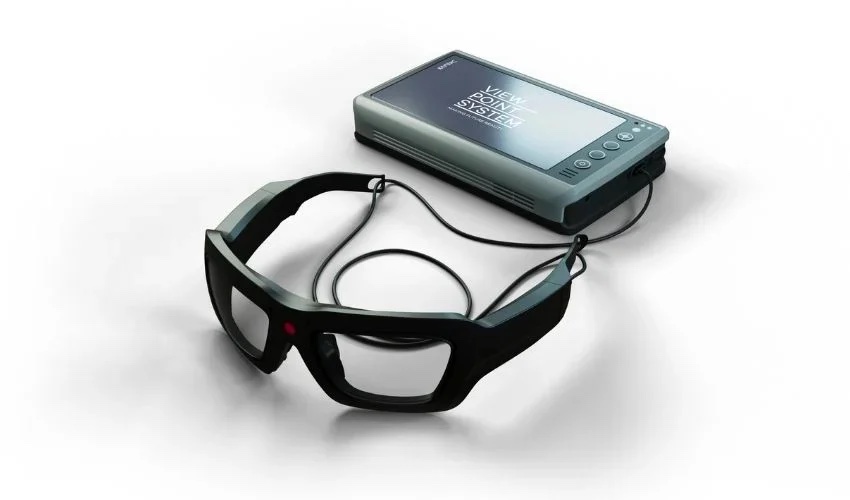
Vienna-based start-up Viewpointsystem has been working intensively on a solution to bring man and machine closer than ever before. The result: forward-looking smart glasses made with scientific know-how in the field of optics. However, what exactly is the contribution of additive manufacturing to such a high-tech achievement? Many of the parts made for the Smart Glasses come from 3D printers! This has allowed for human and machine collaboration at a distance, including for remote support and remote maintenance, among other things. We spoke with Viewpointsystem’s CTO, Frank Linsenmaier, about the use of additive manufacturing for the Smart Glasses and what benefits the technology has brought to the company.
3DN: Can you introduce yourself and Viewpointsystem?

Frank Linsenmaier – CTO bei Viewpointsystem (Bild: Viewpointsystem)
Viewpointsystem is a young deep-tech company from Vienna that develops and produces smart glasses for the B2B sector. We were founded in 2016 out of a spin-off of the University of Natural Resources and Applied Life Sciences, Vienna. Today we have customers on three continents and around 60 employees. We are one of the first companies in Austria to rely on additive manufacturing for industrial series production. A total of twelve components of our smart glasses are manufactured additively, from the frame of the glasses to the nose pads and inner technical parts – and the trend is rising.
I myself first came into contact with additive manufacturing in 2005, in the area of prototype and low-volume production for a major automotive supplier. Compared to other technologies, additive manufacturing always had the most degrees of freedom in design, and prototypes could be produced quickly in terms of time. So we always had the opportunity to quickly analyze feasibility and demonstrate new parts. When I joined Viewpointsystem in 2016, our components were still injection molded. However, we quickly realized that additive manufacturing was better suited. It gives us the ability to design things to be stable and moveable at the same time, which is a big advantage for a wearable item. With the help of additive technology, we were able to quickly bring our product into series production. For the future, we see many more opportunities to push the limits of this technology.
More from the desk
Six other notes from the rest of the bench.
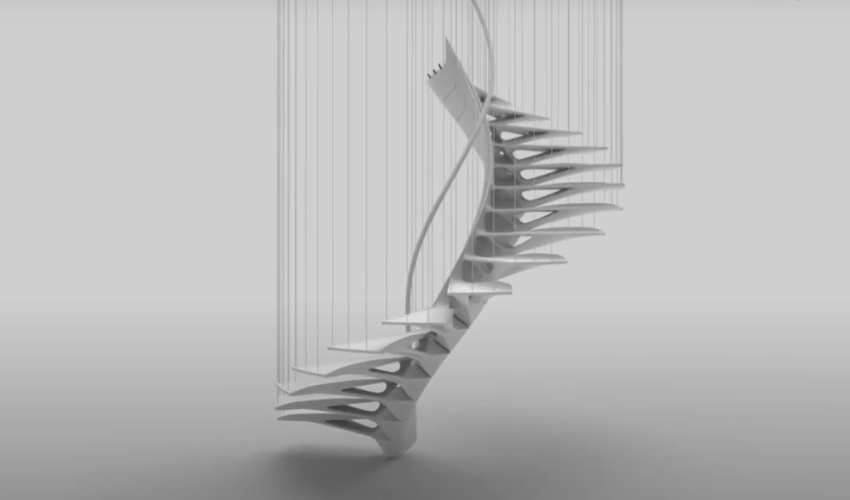 MaterialsHow Concrete Formwork Filament Can Push the Limits of ArchitectureAs art imitates life, and life, art, architecture as a typically large scale and public art form, has the capacity to both represent and influence cultural eras. It is through architecture that creators, transforming its design language, are able to…
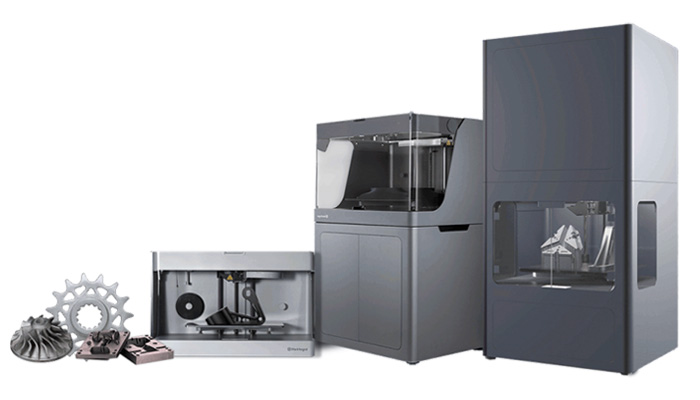 PrintersMarkforged launches two new industrial printers: the X3 and X5In less than 3 years, American 3D printing company, Markforged, has managed to position itself as one of the leaders in the 3D printing industry, with their main mission being to make additive manufacturing more accessible to people and industries. Today,…
 NewsTop 5 Videos: Watch Dogs Run Again Thanks to 3D Printing!We’re back again with the top five videos in 3D printing this week, and we’re here with some inspiring stories! First, take a look at a video about 3D Pets, a company that creates prosthetics for animals using additive manufacturing.…
 NewsThe Best 3D Printing Videos From 20242024 was an extraordinary year for 3D printing, with breakthroughs revolutionizing fields as diverse as medicine, automotive and aerospace. In this article, we’ve put together a selection of our favorite videos of the year, where creativity and technology collide to…
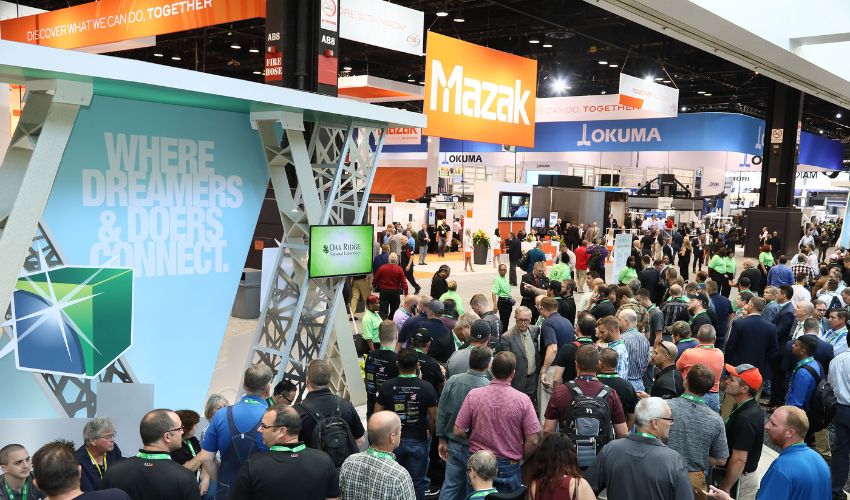 NewsWhat to Expect at IMTS 2022This week, people from around the world are flocking to Chicago for the 33rd edition of the International Manufacturing Technology Show (IMTS), the largest and longest-running industry trade show in the Western Hemisphere. IMTS 2022 is already underway, taking place…
 NewsTop 5 Videos: 3D Printing At The Met GalaIt’s Sunday again and you know what that means. It’s time for the top 5 3D printing videos! In this week toplist, we’ll give you the newest, most interesting videos from the world of 3D printing. This weeks top 5…