Guides
How is 3D Printing Used in the Nuclear Power Sector?
One of the sectors where additive manufacturing has had an increasing role in recent years is energy. Already, we have told you about the many applications for 3D printing in Oil & Gas, but did you know that it is…
- 3 min read
- Guides
- Six more stories
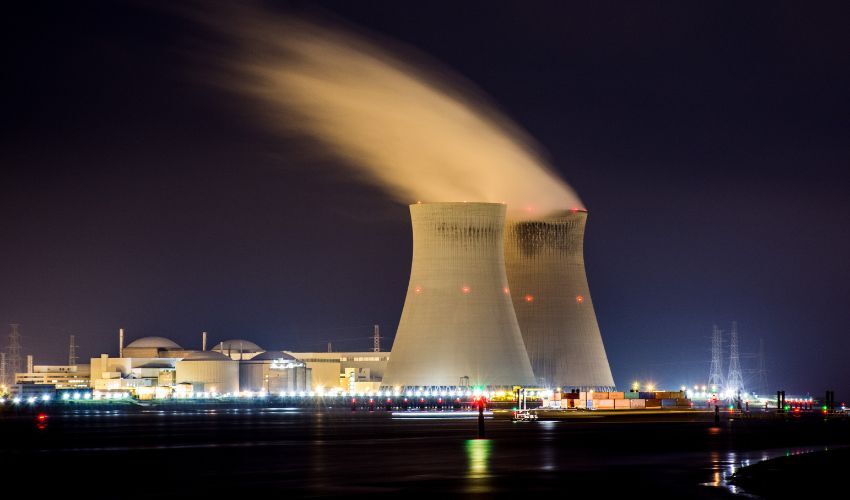
One of the sectors where additive manufacturing has had an increasing role in recent years is energy. Already, we have told you about the many applications for 3D printing in Oil & Gas, but did you know that it is also being used for nuclear applications? The nuclear power plant industry has been gaining in prominence in recent years with data from the World Nuclear Association showing that in 2019 it was the world’s second largest source of low-carbon power with 438 operable reactors spread across 33 countries. Moreover, in 2020, the total world nuclear electricity generation was 2,591 billion kWh, or 10.1% of the total world electrical generation according to the U.S. Energy Information Administration (EIA). Given this rise in popularity, it makes sense as well that the sector is also turning to new technologies, including additive manufacturing. To better understand how exactly it is being used, we took a closer look at some of the top uses of 3D printing in nuclear power plants in no particular order.
A 3D Printed Reactor By ORNL
One of the most active players in the nuclear and 3D printing field is undoubtedly the Oak Ridge National Laboratory (ORNL) in the United States. Its teams have been working for several years on how additive manufacturing can influence the way we think about nuclear power. In May 2020, for example, they presented the first prototype of a reactor core, printed in 3D metal via a DED machine. This project is part of the “Transformational Challenge Reactor Demonstration” (TCR) program, whose objective is to imagine energy systems that are less expensive and more productive, all within a very short timeframe. In fact, this reactor core was created in only three months, from the design phase to post-processing; the printing process required 40 hours of work, at temperatures reaching 1,400°C. You can watch the accelerated 3D printing in the video below:
Ultra Safe Nuclear Corporation in Collaboration with ORNL For Micro Reactors
Ultra Safe Nuclear Corporation is a US nuclear firm which aims to develop and vertically integrate safe, clean, and commercially competitive nuclear solutions. In 2022 it announced plans to collaborate with Oak Ridge National Laboratory to use the latter’s additive manufacturing capabilities to advance nuclear power, by using Binder Jetting in order to make micro modular reactors. The choice of additive manufacturing allows the team to overcome the difficulties associated with working with silicon carbide, a technical ceramic; they will save money and be able to design more complex geometries than with conventional methods. Find out more HERE.
More from the desk
Six other notes from the rest of the bench.
 GuidesTOP 10 Best 3D Printing YouTube Channels / YouTubers (2018 Update)The 3D printing Youtube scene is healthy and growing. Some excellent content is being made by makers, start-ups, and YouTubers. This community helps inform people, as well as showing off the amazing things they have created via 3D printing through…
 NewsVoices AMplified at RAPID + TCT 2023: Learning From the SpeakersAs you know, Voices AMplified is a new series in collaboration with SME the main organizer of RAPID + TCT 2023, the largest additive manufacturing trade show in North America. In these videos, we are putting a spotlight on different…
 Applications#3DExpress: U.S. Navy and Velo3D Partner to Boost AM in DefenseYesterday, we covered the U.S. Defense Advanced Research Projects Agency’s investment of over $10 million to predict the lifespan of 3D printed parts, and today, we have another defense headline: Velo3D is partnering with the U.S. Navy. Velo3D is a…
 PrintersINTAMSYS on their industrial 3D printing solution for HPPs & vision of the marketINTAMSYS, based in Shanghai, is an industrial-grade 3D printer manufacturer and additive manufacturing solutions provider of PEEK and high-performance functional materials. In the AM field, many applications require the use of high-performance functional materials because of thei
 NewsTop 5 Videos: 3D Printing Lunar Material in SpaceWith 2024 behind us, it is time to look ahead to see what innovation is to come. For a while, 3D printing companies have had their sights set on space, and Madison Feehan’s company Space Copy is certainly looking to…
 NewsHempla Presents 3D-Printed Meditation Accessories Made From HempAt a time when the trend is to use more environmentally-friendly raw materials in the production of everyday objects, SofiaHagen x Studio Marmi have worked together to create 3D-printed furniture from hemp. Called Hempla, this is a collection of seats…